गीताभ्यासे श्रद्धात्रयविभागयोगो नाम सप्तदशोऽध्यायः
।। ॐ श्रीपरमात्मने नमः ।।
अथ गीताभ्यासे श्रद्धात्रयविभागयोगो नाम सप्तदशोऽध्यायः
================

This गीताभ्यास: study for learning Sanskrit and Gita together. As studying Sanskrit, the study details पदच्छेदाः, वाक्यांशशः विश्लेषणम्, शब्दाभ्यासाः, छन्दोविश्लेषणम्, As studying Gita, the study details अन्वयार्थाः and स्वाध्यायाः i.e. Notes of self study. i.e. notes of self-study wherein deeper meaning, figures of speech if any, other relevant quotes including verses from other chapters are taken note of by way of "connecting the dots".
There are 28 श्लोकाः in this अध्यायः. In the first श्लोकः there is a question by अर्जुनः which is answered by श्रीकृष्णभगवान् in the rest 27. All have 32 letters each.
गीताभ्यासे १७’१ ये शास्त्रविधिमुत्सृज्य
==================
अर्जुन उवाच ।
पदच्छेदैः - अर्जुन: उवाच ।
ये शास्त्रविधिमुत्सृज्य यजन्ते श्रद्धयान्विताः ।
पदच्छेदैः - ये शास्त्रविधिम् उत्सृज्य यजन्ते श्रद्धया अन्विताः ।
तेषां निष्ठा तु का कृष्ण सत्त्वमाहो रजस्तमः ॥ १७-१॥
पदच्छेदैः - तेषाम् निष्ठा तु का कृष्ण सत्त्वम् आहो रज: तमः ॥ १७-१॥
वाक्यांशशः विश्लेषणम्
अन्वयशः शब्दाभ्यासा:
अर्जुन: उवाच
अर्जुन: - अर्जुन वि. अत्र पुं. 1’1 / अर्जुन a. [अर्ज्-उनन् णिलुक् च Uṇ.3.58] (-ना, -नी f.). 1 White, clear, bright, of the colour of day; अहश्च कृष्णमहरर्जुनं च Rv.6.9.1; पिशङ्गमौञ्जीयुजमर्जुनच्छविम् Śi.1.6. -2 Silvery; यत्र वः प्रेङ्खा हरिता अर्जुना Av.4.37.5. -नः 1 The white colour. -2 A peacock. -3 A sort of cutaneous disease. -4 A tree (Mar. अर्जुनसादडा), with useful rind; Mb.3.64.3. -5 N. of the third Pāṇḍava who was a son of Kuntī by Indra and hence called ऐन्द्रि also. [Arjuna was so called because he was 'white' or 'pure in actions' (पृथिव्यां चतुरन्तायां वर्णो मे दुर्लभः समः । करोमि कर्म शुद्धं च तेन मामर्जनं विदुः). He was taught the use of arms by Droṇa and was his favourite pupil. By his skill in arms he won Draupadī at her Svayaṁvara (see Draupadī). For an involuntary transgression he went into temporary exile and during that time he learnt the science of arms from Paraśurāma. He married Ulūpī, a Nāga Princess, by whom he had a son named Irāvat, and also Chitrāṅgadā, daughter of the king of Maṇipura, who bore him a son named Babhruvāhana. During this exile he visited Dvārakā, and with the help and advice of Kṛiṣṇa succeeded in marrying Subhadrā. By her he had a son named Abhimanyu. Afterwards he obtained the bow (Gāṇḍiva from the god Agni whom he assisted in burning the Khāṇḍva forest. When Dharma, his eldest brother, lost the kingdom by gambling, and the five brothers went into exile, he went to the Himālayas to propitiate the gods and to obtain from them celestial weapons for use in the contemplated war against Kauravas. There he fought with Śiva who appeared in the disguise of a Kirāta; but when he discovered the true character of his adversary he worshipped him and Śiva gave him the Pāśupatāstra. Indra, Varuṇa, Yama and Kubera also presented him with their own weapons. In the 13th year of their exile, the Pāṇḍavas entered the service of the King of Virāṭa and he had to act the part of a eunuch, and music and dancing master. In the great war with the Kauravas Arjuna took a very distinguished part. He secured the assistance of Kṛiṣṇa who acted as his charioteer and related to him the Bhagavadgītā when on the first day of the battle he hesitated to bend his bow against his own kinsmen. In the course of the great struggle he slew or vanquished several redoubtable warriors on the side of the Kauravas, such as Jayadratha, Bhīṣma, Karṇa &c. After Yudhiṣṭhira had been installed sovereign of Hastināpura, he resolved to perform the Aśvamedha sacrifice, and a horse was let loose with Arjuna as its guardian. Arjuna followed it through many cities and Countries and fought with many kings. At the city of Maṇipura he had to fight with his own son Babhruvāhana and was killed; but he was restored to life by a charm supplied by his wife Ulūpī. He traversed the whole of Bharatakhaṇḍa and returned to Hastināpura, loaded with spoils and tributes, and the great horse-sacrifice was then duly performed. He was afterwards called by Kṛiṣna to Dvārakā amid the internecine struggles of the Yādavas and there he performed the funeral ceremonies of Vasudeva and Kṛiṣṇa. Soon after this the five Pāṅdavas repaired to heaven having installed Parīkṣit -the only surviving son of Abhimanyu-- on the throne of Hastināpura. Arjuna was the bravest of the Pāṇdavas, high-minded, generous, upright, handsome and the most prominent figure of all his brothers. He has several appellations, such a Pārtha, Gudākeśa, Savyasāchī, Dhanañjaya, Phālguna, Kirītin, Jīṣṇu, Śvetavāhana, Gāṇḍivin &c.] cf. अर्जनः फाल्गुनो जिष्णुः किरीटी श्वेतवाहनः । बीभत्सुर्विजयः कृष्णः सव्यसाची धनञ्जयः ॥
उवाच - वच्-धातोः (अथवा ब्रू-धातोः) लिटि प्र.पु. एक. / वच् वचँ परिभाषणे (to speak, to tell, to talk) अदादिः, ०२.००५८ परस्मैपदी, द्विकर्मकः, अनिट् / ब्रू ब्रूञ् व्यक्तायां वाचि (to speak, to tell, to explain) अदादिः, ०२.००३९ उभयपदी, द्विकर्मकः, सेट्
ये श्रद्धया अन्विताः शास्त्रविधिम् उत्सृज्य यजन्ते
ये - यत् सर्व. अत्र पुं. 1’3 /
श्रद्धया - श्रद्धा स्त्री. 3’1 / श्रद्धा 1 Trust, faith, belief, confidence. -2 Belief in divine revelation, religious faith; श्रद्धा वित्तं विधिश्चेति त्रितयं तत्समागतम् Ś.7.29; R.2.16; अयतिः श्रद्धयोपेतो योगात् चलितमानसः Bg.6.37;7.21;17.3. -3 Sedateness, composure of mind. -4 Intimacy, familiarity. -5 Respect, reverence. -6 Strong or vehement desire; तथापि वैचित्र्यरहस्यलुब्धाः श्रद्धां विधास्यन्ति सचेतसोऽत्र Vikr.1.13; युद्धश्रद्धापुलकित इव प्राप्तसख्यः करेण Mu.6.18.
अन्विताः - (अनु+इ = अन्वि)-धातोः क्त-वि. अन्वित / अत्र पुं. 1’3 / अन्वित p. p. 1 Followed or attended by, in company with, joined by; अमात्यपुत्रैः सवयोभिरन्वितः R.3.28. -2 Possessed of, having, possessing, endowed with; full of, seized or struck with, overpowered by; with instr. or in compound; कुलान्वितं कुकुलजा निन्दन्ति Pt.1.415; धैर्य˚; गुण˚, वित्त˚; विस्मय˚ struck with wonder; भय˚, क्रोध˚, लोभ˚ &c. &c. -3 Connected with, linked to, following (as a consequence). -4 Connected grammatically; वर्णाः पदं प्रयोगार्हानन्वितैकार्थबोधकाः S. D.9. -5 Understood, reached by the mind. -6 Suitable, befitting; तपसा चान्वितो वेषस्त्वं राममहिषी ध्रुवम् Rām.5.33.13.
शास्त्रविधिम् - शास्त्रविधि पुं. 2’1 / शास्त्रम् च विधिः च एतयोः समाहारः शास्त्रविधि: (द्वन्द्वः) /
शास्त्रम् - शास्त्रम् [शिष्यतेऽनेन शास्-ष्ट्रन्] 1 An order, a command, rule, precept; अतिक्रामति यः शास्त्रं पितुर्धर्मार्थदर्शिनः Mb.5.148.21. -2 A sacred precept or rule, scriptural injunction; तस्माच्छास्त्रं प्रमाणं ते कार्याकार्यव्यवस्थितौ Bg.16.24. -3 A religious or sacred treatise, sacred book, scripture; see comps. below. -4 Any department of knowledge, science; इति गुह्यतमं शास्त्रम् Bg.15.20; शास्त्रेष्वकुण्ठिता बुद्धिः R.1.19; often at the end of comp. after the word denoting the subject, or applied collectively to the whole body of teaching on that subject; वेदान्तशास्त्र, न्यायशास्त्र, तर्कशास्त्र, अलंकार- शास्त्र &c.
विधि: - विधिः [विधा-कि] 1 Doing, performance, practice, an act or action; ब्रह्मध्यानाभ्यसनविधिना योगनिद्रां गतस्य Bh.3.41; योगविधि R.8.22; अस्याः सर्गविधौ V.1.8; लेखाविधि Māl. 1.35. -2 Method, manner, way, means, mode; निः- साराल्पफलानि ये त्वविधिना वाञ्छन्ति दण्डोद्यमैः Pt.1.376. -3 A rule, commandment, any precept which enjoins something for the first time (as distinguished from नियम and परिसंख्या q.v.); विधिरत्यन्तमप्राप्तौ; चिकीर्षाकृतिसाध्यत्व- हेतुधीविषयो विधिः; वहति विधिहुतं या हविः Ś.1.1. -4 A sacred precept or rule, ordinance, injunction, law, a sacred command, religious commandment (opp. अर्थवाद which means 'an explanatory statement coupled with legends and illustrations'; see अर्थवाद); प्रवृत्तिपरं वाक्यं विधिः, as ज्योतिष्टोमेन स्वर्गकामो यजेत; श्रद्धा वित्तं विधिश्चेति त्रितयं तत् समागतम् Ś.7.29; R.2.16.
उत्सृज्य - (उत्+सृज् = उत्सृज्)-धातोः ल्यबन्तम् / उत्सृज् 6 P. 1 to pour out, emit, send forth or down; व्यलीकनिश्वासमिवोत्ससर्ज Ku.3.25; सहस्रगुणमुत्स्रष्टुमादत्ते हि रसं रविः R.1.18 to give back; Bg.9.19; so बाष्पम्, वारि. -2 (a) To quit, leave, abandon, give up. मातापितृभ्यामुत्सृष्टम् Ms.9.171; नियतमात्मानमुत्स्रक्ष्यामि K.177,191,194; R.5.51,6.46,7.7; Ku.2.36,5.86; kill; so तनुम्, प्राणान्, रणम् &c. परार्थे प्राज्ञ उत्सृजेत् H.1.41. (b) To put off, lay aside; भयोत्सृष्टविभूषाणाम् R.4.54,3.60.
यजन्ते - यज्-धातोः लटि प्र.पु. बहु. / यज् यजँ देवपूजासङ्गतिकरणदानेषु (to sacrifice, to offer to a deity, to worship, to get associated with, to give) भ्वादिः ०१.११५७ उभयपदी सकर्मकः अनिट्
कृष्ण तेषाम् निष्ठा तु का सत्त्वम् आहो रज: तमः
कृष्ण - कृष्ण वि. अत्र पुं. सम्बोधनमेक. /
तेषाम् - तत् सर्व. अत्र पुं. 6’3 /
निष्ठा - स्त्री. 1’1 / निष्ठा 1 Position, condition, state; तेषां निष्ठा तु का कृष्ण Bg.17.1; तेषामशान्तकामानां का निष्ठाऽविजितात्मनाम् Bhāg.11.5.1. -2 Basis, foundation. -3 Fixity, fixedness, steadiness; मनो निष्ठाशून्यं भ्रमति च किमप्यालिखति च Māl.1.31; -4 Devotion or application, close attachment. -5 Belief, firm adherence, faith; शास्त्रेषु निष्ठा Māl.3.11; लोकेऽस्मिन् द्विविधा निष्ठा पुरा प्रोक्ता मयाऽनघ Bg.3.3.
तु - अव्ययम् however
का - किम् सर्व. अत्र स्त्री. 1’1 /
सत्त्वम् - सत्त्व नपुं. 1’1 / सत्त्वम् [सतो भावः] (Said to be m. also in the first ten senses) 1 Being, existence, entity. -2 Nature, essence. -3 Natural character, inborn disposition; अच्योष्ट सत्त्वान्नृपतिश्च्युताशः Bk.3.20. -4 Life, spirit, breath, vitality, principle of vitality; उद्गतानीव सत्त्वानि बभूवुरमनस्विनाम् Rām.2.48.2; चित्रे निवेश्य परिकल्पित- सत्त्वयोगा Ś.2.10. -5 Consciousness, mind, sense; वाक्च सत्वं च गोविन्द बुद्धौ संवेशितानि ते Mb.12.46.4; Bg.16.1; Bhāg.7.15.41. -6 An embryo. -7 Substance, thing, wealth. -8 An elementary substance such as earth, air, fire &c. -9 (also m.) A living or sentient being, animal, beast; वन्यान् विनेष्यन्निव दुष्टसत्त्वान् R.2.8;15.15; किं नोऽपत्यनिर्विशेषाणि सत्वानि विप्रकरोषि Ś7; Māl.9; यश्चासूनपि संत्यजेत् करुणया सत्त्वार्थमभ्युद्यतः Nāg.2.10. -10 An evil spirit, a demon, ghost; अद्य नूनं दशरथः सत्त्वमाविश्य भाषते Rām.2.33.10. -11 Goodness, virtue, excellence. -12 Truth, reality, certainty. -13 Strength, energy, courage, vigour, power, inherent power, the stuff of which a person is made; निजमेव सत्त्वमुपकारि साम् Ki.18. 14; Mb.12.313.17; क्रियासिद्धिः सत्त्वे भवति महतां नोपकरणे Subhāṣ.; R.5.31; Mu.3.22. -14 Wisdom, good sense. -15 The quality of goodness or purity regarded as the highest of the three Guṇas q. v.; (it is said to predominate most in gods and heavenly beings). -16 A natural property or quality, characteristic. -17 A noun, substantive. -18 Intellect (बुद्धि); अघ्राणमवितर्कं च सत्त्वं प्रविशते परम् Mb.12.204.18. -19 The subtle body of individual soul (लिङ्गशरीर); गृहाणीव हि मर्त्यानामाहुर्देहानि पण्डिताः । कालेन विनियुज्यन्ते सत्त्वमेकं तु शाश्वतम् ॥ Mb.11.3.8.
आहो - अव्ययम् / आहो ind. An interjection expressing (a) Doubt or alternative (or), and usually standing as a correlative of किम्; किम् वैखानसं व्रतं निषेवितव्यं ... आहो निवत्स्यति समम् हरिणाङ्गनाभिः Ś.1.27; दारत्यागी भवाम्याहो परस्त्रीस्पर्शपांसुलः Ś.5.29. (b) Interrogation.
रज: - रजस् नपुं. 1’1 / रजस् n. [रञ्ज्-असुन् नलोपः Uṇ.4.224] 1 Dust, powder, dirt; धन्यास्तदङ्गरजसा मलिनीभवन्ति Ś.7.17; आत्मोद्धतैरपि रजोभिरलङ्घनीयाः 1.8; R.1.42;6.33. -2 The dust or pollen of flowers; भूयाद् कुशेशयरजोमृदुरेणुरस्याः (पन्थाः) Ś.4.11; Me.35,67; Śi.7.42. -3 A mote in a sunbeam, any small particle (of matter); cf. Ms.8.132; जाल-सूर्यमरीचिस्थं त्रसरेणू रजः स्मृतम् Y.1.362. -4 A ploughed or cultivated land, arable field. -5 Gloom, darkness. -6 Foulness, passion, emotion, moral or mental darkness; अपथे पदमर्पयन्ति हि श्रुतवन्तोऽपि रजोनिमीलिताः R.9.74. -7 The second of the three Guṇas or constituent qualities of all material substances (the other two being सत्त्व and तमस्; रजस् is supposed to be the cause of the great activity seen in creatures; it predominates in men, as Sattva and Tamas predominate in gods and demons); अन्तर्गतमपास्तं मे रजसोऽपि परं तमः Ku.6.60; Bg.6. 27; रजोजुषे जन्मनि K.; Māl.1.20.
तमः - तमस् नपुं. 1’1 / तमस् n. [तम्-असुन्] 1 Darkness; किं वाऽभविष्यदरुण- स्तमसां विभेत्ता तं चेत्सहस्रकिरणो धुरि नाकरिष्यत् Ś.7.4.; V.1.7; Me.39. -2 The gloom or darkness of hell; धर्मेण हि सहायेन तमस्तरति दुस्तरम् Ms.4.242. -3 Mental darkness, ignorance, illusion, error, मुनिसुताप्रणयस्मृतिरोधिना मम च मुक्त- मिदं तमसा मनः Ś.6.8. -4 (In Sāṅ. phil.) Darkness or ignorance, as one of the three qualities or constituents of everything in nature (the other two being सत्त्व and रजस्); अन्तर्गतमपास्तं मे रजसोऽपि परं तमः Ku.6.60; Ms. 12.24. -5 Grief, sorrow; Bhāg.5.14.33. -6 Sin; Bhāg.10.15.5. -7 Stupefaction, swoon; तथा भिन्नतनुत्राणः प्राविशद्विपुलं तमः Rām.7.8.14. -8 Anger; Bhāg.10.59.42. -m., -n. An epithet of Rāhu; तमश्चन्द्रमसीवेदमुपरज्यावभासते Bhāg.4.29.70.
अन्वयार्थाः Overall Meaning
अर्जुन: उवाच - Arjuna asked
कृष्ण - Hey कृष्ण !
ये शास्त्रविधिम् उत्सृज्य यजन्ते श्रद्धया अन्विताः - Those who do acts of sacrifice, not according to the scriptures but nevertheless with implicit faith
तेषाम् निष्ठा तु का सत्त्वम् आहो रज: तमः - what is their condition? Is it one of Purity, of Passion or of Ignorance?
छन्दोविश्लेषणम्
ये शास्त्रविधिमुत्सृज्य (८ अक्षराणि) “धिमुत्सृ(ज्य)” एतेषां मात्राः १-२-२
यजन्ते श्रद्धयान्विताः (८ अक्षराणि) “द्धयान्वि” एतेषां मात्राः १-२-१
तेषां निष्ठा तु का कृष्ण (८ अक्षराणि) “तु का कृ(ष्ण)” एतेषां मात्राः १-२-२
सत्त्वमाहो रजस्तमः (८ अक्षराणि) “रजस्त” एतेषां मात्राः १-२-१
अस्मिन् (१७-१) श्लोके अनुष्टुभ्-छन्दः ।
स्वाध्यायाः Notes of self-study
(१) This question by अर्जुन: is prompted by
यः शास्त्रविधिमुत्सृज्य वर्तते कामकारतः ।
न स सिद्धिमवाप्नोति न सुखं न परां गतिम् ॥ १६-२३॥
He who, having cast aside the ordinances of the scriptures, acts under the impulse of desire, attains not perfection, nor happiness nor the Supreme Goal.
The commonality is ये शास्त्रविधिमुत्सृज्य here, यः शास्त्रविधिमुत्सृज्य in (१६-२३). The difference is यजन्ते श्रद्धयान्विताः here, as against वर्तते कामकारतः in (१६-२३).
(२) Actually converse of (१६-२३) would be यः निष्कामः शास्त्रविधिमनुसृत्य वर्तते स सिद्धिमवाप्नोति सुखं च परां गतिम् च | This is fairly covered in
तस्माच्छास्त्रं प्रमाणं ते कार्याकार्यव्यवस्थितौ ।
ज्ञात्वा शास्त्रविधानोक्तं कर्म कर्तुमिहार्हसि ॥ १६-२४॥
Therefore, let the scripture be thy authority in determining what ought to be done and what ought not to be done. Having known what is said in the ordinance of the scriptures, thou shouldst act here in this world.
(३) In paraphrasing his question अर्जुन: has used the words श्रद्धा and निष्ठा, which are fairly synonymous, both are related to reliance and reliability. One may say that श्रद्धा has a fervour of respecting some superhuman entity.
See एकनिष्ठ means a. 1 Intently devoted or loyal (to one thing). -2 intently fixed on one object.
A dog is स्वामिनिष्ठ loyal to his master.
(४) As we shall see in the next श्लोक:, reply by श्रीकृष्णः focuses only on श्रद्धा and even the title of the chapter is श्रद्धात्रयविभागयोग:.
YouTube video https://youtu.be/ynA6snI26-k
॥ शुभमस्तु ॥
================
गीताभ्यासे १७’२ त्रिविधा भवति श्रद्धा
==================
श्रीभगवानुवाच ।
पदच्छेदैः - श्रीभगवान् उवाच ।
त्रिविधा भवति श्रद्धा देहिनां सा स्वभावजा ।
पदच्छेदैः - त्रिविधा भवति श्रद्धा देहिनाम् सा स्वभावजा ।
सात्त्विकी राजसी चैव तामसी चेति तां शृणु ॥ १७-२॥
पदच्छेदैः - सात्त्विकी राजसी च एव तामसी च इति ताम् शृणु ॥ १७-२॥
वाक्यांशशः विश्लेषणम्
अन्वयशः शब्दाभ्यासा:
श्रीभगवान् उवाच
श्रीभगवान् - श्रीभगवत् वि. अत्र पुं. 1’1 / श्रीमान् च असौ भगवान् च इति श्रीभगवान्
श्रीमत् - वि. / श्रीमत् a. 1 Wealthy, rich. -2 Happy, fortunate, prosperous, thriving. -3 Beautiful, pleasing; श्रियः पतिः श्रीमति शासितुं जगत् Śi.1.1. -4 Famous, celebrated, glorious, dignified; (the word is often used as a respectful affix to celebrated or revered names of persons and things as श्रीमद्भागवत, श्रीमत्छंकराचार्य &c.).
भगवत् - a. 1 Glorious, illustrious. -2 Revered, venerable, divine, holy (an epithet applied to gods, demigods and other holy or respectable personages); स्वर्गप्रकाशो भगवान् प्रदोषः Rām.5.5.8; अथ भगवान् कुशली काश्यपः Ś.5; भगवन् परवानयं जनः R.8.81; so भगवान् वासुदेवः &c.; उत्पत्तिं च विनाशं च भूतानामागतिं गतिम् । वेत्ति विद्यामविद्यां च स वाच्यो भगवानिति ॥
उवाच - वच्-धातोः (अथवा ब्रू-धातोः) लिटि प्र.पु. एक. / वच् वचँ परिभाषणे (to speak, to tell, to talk) अदादिः, ०२.००५८ परस्मैपदी, द्विकर्मकः, अनिट् / ब्रू ब्रूञ् व्यक्तायां वाचि (to speak, to tell, to explain) अदादिः, ०२.००३९ उभयपदी, द्विकर्मकः, सेट्
सा देहिनाम् स्वभावजा श्रद्धा सात्त्विकी राजसी च एव तामसी च इति त्रिविधा भवति
सा - तत् सर्व. अत्र स्त्री. 1’1 /
देहिनाम् - देहिन् embodied वि. अत्र पुं. 6’3 /
स्वभावजा - स्वभावज वि. अत्र स्त्री. 1’1 / स्वस्य भावः स्वभावः (षष्ठी-तत्पुरुषः) / स्वभावतः जाता इति स्वभावजा (उपपदान्वितः पञ्चमी-तत्पुरुषः)
स्वस्य - स्व सर्व. अत्र पुं./नपुं. 6’1 / स्व pron. a. 1 One's own, belonging to oneself, often serving as a reflexive pronoun; स्वनियोगमशून्यं कुरु Ś.2; प्रजाः प्रजाः स्वा इव तन्त्रयित्वा 5.5; oft. in comp. in this sense; स्वपुत्र, स्वकलत्र, स्वद्रव्य. -2 Innate, natural, inherent, peculiar, inborn; सूर्यापाये न खलु कमलं पुष्यति स्वामभिख्याम् Me.82; Ś.1.19; स तस्य स्वो भावः प्रकृतिनियतत्वादकृतकः U.6.14. -3 Belonging to one's own caste or tribe; शूद्रैव भार्या शूद्रस्य सा च स्वा च विशः स्मृते Ms.3.13;5.104.
भावः - भावः [भू-भावे घञ्] 1 Being, existing, existence; नासतो विद्यते भावः Bg.2.16. -2 Becoming, occurring, taking place. -3 State, condition, state of being; लताभावेन परिणतमस्या रूपम् V.4; U.6.23; so कातरभावः, विवर्णभावः &c. -4 Manner, mode. -6 Rank, station, position, capacity; देवीभावं गमिता K. P.10; so प्रेष्यभावम्, किंकरभावम् &c. -6 (a) True condition or state, truth, reality; परं भावमजानन्तः Bg.7.24; इति मत्वा भजन्ते मां बुधा भावसम- न्विताः 10.8. (b) Sincerity, devotion; त्वयि मे भावनिबन्धना रतिः R.8.52;2.26. -7 Innate property, disposition, nature, temperament; स तस्य स्वो भावः प्रकृतिनियतत्वादकृतकः U.6.14. -8 Inclination or disposition of mind, idea, thought, opinion, supposition; हृदयनिहितभावा गूढमन्त्रप्रचाराः किमपि विगणयन्तो बुद्धिमन्तः सहन्ते Pt.3.43; Ms.8.25;4.65; निकृष्टोत्कृष्टयोर्भावं यास्तु गृह्णन्ति ताः स्त्रियः Bu. Ch.4.23. -9 Feeling, emotion, sentiment; एको भावः Pt.3.66; Ku.6.95; निर्विकारात्मके चित्ते भावः प्रथमविक्रिया S. D. (In the dramatic science or in poetic compositions generally, Bhāvas are either स्थायिन् primary, or व्यभिचारिन् subordinate. The former are eight or nine, according as the Rasas are taken to be 8 or 9, each rasa having its own स्थायिभाव. The latter are thirty-three of thirty four in number, and serve to develop and strengthen the prevailing sentiment; for definition and enumeration of the several kinds, see R. G. first ānana, or K. P.4). -10 Love, affection; attachment; द्वन्द्वानि भावं क्रियया विवव्रुः Ku.3.35; कुमुद्वती भानुमतीव भावं (बबन्ध) R.6.36. -11 Purport, drift, gist, substance; इति भावः (often used by commentators); जनकोऽप्युत्स्मयन् राजा भावमस्या विशेषयन् । प्रतिजग्राह भावेन भावमस्या नृपोत्तम Mb.12,320.18. -12 Meaning, intention, sense, import; अन्योन्यभावचतुरेण सखीजनेन मुक्तास्तदा स्मितसुधामधुराः कटाक्षाः Māl.1.25. -13 Resolution, determination. -14 The heart, soul, mind; तयोर्विवृतभावत्वात् Māl.1.12; भावसंशुद्धिरित्येतत् तपो मानसमुच्यते Bg.17.16; स्व एव भावे विनिगृह्य मन्मथम् Bu. Ch.4.101. -15 Any existing thing, an object, a thing, substance; पश्यन्ती विविधान् भावान् Rām.2.94.18; जगति जयिनस्ते ते भावा नवेन्दुकलादयः Māl.1.17,36; R.3.41; U.3.32. -16 A being, living creature. -17 Abstract meditation, contemplation (= भावना q. v.). -18 Conduct, movement. -19 (a) Gesture, behaviour; अहिंसा समता... भवन्ति भावा भूतानाम् Bg.10.5.
स्वभावः - 1 own state. -2 an essential or inherent property, natural constitution, innate or peculiar disposition, nature; स्वभावहेतुजा भावाः Mb.12.211.3; पौरुषं कारणं केचिदाहुः कर्मसु मानवाः । दैवमेके प्रशंसन्ति स्वभावमपरे जनाः ॥ 12.238.4; Bg.5.14; स्वभावो दुरतिक्रमः Subhāṣ.; so कुटिल˚, शुद्ध˚, मृदु˚, चपल˚, कठिन˚ &c. ˚आत्मक a. natural, inborn; स्वभावतः प्रवृत्तो यः प्राप्नोत्यर्थ न कारणात्। तत् स्वभावात्मकं विद्धि फलं पुरुषसत्तम ॥ Mb.3.32.19. ˚उक्तिः f. 1 spontaneous declaration. -2 (in Rhet.) a figure of speech which consists in describing a thing to the life, or with exact resemblance; स्वभावोक्तिस्तु डिम्भादेः स्वक्रियारूपवर्णनम् K. P.10, or नानावस्थं पदार्थानां रूपं साक्षाद्विवृण्वती Kāv.2.8. ˚ज a. innate, natural. ˚भावः natural disposition. ˚वादः the doctrine that the universe was produced and is sustained by the natural and necessary action of substances according to their inherent properties, (and not by the agency of a Supreme Being). ˚सिद्ध a. natural, spontaneous, inborn.
श्रद्धा - श्रद्धा स्त्री. 1’1 / श्रद्धा 1 Trust, faith, belief, confidence. -2 Belief in divine revelation, religious faith; श्रद्धा वित्तं विधिश्चेति त्रितयं तत्समागतम् Ś.7.29; R.2.16; अयतिः श्रद्धयोपेतो योगात् चलितमानसः Bg.6.37;7.21;17.3. -3 Sedateness, composure of mind. -4 Intimacy, familiarity. -5 Respect, reverence. -6 Strong or vehement desire; तथापि वैचित्र्यरहस्यलुब्धाः श्रद्धां विधास्यन्ति सचेतसोऽत्र Vikr.1.13; युद्धश्रद्धापुलकित इव प्राप्तसख्यः करेण Mu.6.18.
सात्त्विकी - सात्त्विक वि. अत्र स्त्री. 1’1 / सात्त्विक a. (-की f.) [सत्वगुणेन तत्कार्येण मनसा वा निर्वृत्तः ठञ्] 1 Real, essential. -2 True, genuine, natural. -3 Honest, sincere, good. -4 Virtuous, amiable. -5 Vigorous. -6 Endowed with the quality Sattva (goodness). -7 Belonging to or derived from the Sattva quality; ये चैव सात्त्विका भावाः Bg.7.12;14.16. -8 Caused by internal feeling or sentiment (as of love), internal; तद्भूरिसात्त्विकविकारमपास्तधैर्यमाचार्यकं विजयि मान्मथमाविरासीत् Māl.1.26. -कः 1 An external indication of (internal) feeling or emotion, one of the kinds of Bhāvas in poetry; (these are eight: स्तम्भः स्वेदोऽथ रोमाञ्चः स्वरभङ्गोऽथ वेपथुः । वैवर्ण्यमश्रुप्रलय इत्यष्टौ सात्त्विकाः स्मृताः ॥
राजसी - राजस वि. अत्र स्त्री. 1’1 / राजस a. (-सी f.) [रजसा निर्मितम् अण्] Relating to or influenced by the quality rajas, endowed with the quality rajas or passion; ऊर्ध्वं गच्छन्ति सत्त्वस्था मध्ये तिष्ठन्ति राजसाः Bg.14.18;7.12;17.2.
च - अव्ययम् and
एव - अव्ययम् also, only
तामसी - तामस वि. अत्र स्त्री. 1’1 / तामस a. (-सी f.) [तमोऽस्त्यस्य अण्] 1 Dark, consisting of darkness; व्यतिकर इव भीमस्तामसो वैद्युतश्च Māl.9.52; U.5.12. -2 Affected by or relating to तमस् or the quality of darkness (the third of the three qualities of nature); ये चैव सात्त्विका भावा राजसास्तामसाश्च ये Bg.7.12;17.2; M.1.1; Ms.12.33-34. -3 Ignorant. -4 Vicious. -सः 1 A malignant person, an incendiary, a villain.
इति - अव्ययम् so and so
त्रिविधा - त्रिविध वि. अत्र स्त्री. 1’1 / तिस्रः विधाः यस्याः सा त्रिविधा (द्विग्वन्वितबहुव्रीहिः)
तिस्रः - त्रि three संख्यावि. अत्र स्त्री. 1’3 /
विधाः - स्त्री. 1’3 विधा 1 Mode, manner, form; मनः प्रत्यक् चित्ते सविधमवधायात्तमरुतः Śiva-mahimna 25. -2 Kind, sort.
त्रिविध a. of three kinds, three-fold
भवति भू-धातोः लटि प्र.पु. एक. / भू सत्तायाम् (to exist, to become, to be, to happen) भ्वादिः, ०१.०००१ परस्मैपदी, अकर्मकः, सेट्
ताम् शृणु
ताम् - तत् सर्व. अत्र स्त्री. 2’1 /
शृणु - श्रु-धातोः लोटि म.पु. एक. / श्रु श्रवणे (to hear, to listen) भ्वादिः, ०१.१०९२ परस्मैपदी, सकर्मकः, अनिट्
अन्वयार्थाः Overall Meaning
श्रीभगवान् उवाच - The Blessed Lord said
सा देहिनाम् स्वभावजा श्रद्धा सात्त्विकी राजसी च एव तामसी च इति त्रिविधा भवति - Threefold is the faith of the embodied, which is inherent in their nature the Sattvic (pure), the Rajasic (passionate) and the Tamasic (dark).
ताम् शृणु - Listen now about it.
छन्दोविश्लेषणम्
त्रिविधा भवति श्रद्धा (८ अक्षराणि) “वति श्र(द्धा)” एतेषां मात्राः १-२-२
देहिनां सा स्वभावजा (८ अक्षराणि) “स्वभाव” एतेषां मात्राः १-२-१
सात्त्विकी राजसी चैव (८ अक्षराणि) “जसी चै” एतेषां मात्राः १-२-२
तामसी चेति तां शृणु (८ अक्षराणि) “ति तां शृ” एतेषां मात्राः १-२-१
अस्मिन् (१७-२) श्लोके अनुष्टुभ्-छन्दः ।
स्वाध्यायाः Notes of self-study
(१) As mentioned in the Notes of self-study स्वाध्यायाः of the previous श्लोक:, though question by अर्जुन: was “ये शास्त्रविधिम् उत्सृज्य यजन्ते श्रद्धया अन्विताः - Those who do acts of sacrifice, not according to the scriptures but nevertheless with implicit faith तेषाम् निष्ठा तु का सत्त्वम् आहो रज: तमः - what is their condition? Is it one of Purity, of Passion or of Ignorance ?” reply by श्रीभगवान् is “देहिनाम् स्वभावजा श्रद्धा सात्त्विकी राजसी च एव तामसी च इति त्रिविधा भवति - Threefold is the faith of the embodied, which is inherent in their nature the Sattvic (pure), the Rajasic (passionate) and the Tamasic (dark)”, focusing on श्रद्धा, neglecting the word निष्ठा
(२) By the way in the Notes of self-study स्वाध्यायाः of the previous श्लोक: I should have noted that the word निष्ठा is in
लोकेऽस्मिन् द्विविधा निष्ठा पुरा प्रोक्ता मयानघ ।
ज्ञानयोगेन साङ्ख्यानां कर्मयोगेन योगिनाम् ॥ ३-३॥
Lord Shri Krishna replied: In this world, as I have said, there are two types of practices, O Sinless One! There is the Path of knowledge for followers of Sankhya philosophy, and the Path of Action for followers of activism.
There is also the word नैष्ठिकीम् derived from निष्ठा in युक्तः कर्मफलं त्यक्त्वा शान्तिमाप्नोति नैष्ठिकीम् ॥ ५-१२॥
(३) All in all I get to understand that श्रद्धा is respect unto a superhuman entity and निष्ठा is what one has resolved for oneself, by oneself. We shall get to examine the definition of श्रद्धा again, when studying the fourth verse.
(४) Also, here the adjective of श्रद्धा is स्वभावजा. And the scope of the word श्रद्धा is देहिनाम्, which includes all life, plant life, insects, microbes and what not. You cannot get apples from a mango tree. Bitter gourd will be bitter only. Being bitter is its स्वभाव:. It is well said in the सुभाषितम्.
यः स्वभावो हि यस्यास्ति स नित्यं दुरतिक्रमः ।
श्वा यदि क्रियते राजा स किं नाश्नात्युपानहम् ॥
One behaves only according to one’s innate character, which is difficult to transgress. Given a shoe, will a dog not munch at it, even when made a king ?
So, the famous quote is स्वभावो दुरतिक्रमः innate character is difficult to transgress.
In short देहिनाम् श्रद्धा स्वभावजा and स्वभावो दुरतिक्रमः. Whatever is स्वभावजा श्रद्धा, that is difficult to transcend. Once a thief, always a thief ? See, in the dictionary explanation of the word स्वभाव: the quotation given is स तस्य स्वो भावः प्रकृतिनियतत्वादकृतकः U.6.14. One has that स्वो (स्व:) भाव:, स्वभाव:, which is प्रकृतिनियत: determined by Nature, which cannot be undone. It is अकृतकः.
(५) From another angle, each one of us has an astronomical chart, a horoscope related to the time and place of birth. In the chart is also detailed of which of three categories, one’s स्वभाव: nature is whether देवगणः godly, मनुष्यगणः humane, or राक्षसगणः demoniacal.
(६) The challenge then is how to rid oneself of the shortcomings of innate character, especially if it is राक्षसगणः demoniacal character in our horoscope. Even if it is मनुष्यगणः humane character, the effort should be that श्रद्धा will be सात्त्विकी only. All this is challenging because स्वभावो दुरतिक्रमः, innate nature is difficult to transcend, difficult, but not impossible. One has to uplift oneself by oneself.
उद्धरेदात्मनात्मानं नात्मानमवसादयेत् ।
आत्मैव ह्यात्मनो बन्धुरात्मैव रिपुरात्मनः ॥ ६-५॥
A person should uplift the Self by self and let him not depress the Self. For, the self alone is the friend of the Self and self alone is the foe of the Self.
YouTube video https://youtu.be/nLSJXNh-qqc
॥ शुभमस्तु ॥
================
गीताभ्यासे १७’३ सत्त्वानुरूपा सर्वस्य
==================
सत्त्वानुरूपा सर्वस्य श्रद्धा भवति भारत ।
पदच्छेदैः - सत्त्व-अनुरूपा सर्वस्य श्रद्धा भवति भारत ।
श्रद्धामयोऽयं पुरुषो यो यच्छ्रद्धः स एव सः ॥ १७-३॥
पदच्छेदैः - श्रद्धामय: अयम् पुरुष: य: यत्-श्रद्धः स: एव सः ॥ १७-३॥
वाक्यांशशः विश्लेषणम्
अन्वयशः शब्दाभ्यासा:
भारत सर्वस्य श्रद्धा सत्त्वानुरूपा भवति
भारत - वि. अत्र पुं. सम्बोधनमेक. / भारत a. (-ती f.) [भरतस्येदम्, भारतान् भरतवंश्यानधिकृत्य कृतो ग्रन्थः अण्] Belonging to or descended from Bharata. -तः 1 A descendant of Bharata; (such as विदुर; सञ्जातहर्षो मुनिमाह भारतः Mb.3.20.8; also धृतराष्ट्र, अर्जुन in Bg.). -2 An inhabitant of Bharatavarṣa or India. -3 An actor, -4 An epithet of the sun shining on the south of Meru. -5 Fire.
सर्वस्य - सर्व all सर्व. अत्र पुं./नपुं. 6’1 /
श्रद्धा - श्रद्धा स्त्री. 1’1 / श्रद्धा 1 Trust, faith, belief, confidence. -2 Belief in divine revelation, religious faith; श्रद्धा वित्तं विधिश्चेति त्रितयं तत्समागतम् Ś.7.29; R.2.16; अयतिः श्रद्धयोपेतो योगात् चलितमानसः Bg.6.37;7.21;17.3. -3 Sedateness, composure of mind. -4 Intimacy, familiarity. -5 Respect, reverence. -6 Strong or vehement desire; तथापि वैचित्र्यरहस्यलुब्धाः श्रद्धां विधास्यन्ति सचेतसोऽत्र Vikr.1.13; युद्धश्रद्धापुलकित इव प्राप्तसख्यः करेण Mu.6.18.
सत्त्वानुरूपा - सत्त्वानुरूप वि. अत्र स्त्री. 1’1 / सत्त्वम् अनु सत्त्वानु (द्वितीया-तत्पुरुषः) / सत्त्वानु रूपम् यस्याः सा सत्त्वानुरूपा (बहुव्रीहिः) /
सत्त्वम् - सत्त्वम् [सतो भावः] (Said to be m. also in the first ten senses) 1 Being, existence, entity. -2 Nature, essence. -3 Natural character, inborn disposition; अच्योष्ट सत्त्वान्नृपतिश्च्युताशः Bk.3.20. -4 Life, spirit, breath, vitality, principle of vitality; उद्गतानीव सत्त्वानि बभूवुरमनस्विनाम् Rām.2.48.2; चित्रे निवेश्य परिकल्पितसत्त्वयोगा Ś.2.10. -5 Consciousness, mind, sense; वाक्च सत्वं च गोविन्द बुद्धौ संवेशितानि ते Mb.12.46.4; Bg.16.1; Bhāg.7.15.41. -6 An embryo. -7 Substance, thing, wealth. -8 An elementary substance such as earth, air, fire &c. -9 (also m.) A living or sentient being, animal, beast; वन्यान् विनेष्यन्निव दुष्टसत्त्वान् R.2.8;15.15; किं नोऽपत्यनिर्विशेषाणि सत्वानि विप्रकरोषि Ś7; Māl.9; यश्चासूनपि संत्यजेत् करुणया सत्त्वार्थमभ्युद्यतः Nāg.2.10. -10 An evil spirit, a demon, ghost; अद्य नूनं दशरथः सत्त्वमाविश्य भाषते Rām.2.33.10. -11 Goodness, virtue, excellence. -12 Truth, reality, certainty. -13 Strength, energy, courage, vigour, power, inherent power, the stuff of which a person is made; निजमेव सत्त्वमुपकारि साम् Ki.18. 14; Mb.12.313.17; क्रियासिद्धिः सत्त्वे भवति महतां नोपकरणे Subhāṣ.; R.5.31; Mu.3.22. -14 Wisdom, good sense. -15 The quality of goodness or purity regarded as the highest of the three Guṇas q. v.; (it is said to predominate most in gods and heavenly beings). -16 A natural property or quality, characteristic. -17 A noun, substantive. -18 Intellect (बुद्धि); अघ्राणमवितर्कं च सत्त्वं प्रविशते परम् Mb.12.204.18. -19 The subtle body of individual soul (लिङ्गशरीर); गृहाणीव हि मर्त्यानामाहुर्देहानि पण्डिताः । कालेन विनियुज्यन्ते सत्त्वमेकं तु शाश्वतम् ॥ Mb.11.3.8.
अनु - अनु ind. (Either used with nouns to form adverbial compounds, or as a prefix to verbs and verbal derivatives, or as a separable preposition with acc. and regarded as a कर्मप्रवचनीय). 1 After, behind, along after (पश्चात्); सर्वे नारदमनु उपविशन्ति V.5; प्रमदामनुसंस्थितः शुचा नृपतिः सन् R.8.72; तं गच्छन्त्यनु ये विपत्तिषु सदा ते तत्प्रतिष्ठाशया Mu.1.14; असौ कुमारस्तमजोनुजातः R.6.78; रत्या न साशङ्कमनुप्रयातः Ku.3.23; क्रमेण सुप्तामनु संविवेश सुप्तोत्थितां प्रातरनूदतिष्ठत् R.2. 24; अनुविष्णु = विष्णोः पश्चात् P.II.4.18. Sk.; तदनु कथयेर्मा- धवीयामवास्थाम् Māl.9.26 afterwards. -2 Along, alongside, by the side of, lengthwise यस्यचायामः P.II.1.16 जलानि सा तीरनिखातयूपा वहत्ययोध्यामनु राजधानीम् R.13.61; सोऽश्वमेधश- तेनेष्ट्वा यमुनामनु वीर्यवान् । त्रिशताश्वान् सरस्वत्यां गङ्गामनु चतुःशतान् Mb.; अनुगङ्गं वाराणसी = गङ्गामन्वायतम् (गङ्गादैर्घ्यसदृशदैर्घ्योपलक्षिता) situated alongside the Gaṅgā P.II.1.16 Sk.; आविर्भू- तप्रथममुकुलाः कन्दलीश्चानुकच्छम् Me.21; गिरिरिव अनुतटपुष्पितकर्णि- कारयष्टिः V.3.3 along the sides or slopes. -3 After, in consequence of, being indicated by; जपमनु प्रावर्षत् P.II 3.8 Sk. (हेतुभूतजपोपलक्षितं वर्षणम्); so वृक्षमनु विद्योतते विद्युत्. -4 With, along with (सहार्थे); connected with; नगीम- न्वसिता सेना P.I.4.85 Sk. (नद्या सह सम्बद्धा) उमास्तनोद्भेदमनु प्रवृद्धः Ku.7.24. along with, contemporaneously; Śi.8.56; दिवसोऽनुमित्रमगमद्विलयम् 9.17. -5 Inferior or subordinate to, (मित्रलाभमनु लाभसम्पदः Ki.13.52 inferior, lower in value or importance; अनु हरिं सुराः = हरेर्हीनाः हीने); P.I.4.86 Sk. -6 In a particular relation or state (इत्थंभूताख्याने प्रकारविशेषनिरूपणे); भक्तो विष्णुमनु Sk. (विष्णोरित्थं- भूतः, भक्तिविशेषयुक्तः) an ardent devotee of Viṣṇu; यस्त्वां द्वेष्टि स मां द्वेष्टि यस्त्वामनु स मामनु Rām. favourably inclined or devoted to. -7 Having a part or share, participation; or one that claims a share of (भागे); भागोऽस्यास्ति इति भागस्वामी; लक्ष्मीर्हरिमनु (हरेर्भागः) Sk., हरिस्वामिकभागवतीत्यर्थः. -8 Repetition, in a distributive sense, mostly in comp. (वीप्सार्थे, विषयतायाम्); अनुदिवसम् day by day, every day; अनुक्षणम् every moment; ˚वेलम् every time, frequently; वृक्षम् वृक्षमनु सिञ्चति Sk. waters tree after tree, i. e. every tree (यावद्वृक्षव्यापकः सेकः). -9 Towards, in the direction of, near, to, at (अनुर्यत्समया P.II.1.15); अनुवनमशनिर्गतः Sk.; ˚नदि Śi.7.24 near the river; प्रजिघाय कान्तमनु मुग्धतरः 9.55 to (प्रति); on or in, with the force of the locative; यदेतदस्यानुतटं विभाति 4.39,7.1; तस्माद्रच्छेरनुकनखलं शैलराजावतीर्णाम् (जह्नोः कन्याम्) Me.52. -10 In orderly succession, according to; अनुक्रमम् in regular order; अनुज्येष्ठम् = ज्येष्ठस्यानुपूर्व्येण in order of seniority; ˚पूर्वम्; अनुरूपम् = रूपस्य योग्यम् Sk. -11 Corresponding with, like, in imitation of; सर्वं मामनु ते प्रियाविरहजां त्वं तु व्यथां मानुभूः V.4.47; so अनुगर्ज् to roar after or in imitation of. -12 Following, conformable to (अनुगत); तथैव सोऽभूदन्वर्थो राजा प्रकृतिरञ्जनात् R.4.12. (अनुगतोऽर्थो यस्य). -13 With regard to, towards, in respect of; अर्घ्यदानमनु चोदितो वचः Śi.14,53; साधुर्देवदत्तो मातरमनु; -14 On account of, by reason of (with abl.); समस्तो वत लोकोऽयं भजते कारणादनु । त्वं तु निष्कारणादेव प्रीयसे वरवर्णिनि ॥ Rām.
रूपम् - रूपम् rūpam [रूप् क भावे अच् वा Uṇ.3.28] 1 Form, figure, appearance; विरूपं रूपवन्तं वा पुमानित्येव भुञ्जते Pt.1.143; so सुरूप, कुरूप &c. -2 Form or the quality of colour (one of the 24 guṇas of the Vaiśeṣikas); चर्क्षुर्मात्रग्राह्यजातिमान् गुणो रूपम् Tarka K; (it is of six kinds :-- शुक्ल, कृष्ण, पीत, रक्त, हरित, कपिल, or of seven, if चित्र be added). -3 Any visible object or thing. -4 A handsome form or figure, beautiful form, beauty, elegance, grace; मानुषीषु कथं वा स्यादस्य रूपस्य संभवः Ś.1.25; विद्या नाम नरस्य रूपमधिकम् Bh.2.20; रूपं जरा हन्ति &c. -5 Natural state or condition, nature, property, characteristic, essence; circumstances (opp. to 'time' and 'place'); देशं रूपं च कालं च व्यवहारविधौ स्थितः Ms.8.45.
सत्त्वानुरूपा - a. 1 according to one's inborn disposition or inherent character; सर्वः कृच्छ्रगतोऽपि वाञ्छति जनः सत्त्वानुरूपं फलम् Bh.2.30. -2 according to one's means or wealth; सत्त्वानुरूपाहरणीकृतश्रीः R.7.32.
भवति - भू-धातोः लटि प्र.पु. एक. / भू सत्तायाम् (to exist, to become, to be, to happen) भ्वादिः, ०१.०००१ परस्मैपदी, अकर्मकः, सेट्
अयम् पुरुष: श्रद्धामय:
अयम् - इदम् this सर्व. अत्र पुं. 1’1 /
पुरुष: - पुरुष पुं. 1’1 / पुरुषः [पुरि देहे शेते शी-ड पृषो˚ Tv.; पुर्-अग्रगमने कुषन् Uṇ.4.74] 1 A male being, man; अर्थतः पुरुषो नारी या नारी सार्थतः पुमान् Mk.3.27; Ms.1.32;7.17;9.2; R.2.41. -2 Men, mankind. -3 A member or representative of a generation. -4 An officer, functionary, agent, attendant, servant. -5 The height or measure of a man (considered as a measure of length); द्वौ पुरुषौ प्रमाणमस्य सा द्विपुरुषा-षी परिखा Sk. -6 The soul; द्वाविमौ पुरुषौ लोके क्षरश्चाक्षर एव च Bg.15.16 &c. -7 The Supreme Being, God (soul of the universe); पुरातनं त्वां पुरुषं पुराविदः (विदुः) Śi.1.33; R.13.6. -8 A person (in grammar); प्रथमपुरुषः the third person, मध्यमपुरुषः the second person, and उत्तमपुरुषः the first person, (this is the strict order in Sk.). -9 The pupil of the eye. -10 (In Sāṅ. phil.) The soul (opp. प्रकृति); according to the Sāṅkhyas it is neither a production nor productive; it is passive and a looker-on of the Prakṛiti; cf. त्वामामनन्ति प्रकृतिं पुरुषार्थप्रवर्तिनीम् Ku.2.13 and the word सांख्य also. -11 The soul, the original source of the universe (described in the पुरुषसूक्त); सहस्रशीर्षः पुरुषः सहस्राक्षः सहस्रपात् &c. -12 The Punnāga tree. -13 N. of the first, third, fifth, seventh, ninth, and eleventh signs of the zodiac. -14 The seven divine or active principles of which the universe was formed; तेषामिदं तु सप्तानां पुरुषाणां महौजसाम् Ms.1.19.
श्रद्धामय: - श्रद्धामय full of श्रद्धा वि. अत्र पुं. 1’1 /
य: यच्छ्रद्धः
यः - यत् सर्व. अत्र पुं. 1’1 /
यच्छ्रद्धः - यच्छ्रद्ध वि. अत्र पुं. 1’1 / या श्रद्धा यस्य सः यच्छ्रद्धः (बहुव्रीहिः) /
स: सः एव
सः - तत् He सर्व. अत्र पुं. 1’1 /
एव - अव्ययम् only
अन्वयार्थाः Overall Meaning
सत्त्वानुरूपा सर्वस्य श्रद्धा भवति भारत - The faith of each is in accordance with his nature, O Arjuna.
अयम् पुरुष: श्रद्धामय: - The man consists of his faith
य: यच्छ्रद्धः स: एव सः - As a man's faith is, so is he.
छन्दोविश्लेषणम्
सत्त्वानुरूपा सर्वस्य (८ अक्षराणि) “पा सर्व(स्य)” एतेषां मात्राः १-२-२
श्रद्धा भवति भारत (८ अक्षराणि) “ति भार” एतेषां मात्राः १-२-१
श्रद्धामयोऽयं पुरुषो (८ अक्षराणि) “यं पुरु” एतेषां मात्राः २-१-१
यो यच्छ्रद्धः स एव सः (८ अक्षराणि) “स एव” एतेषां मात्राः १-२-१
तृतीये पादे अपवादः अन्यथा अस्मिन् (१७-३) श्लोके अनुष्टुभ्-छन्दः ।
स्वाध्यायाः Notes of self-study
(१) In the previous श्लोक: the mention was देहिनाम् श्रद्धा स्वभावजा. Here the mention is सर्वस्य श्रद्धा सत्त्वानुरूपा. We can take it that सत्त्वम् is synonymous with स्वभाव:.
(२) Although reference to अयम् पुरुष: in this श्लोक: seems to refer to humans, the word सर्वस्य here is akin to देहिनाम् in the previous श्लोक:. By a more inclusive thought, we can take “य: यच्छ्रद्धः स: एव सः a man is as his faith is” to be applicable to everything in the universe, not just to humans, not just to living beings also. If we take सत्त्वम् to mean elemental nature, we can interpret अयम् पुरुष: श्रद्धामय: as everything is full of its elemental nature. Water in the ocean is oceanic all through, right ? Loyalty to the master is the elemental nature, such potential श्रद्धा of all dogs.
(३) When accepting that all water in the ocean is oceanic, question comes, who made it so ? The only plausible answer is “it is His doing”.
भूमिरापोऽनलो वायुः खं मनो बुद्धिरेव च ।
अहङ्कार इतीयं मे भिन्ना प्रकृतिरष्टधा ॥ ७-४॥
आपः all waters are His doing, His प्रकृति:. Not just आपः, everything, everything of the eightfold प्रकृति:. Accepting this most reverentially is श्रद्धा. Let us become तच्छ्रद्धः, holding faith in Him in high esteem.
YouTube video https://youtu.be/tk55TYIb0no
॥ शुभमस्तु ॥
================
गीताभ्यासे १७’४ यजन्ते सात्त्विका देवान्
==================
यजन्ते सात्त्विका देवान्यक्षरक्षांसि राजसाः ।
पदच्छेदैः - यजन्ते सात्त्विका: देवान् यक्षरक्षांसि राजसाः ।
प्रेतान्भूतगणांश्चान्ये यजन्ते तामसा जनाः ॥ १७-४॥
पदच्छेदैः - प्रेतान् भूतगणान् च अन्ये यजन्ते तामसा: जनाः ॥ १७-४॥
वाक्यांशशः विश्लेषणम्
अन्वयशः शब्दाभ्यासा:
सात्त्विका: देवान् यजन्ते
सात्त्विका: - सात्त्विक वि. अत्र पुं. 1’3 / सात्त्विक a. (-की f.) [सत्वगुणेन तत्कार्येण मनसा वा निर्वृत्तः ठञ्] 1 Real, essential. -2 True, genuine, natural. -3 Honest, sincere, good. -4 Virtuous, amiable. -5 Vigorous. -6 Endowed with the quality Sattva (goodness). -7 Belonging to or derived from the Sattva quality; ये चैव सात्त्विका भावाः Bg.7.12;14.16. -8 Caused by internal feeling or sentiment (as of love), internal; तद्भूरिसात्त्विकविकारमपास्तधैर्यमाचार्यकं विजयि मान्मथमाविरासीत् Māl.1.26. -कः 1 An external indication of (internal) feeling or emotion, one of the kinds of Bhāvas in poetry; (these are eight: स्तम्भः स्वेदोऽथ रोमाञ्चः स्वरभङ्गोऽथ वेपथुः । वैवर्ण्यमश्रुप्रलय इत्यष्टौ सात्त्विकाः स्मृताः ॥
देवान् - देव वि. पुं. 2’3 / [दिव्-अच्]
Divine, celestial; Bg. 11. 11; Ms. 12. 117.
Shining; यज्ञस्य देवमृत्विजं Rv. 1. 1. 1.
Fit to be worshipped or honoured.
देवः 1 A god, deity; एको देवः केशवो वा शिवो वा Bh. 3. 120.
देवी [दिव् + अच् + ङीष्] A female deity, a goddess.
यजन्ते - यज् ०१ उ. अत्र आ. लट् प्र.पु. बहु. / यज् यजँ देवपूजासङ्गतिकरणदानेषु (to sacrifice, to offer to a deity, to worship, to get associated with, to give) भ्वादिः ०१.११५७ उभयपदी सकर्मकः अनिट्
राजसाः यक्षरक्षांसि
राजसाः - राजस वि. अत्र पुं. 1’3 / राजस a. (-सी f.) [रजसा निर्मितम् अण्] Relating to or influenced by the quality rajas, endowed with the quality rajas or passion; ऊर्ध्वं गच्छन्ति सत्त्वस्था मध्ये तिष्ठन्ति राजसाः Bg.14.18;7.12;17.2.
यक्षरक्षांसि - यक्षरक्षस् नपुं. 2’3 / यक्षाः च रक्षांसि च इति यक्षरक्षांसि (द्वन्द्वः) /
यक्षाः - यक्ष वि. अत्र पुं. 1’3 / यक्षः [यक्ष्यते, यक्ष्-कर्मणि घञ्] N. of a class of demigods who are described as attendants of Kubera, the god of riches, and employed in guarding his gardens and treasures; यक्षोत्तमा यक्षपतिं धनेशं रक्षंति वै प्रासगदादिहस्ताः Hariv., Me. 1, 66; Bg. 10. 23, 11. 22.
रक्षांसि - रक्षस् वि. अत्र नपुं. 1’3 अथवा 2’3 / रक्षस् n. [रक्ष्यते हविरस्मात्, रक्स्-असुन्] 1 An evil spirit, a demon, an imp, a goblin; चतुर्दशसहस्राणि रक्षसां भीमकर्मणाम् । त्रयश्च दूषणखरत्रिमूर्धानो रणे हताः ॥ U. 2. 15.
अन्ये तामसा: जनाः प्रेतान् भूतगणान् च यजन्ते
अन्ये - अन्यत् another सर्व. अत्र पुं. 1’3 /
तामसा: - तामस वि. अत्र पुं. 1’3 / तामस a. (सी f.) [तमोऽस्त्यस्य अण्]
Dark, consisting of darkness; Māl. 9. 52; U. 5. 12.
Affected by or relating to तमस् or the quality of darkness (the third of the three qualities of nature); Bg. 7. 12, 17. 2; M. 1. 1; Ms. 12. 33-34.
Ignorant.
Vicious.
जनाः - जन पुं. 1’3 / जन: [जन्-अच्]
A creature, living being, man.
An individual or person (whether male or female); क्व वयं क्व परोक्षमन्मथो मृगशावैः सममेधितो जनः Ś. 2. 18; तत्तस्य किमपि द्रव्यं यो हि यस्य प्रियो जनः U. 2. 19; so सखीजनः a female friend; दासजनः a slave, अबलाजनः &c. (In this sense जनः or अयं जनः is often used by the speaker-whether male or female, in the sing. or pl.
instead of the first personal pronoun to speak of himself in the third person); अयं जनः प्रष्टुमनास्तपोधने Ku. 5. 40 (male); भ गवन्परवानयं जनः प्रतिकूलाचरितं क्षमस्व मे R. 8. 81 (female); पश्यानंगशरातुरं जनमिमं त्रातापि नो रक्षासि Nāg. 1. 1 (female and pl.).
Men collectively, the people, the world (in sing. or pl.); एवं जनो गृह्णाति M. 1; सतीमपि ज्ञातिकुलैकसंश्रयां जनोऽन्यथा भर्तृमतीं विशंकते Ś. 5. 17.
प्रेतान् - प्रेत वि. अत्र पुं. 2’3 / प्रेत p. p. [प्र-इ-क्त] Departed from this world, dead, deceased; स्वजनाश्रु किलातिसंततं दहति प्रेतमिति प्रचक्षते R. 8. 86.
प्रेतः 1 The departed spirit, the spirit before obsequial rites are performed.
A ghost, evil spirit, Bg. 17. 4; Ms. 12. 71.
भूतगणान् - भूतगण पुं. 2’3 / भूतानां गणः भूतगण: (षष्ठी-तत्पुरुषः)
भूतानाम् - भूत वि. अत्र पुं./नपुं. 6’3 / [भू-क्त] one, who has been (created), one who existed, A spirit, ghost, an imp, a devil
गणः - गण पुं. 1’1 / गण: [गण् कर्मणि कर्तरि वा अच्]
A flock, multitude, group, troop, collection; गुणिगणगणना, भगणः &c.
A series, a class.
A body of followers or attendants.
Particularly, a troop of demigods consider-; ed as Śiva's attendants and under the special superintendence of Gaṇeśa a demigod of this troop; गणानां त्वा गणपतिं हवामहे कविं कवीनां &c.; गणा नमेरुप्रसवावतंसाः Ku. 1. 55, 7. 40, 71; Me. 33, 55, Ki. 5. 13.
Any assemblage or society of men formed for the attainment of the same objects
भूतगण: - the collection of created beings. {2} the whole class of spirits or devils; Bg. 17. 4.
च - अव्ययम् and
अन्वयार्थाः Overall Meaning
सात्त्विका: देवान् यजन्ते - Persons of chaste character worship Gods
राजसाः यक्षरक्षांसि - Persons of passionate character worship demigods and demons
अन्ये तामसा: जनाः प्रेतान् भूतगणान् च यजन्ते - Others given to darkness and ignorance worship the dead and ghosts.
छन्दोविश्लेषणम्
यजन्ते सात्त्विका देवान् (८ अक्षराणि) “त्त्विका दे” एतेषां मात्राः १-२-२
यक्षरक्षांसि राजसाः (८ अक्षराणि) “सि राज” एतेषां मात्राः १-२-१
प्रेतान्भूतगणांश्चान्ये (८ अक्षराणि) “गणांश्चा” एतेषां मात्राः १-२-२
यजन्ते तामसा जनाः (८ अक्षराणि) “मसा ज” एतेषां मात्राः १-२-१
अस्मिन् (१७-४) श्लोके अनुष्टुभ्-छन्दः ।
स्वाध्यायाः Notes of self-study
(१) On the basis of this श्लोक: I would define श्रद्धा as respect unto some superhuman entity. देवा:, यक्षरक्षांसि and प्रेता: भूतगणा: all are superhuman, difference being that देवा: are सात्त्विका:, यक्षरक्षांसि are राजसाः and प्रेता: भूतगणा: are तामसा:. Accordingly, those who have श्रद्धा unto देवा:, यक्षरक्षांसि and प्रेता: भूतगणा: and worship them are respectively सात्त्विका:, राजसाः and तामसा:.
(२) A question comes to mind what to say of people who worship personages like भगवान् बुद्धः, भगवान् महावीरः, Jesus Christ, Prophet Mohammed ? Those personages were neither देवा: nor यक्षरक्षांसि nor प्रेता: भूतगणा:. Actually, in महाभारतम्, श्रीकृष्णः himself was only a personality, by the common perception of all. Only in गीता one gets to read श्रीभगवान् उवाच. Only after श्रीकृष्णः revealed to अर्जुनः what He truly was, अर्जुनः begs pardon तत्क्षामये admitting his misunderstanding श्रीकृष्णः only as his सखा -
सखेति मत्वा प्रसभं यदुक्तं
हे कृष्ण हे यादव हे सखेति ।
अजानता महिमानं तवेदं
मया प्रमादात्प्रणयेन वापि ॥ ११-४१॥
यच्चावहासार्थमसत्कृतोऽसि
विहारशय्यासनभोजनेषु ।
एकोऽथवाप्यच्युत तत्समक्षं
तत्क्षामये त्वामहमप्रमेयम् ॥ ११-४२॥
As against this instance of अर्जुनः regarding श्रीकृष्णः only as his सखा, world history is full of instances of common people eulogising personages as Gods. What a contrast !
The Buddhists regard बुद्धः as भगवान्, though his philosophy is said to be निरीश्वरवादः atheist. Actually I think there is some misunderstanding. I think भगवान् बुद्धः did not disregard भगवान् a Supreme entity. And his followers did accord him the title भगवान् !
To my mind he only disregarded the exclusivity of the Vedic knowledge. Since his preachings are found engraved in Pali on stones primarily installed during the reign of King Ashoka, I would contend that he did not really refute the Vedic knowledge either. Rather, he preached to his disciples, to the Bhikkoos, in turn to the masses the ideals of simple living in the language of the common people. That caused the Vedic knowledge, which was mostly in Sanskrit to become sidelined.
An internet search on “Brahminism and Dhammapada” yields “.. With 423 verses that summarize the Buddha's teachings, the Dhammapada is one of the most venerated books in the Theravāda Buddhist canon. The Brahmana-Vagga, which consists of verses 383–423, is distinctive in that it concentrates on the Brahmin, a term with enormous social connotations in ancient India. ..”. Obviously, Buddha had no big grudge against the word Brahmana. If so, he would not have had a big grudge about Vedic knowledge. His objection could have been about the way it was being practised.
(३) Common people eulogise personages as Gods, primarily on experiencing miracles, especially in situations of distress. Even in Christianity which has so much influence across the technically advanced western world has the practice of according Sainthood to personages with a qualifying condition of ascertained evidences that the particular person has performed miracles. Is performing miracles Sainthood or Godhood ? Note “.. While the Buddha demonstrated these powers, he generally regarded them as distractions from the true goal of enlightenment and discouraged his monks from performing them to gain followers. ..”
(४) Another question is “is unusuality Godhood ?” Interestingly पाण्डवाः had no biological father. Jesus also. In spite of this unusual birth, none of them पाण्डवाः or Jesus had Godhood. Jesus is called ‘son of the father in heaven’. Krishna was the son of Vasudeva. But He was God incarnate. The conclusion is that unusual birth also does not denote Godhood.
(५) Thinking of religious beliefs and practices come to mind two words cults and sects. Internet search brings forth “.. Sects and cults are religious organisations that differ from each other in terms of their origins and primary deity. Sects are divisions formed in a major religion, whereas cults are groups that follow religious, philosophical, and spiritual beliefs that are niche and unorthodox. ..”.
So, Shia and Sunny are major sects among Muslims, Catholics and Protestants among Christians, Theravada, Mahayana and Vajrayana among Buddhists, Shwetambara and Digambara among Jains, Shaivaites and Vaishnavaites among Hindus. I would discount all these sects in all religions, because they are antagonistic to the basic edict सात्त्विका: देवान् यजन्ते - Persons of chaste character worship Gods. The edict specifies chaste character. The divisive thinking of sects is against chastity. The divisive thinking seems to stem from immaturity in understanding Godhood.
Note, जन्म कर्म च मे दिव्यमेवं यो वेत्ति तत्त्वतः (४-९) “One who understands from philosophical fundamentals, that manifestation and actions of the Supreme are always sublime and divine.” By the way, the words दिव्यम् and divine resonate so well, right ?
Any thinking and argument devoid of or contrary to this fundamental understanding is just immaturity, if not devoid of chastity of character.
(६) Whereas in Christianity Sainthood is accorded by the Pope or the Vatican, in India sainthood is far more democratic. A person becomes more and more of a saint, as the number of followers grows.
(७) If devotees and disciples experience miracles, the person does not remain just a saint, he is regarded as a God. There are temples at the places treaded by them. The places become places of pilgrimage. Eminent examples are Sai Baba of Shirdi, Gajanan Maharaj of Shegaon, Swami Samarth of Akkalkot and many, many more.
(८) The edict is सात्त्विका: देवान् यजन्ते - Persons of chaste character worship Gods. Rather, Persons bestowing benevolence become worthy of worship as Gods.
YouTube video https://youtu.be/pUPTiSHoT04
॥ शुभमस्तु ॥
================
गीताभ्यासे १७’५ अशास्त्रविहितं घोरम् + १७’६ कर्षयन्तः शरीरस्थम्
==================
अशास्त्रविहितं घोरं तप्यन्ते ये तपो जनाः ।
पदच्छेदैः - अशास्त्रविहितम् घोरम् तप्यन्ते ये तप: जनाः ।
दम्भाहङ्कारसंयुक्ताः कामरागबलान्विताः ॥ १७-५॥
पदच्छेदैः - दम्भ-अहङ्कारसंयुक्ताः कामरागबल-अन्विताः ॥ १७-५॥
कर्षयन्तः शरीरस्थं भूतग्राममचेतसः ।
पदच्छेदैः - कर्षयन्तः शरीरस्थम् भूतग्रामम् अचेतसः ।
मां चैवान्तःशरीरस्थं तान्विद्ध्यासुरनिश्चयान् ॥ १७-६॥
पदच्छेदैः - माम् च एव अन्तःशरीरस्थम् तान् विद्धि आसुरनिश्चयान् ॥ १७-६॥
वाक्यांशशः विश्लेषणम्
अन्वयशः शब्दाभ्यासा:
ये अचेतसः
ये - यत् सर्व. अत्र पुं. 1’3 /
अचेतसः - अचेतस् वि.अत्र पुं. 1’3 / न चेतः यस्य सः अचेताः (बहुव्रीहिः) / चेतस् n. [चित् करणे असुन्]
Consciousness, sense.
Thinking soul, reasoning faculty.
The mind, heart, soul; चेतः प्रसादयति Bh. 2. 23; गच्छति पुरः शरीरं धावति पश्चादसंस्तुतं चेतः Ś. 1. 34.
शरीरस्थम् भूतग्रामम् कर्षयन्तः
शरीरस्थम् - शरीरस्थ वि. अत्र पुं. 2’1 / शरीरे तिष्ठन् इति शरीरस्थ: (उपपदान्वितः सप्तमी-तत्पुरुषः) existing in the body
भूतग्रामम् - भूतग्राम पुं. 2’1 / भूतानां ग्रामः भूतग्रामः (षष्ठी-तत्पुरुषः)
भूतानाम् - भूत [भू-क्त] made to be, created वि. अत्र पुं./नपुं. 6’3 /
ग्रामः - पुं. 1’1 / ग्रामः [ग्रस्-मन् आदन्तादेशः] 1 A village, hamlet; पत्तने विद्यमानेऽपि ग्रामे रत्नपरीक्षा M.1; त्यजेदेकं कुलस्यार्थे ग्रामस्यार्थे कुलं त्यजेत् । ग्रामं जनपदस्यार्थे स्वात्मार्थे पृथिवीं त्यजेत् ॥ H.1.129; R.1.44; Me.30. -2 A race, community; कथा ग्रामं न पृच्छसि Rv.10.146.1. -3 A multitude, collection (of anything); e. g. गुणग्राम, इन्द्रियग्राम; Bg.8.19;9.8. शस्त्रास्त्रग्रामकोविदः Bm.1.611,613.
कर्षयन्तः - कृष्-धातोः शतृ-वि. कर्षयत् अत्र पुं. 1’3 / कृष् कृषँ विलेखने भ्वादिः ०१.११४५ परस्मैपदी द्विकर्मकः अनिट् (to farm, to plow, to cultivate)
अन्तःशरीरस्थम् माम् च एव (कर्षयन्तः)
अन्तःशरीरस्थम् - अन्तःशरीरस्थ वि. अत्र पुं. 2’1 / शरीरस्य अन्तः अन्तःशरीरम् / अन्तःशरीरे तिष्ठन् अन्तःशरीरस्थ: (उपपदान्वितः सप्तमी-तत्पुरुषः)
अन्तः - पुं. 1’1 / अन्त a. [अम्-तन् Uṇ.3.86] Underneath, inside, inner part; युष्मदीयं च जलान्ते गृहम् Pt.4 in water, underneath water; सुप्रयुक्तस्य दम्भस्य ब्रह्माप्यन्तं न गच्छति Pt.1.202 does not penetrate or dive into, sound, fathom; आशङ्कितस्यान्तं गच्छामि M.3 shall dive deep into, fully satisfy, my doubts.
शरीरे - शरीर नपुं. 7’1 / शरीरम् [शॄ-ईरन् Uṇ.4.31] The body (of animate or inanimate objects); शरीरमाद्यं खलु धर्मसाधनम् Ku.5.33.
माम् - अस्मद् सर्व. 2’1 /
च - अव्ययम् and
एव - अव्ययम् also
दम्भाहङ्कारसंयुक्ताः कामरागबलान्विताः जनाः अशास्त्रविहितम् घोरम् तप: तप्यन्ते
दम्भाहङ्कारसंयुक्ताः - दम्भः च अहङ्कारः च इति दम्भाहङ्कारौ (द्वन्द्वः) / ताभ्यां (सह) संयुक्ताः दम्भाहङ्कारसंयुक्ताः (तृतीया-तत्पुरुषः) /
दम्भः [दम्भ्-घञ्] 1 Deceit, fraud, trickery; Ms.4.163. -2 Religious hypocrisy; Bg.16.4. -3 Arrogance. pride, ostentation. -4 Sin, wickedness.
अहङ्कारः - पुं, 1’1 / (अहमिति ज्ञानं क्रियतेऽनेन । अहं + कृ + घञ् ।) arrogance, ego
संयुक्ताः - (सम्+युज्)-क्त संयुक्त connected with, possessed of वि. अत्र पुं. 1’3 /
कामरागबलान्विताः - कामरागबलान्वित वि. अत्र पुं. 1’3 / काम: च राग: च बलम् च कामरागबलानि (द्वन्द्वः) / एतैः अन्विताः कामरागबलान्विताः /
काम: - काम पुं. 1’1 / कामः [कम्-घञ्] 1 Wish, desire; संतानकामाय R.2.65,3.67; oft. used with the inf. form; गन्तुकामः desirous to go; संगात्संजायते कामः Bg.2.62; Ms.2.94.
राग: - राग पुं. 1’1 / रागः [रञ्ज्-भावे घञ् नि˚ नलोपकुत्वे] 1 (a) Colouring, dyeing, tinging. (b) Colour, hue, dye; वचस्तत्र प्रयोक्तव्यं यत्रोक्तं लभते फलम् । स्थायीभवति चात्यन्तं रागः शुक्लपटे यथा ॥ Pt.1.33. -2 Red colour, redness; अधरः किसलयरागः Ś.1.21; Śi.8.15; Ki.16.46. -3 Red dye, red lac; रागेण बालारुणकोमलेन चूतप्रवालोष्ठमलंचकार Ku.3.30;5.11. -4 Love, passion, affection, amorous or sexual feeling; मलिनेऽपि रागपूर्णाम् Bv.1.100 (where it means 'redness' also); Śi.17.2; अथ भवन्तमन्तरेण कीदृशोऽस्या दृष्टिरागः Ś.2; see चक्षूराग also; चरणयुगलादिव हृदयमविशद्रागः K.142. -5 Feeling, emotion, sympathy, interest. -6 Joy, pleasure. -7 Anger, wrath; निध्वनज्जवहारीभा भेजे रागरसात्तमः Śi. 19.34.
बलम् - बल नपुं. 1’1 / बलम् [बल्-अच्] 1 Strength, power, might, vigour; क्षत्त्रियाणां बलं युद्धम् Brav. P. -2 Force, violence; as in बलात् q. v.
अन्विताः - (अनु+इ) अन्वि- धातोः क्त-वि. अन्वित / अत्र पुं. 1’3 / अन्वित p. p. 1 Followed or attended by, in company with, joined by; अमात्यपुत्रैः सवयोभिरन्वितः R.3.28. -2 Possessed of, having, possessing, endowed with; full of, seized or struck with, overpowered by; with instr. or in compound; कुलान्वितं कुकुलजा निन्दन्ति Pt.1.415; धैर्य˚; गुण˚, वित्त˚; विस्मय˚ struck with wonder; भय˚, क्रोध˚, लोभ˚ &c. &c. -3 Connected with, linked to
जनाः - जन person पुं. 1’3 /
अशास्त्रविहितम् - अशास्त्रविहित वि. अत्र नपुं. 2’1 / शास्त्रे विहितम् इति शास्त्रविहितम् (सप्तमी-तत्पुरुषः) / न शास्त्रविहितम् इति अशास्त्रविहितम् (नञ्-तत्पुरुषः) /
शास्त्रे - शास्त्र नपुं. 7’1 / शास्त्रम् [शिष्यतेऽनेन शास्-ष्ट्रन्] 1 An order, a command, rule, precept; अतिक्रामति यः शास्त्रं पितुर्धर्मार्थदर्शिनः Mb.5.148.21. -2 A sacred precept or rule, scriptural injunction; तस्माच्छास्त्रं प्रमाणं ते कार्याकार्यव्यवस्थितौ Bg.16.24. -3 A religious or sacred treatise, sacred book, scripture; see comps. below. -4 Any department of knowledge, science; इति गुह्यतमं शास्त्रम् Bg.15.20; शास्त्रेष्वकुण्ठिता बुद्धिः R.1.19; often at the end of comp. after the word denoting the subject, or applied collectively to the whole body of teaching on that subject; वेदान्तशास्त्र, न्यायशास्त्र, तर्कशास्त्र, अलंकार- शास्त्र &c. -5 What is learnt, knowledge; Śi.5.47. -6 A work, treatise; तन्त्रैः पञ्चभिरेतच्चकार सुमनोहरं शास्त्रकम् Pt.1. -7 Theory (opp. प्रयोग or practice); इमं मां च शास्त्रे प्रयोगे च विमृशतु M.1. -8 The material and spiritual science together; तत्त्वाभेदेन यच्छास्त्रं तत्कार्यं नान्यथाविधम् Mb. 12.267.9.
विहितम् - विहि (अथवा विधा)-धातोः क्त-वि. विहित / विहित p. p. 1 Done, performed, made, acted. -2 Arranged, fixed, settled, appointed, determined. -3 Ordered, prescribed, decreed; विहिता व्यङ्गिता तेषाम् Pt. 1.201. -4 Framed, constructed. -5 Placed, deposited. -6 Furnished with, possessed of. -7 Fit to be done. -8 Distributed, apportioned. (See धा with वि). -तम् An order, a command, decree; परतो दैवविहितायत्तम् Pt.1.
घोरम् - घोर वि. अत्र नपुं. 2’1 / घोर a. [घर्-अच् Uṇ.5.64] 1 Terrific, frightful, horrible, awful; शिवाघोरस्वनां पश्चाद्बुबुधे विकृतेति ताम् R.12.39; or तत्किं कर्मणि घोरे मां नियोजयसि केशव Mb.; घोरं लोके वितत- मयशः U.7.6; Ms.1.50;12.54. -2 Violent, vehement. -3 Ved. Venerable, awful, sublime. -4 Unsteady, displeasing; शान्ता घोराश्च मूढाश्च Sāṅ. K.38.
तप: - तपस् नपुं. 2’1 / तपस् n. [तप्-असुन्] 1 Warmth, heat, fire, light; एकः सूर्यस्तपसो योनिरेका Mb.12.351.10. -2 Pain, suffering; न तपः कुतश्चन Rv.7.82.7. -3 Penance, religious austerity, mortification; तपः किलेदं तदवाप्तिसाधनम् Ku.5.64. -4 Meditation connected with the practice of personal self-denial or bodily mortification; गीरा वाऽऽशंसामि तपसा ह्यनन्तौ Mb.1.3.57.; Bhāg.12.11.24.
तप्यन्ते - तप्-धातोः लटि प्र.पु. बहु. / तप् तपँ ऐश्वर्ये (to be powerful) दिवादिः ०४.००५४ आत्मनेपदी अकर्मकः अनिट् /
तान् आसुरनिश्चयान् विद्धि
तान् - तत् सर्व. अत्र पुं. 2’3 /
आसुरनिश्चयान् - आसुरनिश्चय वि. अत्र पुं. 2’3 / निश्चयेन आसुर: इति आसुरनिश्चय:
निश्चयेन - निश्चय पुं. 3’1 /
आसुर: - आसुर वि. पुं. 1’3 / आसुर a. (-री f.) [असुरस्येदं अण् opp. दैव] 1 Belonging to Asuras. -2 Belonging to evil spirits; आसुरी माया, आसुरी रात्रिः &c. -3 Infernal, demoniacal; आसुरं भावमाश्रितः Bg.7.15 (for a full exposition of what constitutes आसुर conduct, see Bg.16.7-24). -4 Not performing sacrifices.
विद्धि - विद्-धातोः लोटि म.पु. एक. / विद् विदँ ज्ञाने (to understand, to learn, to know, to realize, to experience, to be sad, to meditate, to think) अदादिः, ०२.००५९ परस्मैपदी, सकर्मकः, सेट्
अन्वयार्थाः Overall Meaning
ये अचेतसः - Those heartless
शरीरस्थम् भूतग्रामम् कर्षयन्तः - who harm all embodied creation
अन्तःशरीरस्थम् माम् च एव (कर्षयन्तः) - who also harm Me who resides deep inside
दम्भाहङ्कारसंयुक्ताः कामरागबलान्विताः जनाः अशास्त्रविहितम् घोरम् तप: तप्यन्ते - Those men, who practise terrible austerities, not as enjoined in the scriptures; who are bound to hypocrisy and ego, and are endowed with (i.e. impelled by) the force of passion for the desired objects
तान् आसुरनिश्चयान् विद्धि - know them as possessed of demoniacal conviction.
छन्दोविश्लेषणम्
अशास्त्रविहितं घोरं (८ अक्षराणि) “हितं घो” एतेषां मात्राः १-२-२
तप्यन्ते ये तपो जनाः (८ अक्षराणि) “तपो ज” एतेषां मात्राः १-२-१
दम्भाहङ्कारसंयुक्ताः (८ अक्षराणि) “रसंयु(क्ताः)” एतेषां मात्राः १-२-२
कामरागबलान्विताः (८ अक्षराणि) “बलान्वि” एतेषां मात्राः १-२-१
अस्मिन् (१७-५) श्लोके अनुष्टुभ्-छन्दः ।
कर्षयन्तः शरीरस्थं (८ अक्षराणि) “शरीर(स्थं)” एतेषां मात्राः १-२-२
भूतग्राममचेतसः (८ अक्षराणि) “मचेत” एतेषां मात्राः १-२-१
मां चैवान्तःशरीरस्थं (८ अक्षराणि) “शरीर(स्थं)” एतेषां मात्राः १-२-२
तान्विद्ध्यासुरनिश्चयान् (८ अक्षराणि) “रनिश्च” एतेषां मात्राः १-२-१
अस्मिन् (१७-६) श्लोके अनुष्टुभ्-छन्दः ।
स्वाध्यायाः Notes of self-study
(१) अर्जुन’s question was
ये शास्त्रविधिमुत्सृज्य यजन्ते श्रद्धयान्विताः ।
तेषां निष्ठा तु का कृष्ण सत्त्वमाहो रजस्तमः ॥ १७-१॥
The part सत्त्वमाहो रजस्तमः was answered in the previous श्लोक:
यजन्ते सात्त्विका देवान्यक्षरक्षांसि राजसाः ।
प्रेतान्भूतगणांश्चान्ये यजन्ते तामसा जनाः ॥ १७-४॥
The phrase अशास्त्रविहितम् घोरम् तप: तप्यन्ते here has reference to ये शास्त्रविधिमुत्सृज्य यजन्ते in अर्जुन’s question. Especially the word अशास्त्रविहितम् here has direct reference to शास्त्रविधिमुत्सृज्य.
But, अशास्त्रविहितम् घोरम् तप: तप्यन्ते is an explanation somewhat further to राजसाः यक्षरक्षांसि यजन्ते.
(2) Simple translation of the word तप: is penance. Generally speaking तप: i.e. penance is considered to be something positive. But घोरम् तप: is certainly not positive. So this phrase घोरम् तप: introduces the thought that तप: can be सत्त्वम् or रज: or तमः.
(३) Also from धातुः यज् in यजन्ते we have the word यज्ञः the sacrificial ritual. Generally speaking यज्ञः the sacrificial ritual is also considered to be something positive. Of course the यज्ञः as practised by सात्त्विका:, see यजन्ते सात्त्विका देवान्, is of course सात्त्विक: positive. But राजसाः यक्षरक्षांसि यजन्ते. Yes, यज्ञः can also be सात्त्विक: or राजस: or तामस:.
(४) Basically
त्रिविधा भवति श्रद्धा देहिनां सा स्वभावजा ।
सात्त्विकी राजसी चैव तामसी चेति तां शृणु ॥ १७-२॥
Since श्रद्धा is सात्त्विकी राजसी or तामसी, accordingly तप: can be सत्त्वम् or रज: or तमः, also यज्ञः can be सात्त्विक: or राजस: or तामस:. Hence, the title of this अध्यायः is श्रद्धात्रयविभागयोगः. I love this अध्यायः for a very clear, logical structure in its delineation, which is very fluent. Not that similar clear, logical structure and fluency is not there in other अध्यायाः, but to my mind, this one is the best.
YouTube video https://youtu.be/1r_1zM2PZuo
॥ शुभमस्तु ॥
================
गीताभ्यासे १७’७ आहारस्त्वपि सर्वस्य
==================
आहारस्त्वपि सर्वस्य त्रिविधो भवति प्रियः ।
पदच्छेदैः - आहार: तु अपि सर्वस्य त्रिविध: भवति प्रियः ।
यज्ञस्तपस्तथा दानं तेषां भेदमिमं शृणु ॥ १७-७॥
पदच्छेदैः - यज्ञ: तपः तथा दानम् तेषाम् भेदम् इमम् शृणु ॥ १७-७॥
वाक्यांशशः विश्लेषणम्
अन्वयशः शब्दाभ्यासा:
सर्वस्य प्रियः आहार: अपि तु त्रिविध: भवति
सर्वस्य - सर्व all सर्व. अत्र पुं./नपुं. 6’1 /
प्रियः - प्रिय वि. अत्र पुं. 1’1 / प्रिय a. [प्रीणाति प्रि-तर्पणे क] (compar. प्रेयस्, superl. प्रेष्ठ) 1 Dear, beloved, liked, welcome, favourite; बन्धुप्रियाम् Ku.1.26; प्रकृत्यैव प्रिया सीता रामस्यासीन्महात्मनः Rām; R.3.29. -2 Pleasing, agreeable; तामूचतुस्ते प्रियमप्यमिथ्या R.14.6. -3 Fond of, liking, loving, devoted or attached to; प्रियमण्डना Ś.4.9.; प्रियारामा वैदेही U.2. -4 Dear, expensive. -5 Ved. Customary, familiar, usual.
आहार: - आहार वि. अत्र पुं. 1’1 / आहार a. (रा or री f.) 1 Bringing near, procuring, getting; भाराहारः कार्यवशात् Sk. -2 Going to fetch; अयं गच्छति भर्ता मे फलाहारो महावनम् Mb.3.296.23. -रः 1 Taking, fetching, or bringing near; निर्गतस्तु पुराद्वीरो भक्ष्याहारप्रचोदितः Rām.7.68.2. -2 Employing, using. -3 Taking food. -4 Food; (आहरन्ति रसमस्मादित्याहारः Sk.); ˚वृत्तिमकरोत् Pt.1 took his dinner; फलाहार, ˚वृत्तिः means of livelihood; भैक्षाहारः living on alms; यवाहार, निराहार &c.
अपि - अव्ययम् also
तु - अव्ययम् as such
त्रिविध: - त्रिविध वि. अत्र पुं. 1’1 / तिस्रः विधाः यस्य स: त्रिविध: (द्विग्वन्वितबहुव्रीहिः)
तिस्रः - त्रि three संख्यावि. अत्र स्त्री. 1’3 /
विधाः - स्त्री. 1’3 विधा 1 Mode, manner, form; मनः प्रत्यक् चित्ते सविधमवधायात्तमरुतः Śiva-mahimna 25. -2 Kind, sort.
त्रिविध a. of three kinds, three-fold
भवति - भू-धातोः लटि प्र. पु. एक./ भू सत्तायाम् (to exist, to become, to be, to happen) भ्वादिः, ०१.०००१ परस्मैपदी, अकर्मकः, सेट्
तथा यज्ञ: तपः दानम्
तथा - अव्ययम् similarly, likewise
यज्ञ: - यज्ञ पुं. 1’1 / यज्ञः [यज्-भावे न] 1 A sacrifice, sacrificial rite; any offering or oblation; यज्ञेन यज्ञमयजन्त देवाः; तस्माद्यज्ञात् सर्वहुतः &c.; यज्ञाद् भवति पर्जन्यो यज्ञः कर्मसमुद्भवः Bg.3.14. -2 An act of worship, any pious or devotional act. (Every householder, but particularly a Brāhmaṇa, has to perform five such devotional acts every day; their names are :-- भूतयज्ञ, मनुष्ययज्ञ, पितृयज्ञ, देवयज्ञ, and ब्रह्मयज्ञ, which are collectively called the five 'great sacrifices'; see महायज्ञ, and the five words separately.)
तपः - तपस् नपुं. 1’1 / तपस् n. [तप्-असुन्] 1 Warmth, heat, fire, light; एकः सूर्यस्तपसो योनिरेका Mb.12.351.10. -2 Pain, suffering; न तपः कुतश्चन Rv.7.82.7. -3 Penance, religious austerity, mortification; तपः किलेदं तदवाप्तिसाधनम् Ku.5.64.
दानम् - दान charity नपुं. 1’1 / दानम् [दा-ल्युट्] 1 Giving, granting, teaching, &c. (in general); giving in marriage (cf. कन्यादान). -2 Delivering, handing over. -3 A gift, donation, present; Ms.2.158; दातव्यमिति यद्दान दीयतेऽनुपकारिणे Bg.17.20; Y.3.274. -4 Liberality, charity, giving away as charity, munificence; R.1.69; दानं भोगो नाशस्तिस्रो गतयो भवन्ति वित्तस्य Bh.2.43; दानं हि उत्सर्गपूर्वकः परस्य स्वत्वसम्बन्धः ŚB. on MS.4.1.30; ननु दानमित्युच्यते स्वत्वनिवृत्तिः परस्वत्वापादनम् च । ŚB. on MS.6.7.1.
तेषाम् इमम् भेदम् शृणु
तेषाम् - तत् सर्व. अत्र पुं. 6’3 /
इमम् - इदम् सर्व. अत्र पुं. 2’1 /
भेदम् - भेद पुं. 2’1 / भेदः [भिद् घञ्] 1 Breaking; splitting, cleaving; hitting (as a mark). -2 Rending, tearing. -3 Dividing, separating. -4 Piercing through, perforation. -5 (a) Breach, rupture. (b) Breaking open, bursting; V.2.7. -6 Disturbance, interruption. -7 Division, separation. -8 A chasm, gap, fissure, cleft. -9 A hurt, injury, wound. -10 Difference, distinction; तयोर्न भेदप्रतिपत्तिरस्ति मे Bh.3.99; अगौरवभेदेन Ku.6.12; Bg.18.19,22. रस˚, काल˚ &c.; भेदाभेदयोर्भेदो ग्रहीतव्यः ŚB. on MS.10.6.3. -11 A change, modification; न बुद्धिभेदं जनयेदज्ञानां कर्मसङ्गिनाम् Bg.3.26. -12 Dissension, disunion.
शृणु - शृ-धातोः लोटि म.पु. एक. / श्रु श्रवणे (to hear, to listen) भ्वादिः, ०१.१०९२ परस्मैपदी, सकर्मकः, अनिट् /
अन्वयार्थाः Overall Meaning
सर्वस्य प्रियः आहार: अपि तु त्रिविध: भवति - Food also, which is dear to all, is of three kinds
तथा यज्ञ: तपः दानम् - and so also are sacrifices, austerity and charity.
तेषाम् इमम् भेदम् शृणु - Listen to this classification of them.
छन्दोविश्लेषणम्
आहारस्त्वपि सर्वस्य (८ अक्षराणि) “पि सर्व(स्य)” एतेषां मात्राः १-२-२
त्रिविधो भवति प्रियः (८ अक्षराणि) “वति प्रि” एतेषां मात्राः १-२-१
यज्ञस्तपस्तथा दानं (८ अक्षराणि) “स्तथा दा” एतेषां मात्राः १-२-२
तेषां भेदमिमं शृणु (८ अक्षराणि) “मिमं शृ” एतेषां मात्राः १-२-१
अस्मिन् (१७-७) श्लोके अनुष्टुभ्-छन्दः ।
स्वाध्यायाः Notes of self-study
(१) It is interesting that the threefold analysis in this अध्यायः dwells on आहार: also as an item worthy of such analysis, suggesting in turn that mental makeup श्रद्धा is very much influenced by the type of food one likes. It is well-known that mendicants who resort to the forests subsist only on fruits and roots.
(२) How one’s आहार: should be has been already discussed in
नात्यश्नतस्तु योगोऽस्ति न चैकान्तमनश्नतः .. ॥ ६-१६॥
युक्ताहारविहारस्य युक्तचेष्टस्य कर्मसु ।
युक्तस्वप्नावबोधस्य योगो भवति दुःखहा ॥ ६-१७॥
योग: cannot be, must not be practised either with overeating or on an empty stomach. आहार: must be युक्त: appropriate.
Comes to mind the episode when Buddha ordained “right now this person needs food, not philosophy”.
(३) Here in this अध्यायः the threefold analysis of आहार: is in respect of type of food.
(४) The threefold analysis in this अध्यायः is about (1) आहार: (2) यज्ञ: (3) तपः (4) दानम् in this order. Though threefold analysis is here about यज्ञ: तपः दानम् also, by general understanding these are righteous actions धर्मकर्माणि. But righteous actions धर्मकर्माणि can be performed properly only if body is in proper health. शरीरमाद्यं खलु धर्मसाधनम्. That endorses आहार: to be first in the order.
YouTube video https://youtu.be/hgacOeJGSgc
॥ शुभमस्तु ॥
================
गीताभ्यासे १७’८ आयुःसत्त्वबलारोग्य …१७’१० यातयामं गतरसं
==================
आयुःसत्त्वबलारोग्यसुखप्रीतिविवर्धनाः ।
पदच्छेदैः - आयुःसत्त्वबल-आरोग्यसुखप्रीतिविवर्धनाः ।
रस्याः स्निग्धाः स्थिरा हृद्या आहाराः सात्त्विकप्रियाः ॥ १७-८॥
पदच्छेदैः - रस्याः स्निग्धाः स्थिरा: हृद्या: आहाराः सात्त्विकप्रियाः ॥ १७-८॥
कट्वम्ललवणात्युष्णतीक्ष्णरूक्षविदाहिनः ।
पदच्छेदैः - कटु-अम्ललवण-अति-उष्णतीक्ष्णरूक्षविदाहिनः ।
आहारा राजसस्येष्टा दुःखशोकामयप्रदाः ॥ १७-९॥
पदच्छेदैः - आहारा: राजसस्य इष्टा: दुःखशोक-आमयप्रदाः ॥ १७-९॥
यातयामं गतरसं पूति पर्युषितं च यत् ।
पदच्छेदैः - यातयामम् गतरसम् पूति पर्युषितं च यत् ।
उच्छिष्टमपि चामेध्यं भोजनं तामसप्रियम् ॥ १७-१०॥
पदच्छेदैः - उच्छिष्टम् अपि च अमेध्यम् भोजनम् तामसप्रियम् ॥ १७-१०॥
वाक्यांशशः विश्लेषणम्
अन्वयशः शब्दाभ्यासा:
आयुःसत्त्वबलारोग्यसुखप्रीतिविवर्धनाः रस्याः स्निग्धाः स्थिरा हृद्या: आहाराः सात्त्विकप्रियाः
आयुःसत्त्वबलारोग्यसुखप्रीतिविवर्धनाः - आयुःसत्त्वबलारोग्यसुखप्रीतिविवर्धन वि. अत्र पुं. 1’3 / आयुः च सत्त्वम् च बलम् च आरोग्यम् च सुखम् च प्रीति: च आयुःसत्त्वबलारोग्यसुखप्रीतयः (एतेषाम् इतरेतर-द्वन्द्वः) / आयुःसत्त्वबलारोग्यसुखप्रीतीनां विवर्धनाः इति आयुःसत्त्वबलारोग्यसुखप्रीतिविवर्धनाः (षष्ठी-तत्पुरुषः) /
आयुः - आयुस् n. [इ-असि-णिच्च Uṇ.2.117] 1 Life, duration of life; दीर्घमायुः R.9.62,12.48; तक्षकेणापि दष्टस्य आयुर्मर्माणि रक्षति H.2.16; आयुर्वर्षशतं नृणां परिमितम् Bh.3.107, शतायुर्वै पुरुषः Ait. Br.; प्राणो हि भूतानामायुः । तस्मात्सर्वायुषमुच्यते सर्वमेव त आयुर्यान्ति Tait. Up.2.3.1
सत्त्वम् - सत्त्वम् [सतो भावः] (Said to be m. also in the first ten senses) 1 Being, existence, entity. -2 Nature, essence. -3 Natural character, inborn disposition; अच्योष्ट सत्त्वान्नृपतिश्च्युताशः Bk.3.20. -4 Life, spirit, breath, vitality, principle of vitality; उद्गतानीव सत्त्वानि बभूवुरमनस्विनाम् Rām.2.48.2; चित्रे निवेश्य परिकल्पितसत्त्वयोगा Ś.2.10. -5 Consciousness, mind, sense; वाक्च सत्वं च गोविन्द बुद्धौ संवेशितानि ते Mb.12.46.4; Bg.16.1; Bhāg.7.15.41. -6 An embryo. -7 Substance, thing, wealth. -8 An elementary substance such as earth, air, fire &c. -9 (also m.) A living or sentient being, animal, beast; वन्यान् विनेष्यन्निव दुष्टसत्त्वान् R.2.8;15.15; किं नोऽपत्यनिर्विशेषाणि सत्वानि विप्रकरोषि Ś7; Māl.9; यश्चासूनपि संत्यजेत् करुणया सत्त्वार्थमभ्युद्यतः Nāg.2.10. -10 An evil spirit, a demon, ghost; अद्य नूनं दशरथः सत्त्वमाविश्य भाषते Rām.2.33.10. -11 Goodness, virtue, excellence. -12 Truth, reality, certainty. -13 Strength, energy, courage, vigour, power, inherent power, the stuff of which a person is made; निजमेव सत्त्वमुपकारि साम् Ki.18. 14; Mb.12.313.17; क्रियासिद्धिः सत्त्वे भवति महतां नोपकरणे Subhāṣ.; R.5.31; Mu.3.22. -14 Wisdom, good sense. -15 The quality of goodness or purity regarded as the highest of the three Guṇas q. v.; (it is said to predominate most in gods and heavenly beings). -16 A natural property or quality, characteristic. -17 A noun, substantive. -18 Intellect (बुद्धि); अघ्राणमवितर्कं च सत्त्वं प्रविशते परम् Mb.12.204.18. -19 The subtle body of individual soul (लिङ्गशरीर); गृहाणीव हि मर्त्यानामाहुर्देहानि पण्डिताः । कालेन विनियुज्यन्ते सत्त्वमेकं तु शाश्वतम् ॥ Mb.11.3.8.
बलम् - [बल्-अच्] 1 Strength, power, might, vigour; क्षत्त्रियाणां बलं युद्धम् Brav. P.
आरोग्यम् -(अरोगस्य भावः ष्यञ्] Freedom from disease, good health; लघुत्वमारोग्यमलोलुपत्वम् Śvet.2.13.
सुखम् - a. [सुख-अच्] 1 Happy, delighted, joyful, pleased. -2 Agreeable, sweet, charming, pleasant; विविक्तवर्णाभरणा सुखश्रुतिः Ki.14.3; दिशः प्रसेदुर्मरुतो ववुः सुखाः R.3.14; so सुखश्रवा निस्वनाः 3.19.
प्रीति: - [प्री भावे क्तिच्] f. Pleasure, happiness, satisfaction, delight, gladness, joy, gratification; निहत्य धार्तराष्ट्रान् नः का प्रीतिः स्याज्जनार्दन Bg.1.36; Bhāg.10.23.32. भुवनालोकनप्रीतिः Ku.2.45;6.21; R.2.51; Me.64. -2 Favour, kindness. -3 Love, affection, regard; प्रीतिप्रमुखवचनं स्वागतं व्याजहार Me.4,16; R.1.57;12.54. -4 Liking or fondness for, delight in, addiction to; द्यूत˚, मृगया˚. -5 Friendliness, amity.
विवर्धनाः - विवर्धन वि. अत्र पुं. 1’3 / विवर्धनम् 1 Increasing. -2 Increase, augmentation, growth.
रस्याः - रस्य वि. अत्र पुं. 1’3 / रस्-धातोः ण्यत्-वि. रस्य / रस आस्वादनस्नेहनयोः (to tastem, to love, to have affection) चुरादिः १०.०४७७ उभयपदी सकर्मकः सेट् / रस्य a. Juicy, savoury, sapid, palatable; रस्याः स्निग्धाः स्थिरा हृद्या आहाराः सात्त्विकप्रियाः Bg.17.8.
स्निग्धाः - स्निग्ध वि. अत्र पुं. 1’3 / स्निग्ध a. [स्निह्-क्त] 1 Loving, affectionate, friendly, attached, tender; नादस्तावद्विकलकुररीकूजितस्निग्धतारः Māl.5.20. -2 Oily, unctuous, greasy, wetted with oil; उत्पश्यामि त्वयि तटगते स्निग्धभिन्नाञ्जनाभे Me.61; स्निग्धवेणीसवर्णे 18; Śi.12.62; Māl.10.4. -3 Sticky, viscid, adhesive, cohesive. -4 Glistening, shining, glassy, resplendent; कनकनिकषस्निग्धा विद्युत् प्रिया न ममोर्वशी V.4.1; Me.39; U.1.33;6.21. -5 Smooth, emollient. -6 Moist, wet. -7 Cooling. -8 Kind, soft, bland, amiable; प्रीतिस्नि- ग्धैर्जनपदवधूलोचनैः पीयमानः Me.16. -9 Lovely, agreeable, charming; स्निग्धगम्भीरनिर्घोषम् R.1.36; Me.66; U.2.14.3.22. -10 Thick, dense, compact; स्निग्धच्छायातरुषु वसतिं रामगिर्याश्रमेषु (चक्रे) Me.1. -11 Intent, fixed, steadfast (as a gaze or look).
स्थिरा: - स्थिर वि. अत्र पुं. 1’3 / स्थिर a. [स्था-किरच्] (compar. स्थेयस्; superl. स्थेष्ठ) 1 Firm, steady, fixed; भावस्थिराणि जननान्तरसौहृदानि Ś.5.2. स स्थाणुः स्थिरभक्तियोगसुलभो निःश्रेयसायास्तु वः V.1.1; Ku.1.30; R.11.19. -2 Immoveable, still, motionless; स्थिरप्रदीपतामेत्य भुजङ्गाः पर्युपासते Ku.2.38. -3 Immovably fixed; कालेनावरणात्ययात्परिणते यत्स्नेहसारे स्थितम् U.1.39. -4 Permanent, eternal, everlasting; कल्पिष्यन्ते स्थिरगणपदप्राप्तये श्रद्दधानाः Me.57; Māl.10.25. -5 Cool, collected, composed, placid, calm. -6 Quiescent, free from passion. -7 Steady in conduct, steadfast. -8 Constant, faithful, determined. -9 Certain, sure. -10 Hard, solid. -11 Strong, intense. -12 Stern, relentless, hard-hearted; अहो स्थिरः कोऽपि तवेप्सितो युवा Ku.5.47.
हृद्या: - हृद्य वि. अत्र पुं. 1’3 / हृद्य a. [हृदि स्पृश्यते मनोज्ञत्वात् हृद्-यत्] 1 Hearty, cordial, sincere. -2 Dear to the heart, cherished, dear, desired, beloved; लोकोत्तरा च कृतिराकृतिरार्तहृद्या Bv.1.69. -3 Agreeable, pleasant; charming; भूम्ना रसानां गहनाः प्रयोगाः सौहार्दहृद्यानि विचेष्टितानि Māl.1.4;8.4; R.11.68. -4 Affectionate, kind. -5 Savoury, dainty; रम्याः स्निग्धाः स्थिरा हृद्या आहाराः सात्त्विकप्रियाः Bg.17.8.
आहाराः - आहार पुं. 1’3 / आहार a. (रा or री f.) 1 Bringing near, procuring, getting; भाराहारः कार्यवशात् Sk. -2 Going to fetch; अयं गच्छति भर्ता मे फलाहारो महावनम् Mb.3.296.23. -रः 1 Taking, fetching, or bringing near; निर्गतस्तु पुराद्वीरो भक्ष्याहारप्रचोदितः Rām.7.68.2. -2 Employing, using. -3 Taking food. -4 Food; (आहरन्ति रसमस्मादित्याहारः Sk.); ˚वृत्तिमकरोत् Pt.1 took his dinner; फलाहार, ˚वृत्तिः means of livelihood; भैक्षाहारः living on alms; यवाहार, निराहार &c.
सात्त्विकप्रियाः - सात्त्विकप्रिय वि. अत्र पुं. 1’3 / सात्त्विकस्य प्रियाः इति सात्त्विकप्रियाः (षष्ठी-तत्पुरुषः) /
सात्त्विकस्य - सात्त्विक वि. अत्र 6’1 / सात्त्विक a. (-की f.) [सत्वगुणेन तत्कार्येण मनसा वा निर्वृत्तः ठञ्] 1 Real, essential. -2 True, genuine, natural. -3 Honest, sincere, good. -4 Virtuous, amiable. -5 Vigorous. -6 Endowed with the quality Sattva (goodness). -7 Belonging to or derived from the Sattva quality; ये चैव सात्त्विका भावाः Bg.7.12;14.16. -8 Caused by internal feeling or sentiment (as of love), internal; तद्भूरिसात्त्विकविकारमपास्तधैर्यमाचार्यकं विजयि मान्मथमाविरासीत् Māl.1.26. -कः 1 An external indication of (internal) feeling or emotion, one of the kinds of Bhāvas in poetry; (these are eight: स्तम्भः स्वेदोऽथ रोमाञ्चः स्वरभङ्गोऽथ वेपथुः । वैवर्ण्यमश्रुप्रलय इत्यष्टौ सात्त्विकाः स्मृताः ॥
प्रियाः - प्रिय वि. अत्र पुं. 1’3 / प्रिय priya a. [प्रीणाति प्रि-तर्पणे क] (compar. प्रेयस्, superl. प्रेष्ठ) 1 Dear, beloved, liked, welcome, favourite; बन्धुप्रियाम् Ku.1.26; प्रकृत्यैव प्रिया सीता रामस्यासीन्महात्मनः Rām; R.3.29. -2 Pleasing, agreeable; तामूचतुस्ते प्रियमप्यमिथ्या R.14.6. -2 Fond of, liking, loving, devoted or attached to; प्रियमण्डना Ś.4.9.; प्रियारामा वैदेही U.2. -2 Dear, expensive.
कट्वम्ललवणात्युष्णतीक्ष्णरूक्षविदाहिनः दुःखशोकामयप्रदाः आहारा: राजसस्य इष्टा:
कट्वम्ललवणात्युष्णतीक्ष्णरूक्षविदाहिनः - कट्वम्ललवणात्युष्णतीक्ष्णरूक्षविदाहिन् वि. अत्र पुं. 1’3 / कटु-अम्ल-लवण-अत्युष्ण-तीक्ष्ण-रुक्ष-विदाहिनः एतैः गुणैः संयुक्ताः कट्वम्ललवणात्युष्णतीक्ष्णरूक्षविदाहिनः
कटु - bitter
अम्ल - sour
लवण - salty
अत्युष्ण (अति-उष्ण) - very hot
तीक्ष्ण - sharp
रुक्ष - dry
विदाहिनः - विदाहिन् वि. अत्र पुं. 1’3 / causing burning sensation / विदाहिन् m. A substance causing inflammation; कट्वम्ललवणात्युष्णतीक्ष्णरूक्षविदाहिनः Bg.17.9.
दुःखशोकामयप्रदाः - दुःखशोकामयप्रद वि. अत्र पुं. 1’3 / दुःखं शोकं आमयं प्रददाति इति दुःखशोकामयप्रद: /
दुःखम् - sorrow
शोकम् - शोक पुं. 2’1 / शोकः [शुच्-घञ्] Sorrow, grief, distress, affliction, lamentation, wailing, deep anguish; श्लोकत्वमापद्यत यस्य शोकः R.14.70.
आमयम् - आमय पुं. 2’1 / आमयः [आ-मी करणे अच्; Tv.; said to be fr. अम् also the word may also be derived as आमेन अय्यते इति आमयः] 1 Disease, sickness, distemper; दुःखशोकामयप्रदाः Bg.17.9; दर्पामयः Mv.4.22; आमयस्तु रतिरागसंभवः R.19.48; समौ हि शिष्टैराम्नातौ वर्त्स्यन्तावामयः स च Śi.2.10. -2 Damage, hurt, destruction; देवानामिव सैन्यानि सङ्ग्रामे तारकामये Rām.6.4.54. -3 Indigestion.
प्रददाति - प्रदा-धातोः लटि प्र.पु. एक. / प्रदा pradā 3 U. 1 To grant, give, offer, present; स्वं प्रागहं प्रादिषि नामराय किं नाम तस्मै मनसा नराय N.6.95; Ms.3.99, 108,273; Y.2.90. -2 To impart, teach (as learning); शिष्यप्रदेयागमाः (कवयः) Bh.2.15. -3 To give away; yield. -4 To give up, deliver. -5 To give away in marriage. -6 To sell; यत्रैकेन च यत् क्रीतं तच्छतेन प्रदीयते Pt.1.13. -7 To deliver up, restore. -8 To pay, discharge (a debt). -9 To put, place in.
प्रद a. 1 (At the end of comp.) Giving, bestowing, or conferring on, yielding; सुख˚, ताप˚, सस्य˚ &c.
राजसस्य - राजस वि. अत्र पुं. 6’1 / राजस a. (-सी f.) [रजसा निर्मितम् अण्] Relating to or influenced by the quality rajas, endowed with the quality rajas or passion; ऊर्ध्वं गच्छन्ति सत्त्वस्था मध्ये तिष्ठन्ति राजसाः Bg.14.18;7.12;17.2.
इष्टा: - इष्ट वि. अत्र पुं. 1’3 / इष्ट p. p. [इष् इच्छायां कर्मणि क्त] 1 Wished, desired, longed for, wished for; उपपन्नो गुणैरिष्टैः Nala.1.1. -2 Beloved, agreeable, liked, favourite, dear;
यत् च यातयामम् गतरसम् पूतिपर्युषितम् उच्छिष्टम् अपि च अमेध्यम् भोजनम् तामसप्रियम्
यत् - सर्व. नपुं. 1’1 /
च - अव्ययम् and
यातयामम् - यातयाम वि. अत्र नपुं. 1’1 / यातः यामः यस्मात् तत् यातयामम् (बहुव्रीहिः) /
यातः - या-धातोः क्त-वि. यात / या प्रापणे (to go, to pass) अदादिः ०२.००४४ परस्मैपदी सकर्मकः अनिट् / यात p. p. 1 Gone, marched, walked. -2 Passed, departed, gone away. -3 Passed by, elapsed. -4 Attained, reduced or gone to (a state &c.).
यामः - यामः [यम्-घञ्] 1 Restraint, forbearance, control; लेखाः सुयामास्तुषिता ब्रह्मकायाः Mb.13.18.74.
गतरसम् - गतरस वि. अत्र नपुं. 1’1 / गतः रसः यस्मात् तत् गतरसम् (बहुव्रीहिः) /
गतः - गम्-धातोः क्त-वि. गत / गत p. p. [गम्-क्त] 1 Gone, departed, gone forever; Mu.1.25; किं गते सलिले सेतुबन्धेन, किं गते विवाहे नक्षत्रपरीक्षया Vb.4. 'what is the use of locking the stable-door when the steed is stolen ?'
रसः - रसः [रस्-अच्] 1 Sap, juice (of trees); इक्षुरसः, कुसुमरसः &c. -2 A liquid, fluid; यष्टव्यं पशुभिर्मुख्यैरथो बीजै रसैरिति Mb.14.91.21; न्यस्ताक्षरा धातुरसेन यत्र Ku.1.7. -3 Water; सहस्रगुणमुत्स्रष्टुमादत्ते हि रसं रविः R.1.18; Bv.2.144. -4 Liquor, drink; Ms.2.177. -5 A draught, potion. -6 Taste, flavour, relish (fig. also) (considered in Vaiś. phil. as one of the 24 gunas; the rasas are six; कटु, अम्ल, मधुर, लवण, तिक्त and कषाय); परायत्तः प्रीतेः कथमिव रसं वेत्तु पुरुषः Mu.3.4; U.2.2.
पूतिपर्युषितम् - पूतिपर्युषित वि. अत्र नपुं. 1’1 / पूतिना पर्युषितम् इति पूतिपर्युषितम् अथवा पूतिः पर्युषिता यस्मिन् तत् पूतिपर्युषितम् (बहुव्रीहिः) /
पूतिः - पूति a. [पूय्-क्तिच्] Putrid, stinking, fetid, foul-smelling; यातयामं गतरसं पूति पर्युषितं च यत् Bg.17.10. -तिः f. [पू-पूय् वा भावे क्तिन्] 1 Purification. -2 Stink, stench; पूतिक्लिन्न Bh.3.18 (v. l.); Ms.11.50. -3 Putrefaction. -n. 1 Filthy water. -2 Pus, matter. -3 The substance called civet.
पर्युषित - परिवस्-धातोः क्त-वि. पर्युषित / पर्युषित a. Stale, not fresh; शुक्तं पर्युषितोच्छिष्टं श्वस्पृष्टं पतितेक्षितम् Y.1.167; Ms.4.211; Bg.17.10; cf. अपर्युषित. -2 Insipid. -3 Stupid. -4 Vain. -5 Having passed the night. -6 Having stood for a time or in some place.
उच्छिष्टम् - उच्छिष्ट वि. अत्र नपुं. 1’1 / उच्छिष् (उत्+शिष्)-धातोः क्त-वि. उच्छिष्ट / उच्छिष्ट p. p. 1 Left as a remainder -2 Rejected, abandoned; अन्˚ R.12.15. -3 Stale; ˚कल्पना stale idea or invention. -4 Unholy, impure; उच्छिष्टं तु यवक्रीतम- पकृष्टकमण्डलुम् Mb.3.136.14. -5 (Used actively). One who has not washed his mouth and hands after meals, and hence considered impure; न चोच्छिष्टः क्वचिद् व्रजेत् Ms.2.56; -ष्टम् 1 Leaving, fragments remainder, (especially of food or sacrifice); उच्छिष्टमपि चामेध्यम् Bg.17.10; नोच्छिष्टं कस्यचिद्दद्यात् Ms.2.56.
अपि - अव्ययम् also
अमेध्यम् - अमेध्य वि. अत्र नपुं. 1’1 / अमेध्य a. 1 Not able or allowed to sacrifice. -2 Unfit for a sacrifice; नामेध्यं प्रक्षिपेदग्नौ Ms.4.53,56;5.5,132. -2 Unholy, filthy, foul, dirty, impure; उच्छिष्टमपि चामेध्यं भोजनं तामसप्रियम् Bg.17.10.; Bh.3.106.
भोजनम् - भोजन नपुं. 1’1 / भोजन a. भुज्-ल्यु ल्युट् वा] भोजनम् 1 Eating, eating food; taking one's meals; अजीर्णे भोजनं विषम्. -2 Food. -3 Giving (food) to eat, feeding. -4 Using, enjoying. -5 Any object of enjoyment. -6 That which is enjoyed; सहानुजैः प्रत्यवरुद्ध- भोजनः Bhāg.1.10.1.
तामसप्रियम् - तामसप्रिय वि. अत्र नपुं. 1’1 / तामसस्य प्रियम् इति तामसप्रियम् (षष्ठी-तत्पुरुषः) /
तामसस्य - तामस वि. अत्र पुं. 6’1 / तामस a. (सी f.) [तमोऽस्त्यस्य अण्]
Dark, consisting of darkness; Māl. 9. 52; U. 5. 12.
Affected by or relating to तमस् or the quality of darkness (the third of the three qualities of nature); Bg. 7. 12, 17. 2; M. 1. 1; Ms. 12. 33-34.
Ignorant.
Vicious.
अन्वयार्थाः Overall Meaning
आयुःसत्त्वबलारोग्यसुखप्रीतिविवर्धनाः रस्याः स्निग्धाः स्थिरा हृद्या: आहाराः सात्त्विकप्रियाः - Foods that augment life, firmness of mind, strength, health, happiness and delight, and which are succulent, oleaginous, substantial and agreeable, are dear to one endowed with sattva.
कट्वम्ललवणात्युष्णतीक्ष्णरूक्षविदाहिनः दुःखशोकामयप्रदाः आहारा: राजसस्य इष्टा: - The foods that are bitter, sour, saline, excessively hot, pungent, dry and burning, are liked by the Rajasic and are productive of pain, grief and disease.
यत् च यातयामम् गतरसम् पूतिपर्युषितम् उच्छिष्टम् अपि च अमेध्यम् भोजनम् तामसप्रियम् - The Ignorant love food which is stale, not nourishing, putrid and corrupt, the leavings of others and unclean.
छन्दोविश्लेषणम्
आयुःसत्त्वबलारोग्य- (८ अक्षराणि) “बलारो” एतेषां मात्राः १-२-२
सुखप्रीतिविवर्धनाः (८ अक्षराणि) “विवर्ध” एतेषां मात्राः १-२-१
रस्याः स्निग्धाः स्थिरा हृद्या (८ अक्षराणि) “स्थिरा हृ(द्या)” एतेषां मात्राः १-२-२
आहाराः सात्त्विकप्रियाः (८ अक्षराणि) “त्त्विकप्रि” एतेषां मात्राः १-२-१
अस्मिन् (१७-८) श्लोके अनुष्टुभ्-छन्दः ।
कट्वम्ललवणात्युष्ण- (८ अक्षराणि) “वणात्यु(ष्ण)” एतेषां मात्राः १-२-२
तीक्ष्णरूक्षविदाहिनः (८ अक्षराणि) “विदाहि” एतेषां मात्राः १-२-१
आहारा राजसस्येष्टा (८ अक्षराणि) “जसस्ये” एतेषां मात्राः १-२-२
दुःखशोकामयप्रदाः (८ अक्षराणि) “मयप्र” एतेषां मात्राः १-२-१
अस्मिन् (१७-९) श्लोके अनुष्टुभ्-छन्दः ।
यातयामं गतरसं (८ अक्षराणि) “गतर” एतेषां मात्राः १-१-१
पूतिपर्युषितं च यत् (८ अक्षराणि) “षितं च” एतेषां मात्राः १-२-१
उच्छिष्टमपि चामेध्यं (८ अक्षराणि) “पि चामे” एतेषां मात्राः १-२-२
भोजनं तामसप्रियम् (८ अक्षराणि) “मसप्रि” एतेषां मात्राः १-२-१
प्रथमे पादे अपवादः अन्यथा अस्मिन् (१७-१०) श्लोके अनुष्टुभ्-छन्दः ।
स्वाध्यायाः Notes of self-study
(१) Studying these three श्लोकाः together puts forth a qualitative comparison of the gastronomic likings प्रियम् भोजनम् of the सात्त्विक, राजस and तामस. Rather, as be the gastronomic likings, so becomes the character.
(२) May I suggest that the word स्थिरा: as an essential quality of सात्त्विकप्रियाः आहाराः be interpreted as that food, which has a long shelf-life, which does not decay too soon ?
(३) In describing राजसस्य इष्टा: आहारा:, there is a list of various tastes कटु, अम्ल, लवण, तीक्ष्ण which connoisseurs of food are known to be hankering for. In the dictionary, for the word रसः, six primary tastes are mentioned कटु, अम्ल, लवण, तिख्त, कषाय, मधुर. I would take it that तीक्ष्ण is the same as तिख्त. Basically to be a connoisseur of food because of its taste is राजस character. True is the idiom that some people live to eat and some eat to live. He who lives to eat is राजस and he who eats to live is सात्त्विक, which is clear also from the mention that सात्त्विकप्रियाः आहाराः are आयुःसत्त्वबलारोग्यसुखप्रीतिविवर्धनाः.
(४) Actually the tastes कटु, अम्ल, लवण, तीक्ष्ण mentioned of राजसस्य इष्टा: आहारा: are not harmful by themselves. The essential code is अति सर्वत्र वर्जयेत् excess of anything is bad.
Many tastes are inherent botanically, e.g. chillies are pungent. God created chillies, not for nothing.
Comes to mind a सुभाषितम्
अमन्त्रमक्षरं नास्ति नास्ति मूलमनौषधम् |
अयोग्यः पुरुषो नास्ति योजकस्तत्र दुर्लभः ||
There is no letter that is meaningless, there is no herb non-medicinal. There is no person good for nothing. What is needed is the perspective to explore utility.
(५) The description of तामसभोजनम् is so nauseating, just reading the word like पूतिपर्युषितम्. I cannot stand even the mere imagination of such भोजनम्. I really wonder whether there would ever be a person of such gastronomic likings. I accept it as possible only because श्रीकृष्णभगवान् has said it.
(६) The 17th century saint संत रामदास the spiritual precept of छत्रपति शिवाजी महाराज would beg food from five households, all different preparations collected in a cloth on his shoulder tied to serve the function of a bag. What would be the taste of that mixture ? Not only that he was totally unmindful of the taste, back to his cave, he would hold the cloth and all the food therein to be washed by the water of a waterfall, which was just next to the cave, the शिवथर घळ. Seemingly he washed away all the mental perturbations that may have got mixed in the food, from the minds of the ladies who had cooked.
(७) In the fourteenth chapter there is mention of गुणातीतता transcending qualitativeness. For an elevated soul, the food needs not be even सात्त्विकप्रियम्. संत रामदास exemplified that.
Physiologically speaking the taste of food is relevant only for the 8-odd cm length of the tongue, right ? And we have been making so much fuss about it right from our childhood ?
(८) These श्लोकाः when speaking about आहाराः and भोजनम् are really speaking about अन्नम्. The thought of अन्नम् brings to mind अन्नाद्भवन्ति भूतानि (३-१४). This is endorsed by the mention of पञ्चकोशाः five-fold existence of human life in तैत्तिरीयोपनिषद्. The exteriormost is अन्नमयकोशः.
(९) About partaking of food it is also advocated that
यज्ञशिष्टाशिनः सन्तो मुच्यन्ते सर्वकिल्बिषैः ।
भुञ्जते ते त्वघं पापा ये पचन्त्यात्मकारणात् ॥ ३-१३॥
Only those who partake of sacrificial remains यज्ञशिष्टम् अन्नम् are cleansed of all blemishes. Only the sinful consume selfishly.
How much one should be eating is also dictated. See
नात्यश्नतस्तु योगोऽस्ति न चैकान्तमनश्नतः (६-१६)
Neither over-eating nor starving can be Yogic practice.
(१०) Comes to mind a beautiful Marathi verse sung together at the commencement of a party meal.
वदनि कवळ घेतां नाम घ्या श्रीहरीचे |
सहज हवन होतें नाम घेतां फुकाचे |
जीवन करी जीवी त्वां अन्न हें पूर्णब्रह्म |
उदरभरण नोहे जाणिजे यज्ञकर्म ||
Meditate on His name when putting every morsel in the mouth. That makes an easily attained sacrificial ritual, an offering to Him. Remind yourself that food is wholesome Brahma only. Eating is not filling the belly. It is a sacrificial ritual, to bring the fire in the stomach to peace.
There is yet another in Sanskrit
हरिर्दाता हरिर्भोक्ता हरिरन्नं प्रजापतिः |
हरिर्विप्रः शरीरे तु भुङ्क्ते भोजयते हरिः ||
हरिः is the provider, He only is the consumer. The food itself is Him only. He is the creator of all. He is the omniscient. He knows and decides how good the body is to be sustained.
(११) All such consciousness about food and consuming it is so much spiritually rich and elevating !
YouTube video https://youtu.be/bmjp_qHdu-A
॥ शुभमस्तु ॥
================
गीताभ्यासे १७’११ अफलाकाङ्क्षिभिर्यज्ञो … १७’१३ विधिहीनमसृष्टान्नम्
==================
अफलाकाङ्क्षिभिर्यज्ञो विधिदृष्टो य इज्यते ।
पदच्छेदैः - अफल-आकाङ्क्षिभि: यज्ञः विधिदृष्ट: य: इज्यते ।
यष्टव्यमेवेति मनः समाधाय स सात्त्विकः ॥ १७-११॥
पदच्छेदैः - यष्टव्यम् एव इति मनः समाधाय स: सात्त्विकः ॥ १७-११॥
अभिसन्धाय तु फलं दम्भार्थमपि चैव यत् ।
पदच्छेदैः - अभिसन्धाय तु फलम् दम्भ-अर्थम् अपि च एव यत् ।
इज्यते भरतश्रेष्ठ तं यज्ञं विद्धि राजसम् ॥ १७-१२॥
पदच्छेदैः - इज्यते भरतश्रेष्ठ तम् यज्ञम् विद्धि राजसम् ॥ १७-१२॥
विधिहीनमसृष्टान्नं मन्त्रहीनमदक्षिणम् ।
पदच्छेदैः - विधिहीनम् असृष्ट-अन्नम् मन्त्रहीनम् अदक्षिणम् ।
श्रद्धाविरहितं यज्ञं तामसं परिचक्षते ॥ १७-१३॥
पदच्छेदैः - श्रद्धाविरहितम् यज्ञम् तामसम् परिचक्षते ॥ १७-१३॥
वाक्यांशशः विश्लेषणम्
अन्वयशः शब्दाभ्यासा:
यष्टव्यम् एव इति मनः समाधाय य: यज्ञः अफलाकाङ्क्षिभि: विधिदृष्ट: इज्यते स: सात्त्विकः
यष्टव्यम् - यज्-धातोः तव्यत्-वि. यष्टव्य / अत्र नपुं. 1’1 /
एव - अव्ययम् only
इति - अव्ययम् as such, like this
मनः - मनस् mind नपुं. 2’1 /
समाधाय - समाधा (सम्+आ+धा)-धातोः ल्यबन्तम् / समाधा 3 U. 1 To place or put together, join, unite; राक्षसाः सत्त्वसंपन्नाः पुनर्धैर्यं समादधुः Rām.7.7.26; मूर्तीः सर्वाः समाधाय त्रैलोक्यस्य ततस्ततः Mb.8.34.16. -2 To place, put, put or place upon, apply to; पदं मूर्ध्नि समाधत्ते केसरी मत्तदन्तिनः Pt.1.327. -3 To install, place on the throne; तदात्मसंभवं राज्ये मन्त्रिवृद्धाः समादधुः R.17.8. -4 To compose, collect (as the mind); मनः समाधाय निवृत्तशोकः Rām.;न शशाक समाधातुं मनो मदनवेपितम् Bhāg. -5 To concentrate, fix or apply intently upon (as the eye, mind &c.); समाधाय मतिं राम निशामय वदाभ्यहम् Rām.7.35.18; अथ चित्तं समाधातुं न शक्नोषि मयि स्थिरम् Bg.12.9; Bh.3.48. -6 To satisfy, clear or solve (a doubt), answer an objection; इति समाधत्ते (in commentaries); ततो दुहितरं वेश्यां समाधायेतिकार्यताम् Mb.3.111.5. -7 To repair, redress, set right, remove; न ते शक्याः समाधातुम् H.3.37; अत्पन्नामापदं यस्तु समाधत्ते स बुद्धिमान् 4.7. -8 To think over; चिरं मुधीरभ्यधिकं समाधात् Bk.12.6
य: - यत् सर्व. अत्र पुं. 1’1 /
यज्ञः - यज्ञ पुं. 1’1 / यज्ञः [यज्-भावे न] 1 A sacrifice, sacrificial rite; any offering or oblation; यज्ञेन यज्ञमयजन्त देवाः; तस्माद्यज्ञात् सर्वहुतः &c.; यज्ञाद् भवति पर्जन्यो यज्ञः कर्मसमुद्भवः Bg.3.14. -2 An act of worship, any pious or devotional act. (Every householder, but particularly a Brāhmaṇa, has to perform five such devotional acts every day; their names are :-- भूतयज्ञ, मनुष्ययज्ञ, पितृयज्ञ, देवयज्ञ, and ब्रह्मयज्ञ, which are collectively called the five 'great sacrifices'; see महायज्ञ, and the five words separately.)
अफलाकाङ्क्षिभि: - अफलाकाङ्क्षिन् वि. अत्र पुं. 3’3 / फलस्य आकाङ्क्षा अस्य अस्ति इति फलाकाङ्क्षी / न फलाकाङ्क्षी इति अफलाकाङ्क्षी (नञ्-तत्पुरुषः) /
फलस्य - फल fruit नपुं. 6’1 /
आकाङ्क्षा - स्त्री. (आङ् + काङ्क्षि + अच् + टाप् ।) इच्छा । अभिलाषः । इत्यमरः ॥
विधिदृष्ट: - विधिदृष्ट वि. अत्र पुं. 1’1 / विधिना दृष्टः इति विधिदृष्ट: / अत्र यथा विधिना दृष्टः तथा /
विधिना - विधि पुं. 3’1 / विधिः prescribed procedure
दृष्टः - दृश्-धातोः क्त-वि. दृष्ट seen / अत्र पुं. 1’1 /
इज्यते - यज्-धातोः कर्मणि लटि प्र. पु. एक. / यज् यजँ देवपूजासङ्गतिकरणदानेषु (to sacrifice, to offer to a deity, to worship, to get associated with, to give) भ्वादिः ०१.११५७ उभयपदी सकर्मकः अनिट्
स: - तत् सर्व. अत्र पुं. 1’1 /
सात्त्विकः - सात्त्विक वि. पुं. 1’1 / सात्त्विक a. (-की f.) [सत्वगुणेन तत्कार्येण मनसा वा निर्वृत्तः ठञ्] 1 Real, essential. -2 True, genuine, natural. -3 Honest, sincere, good. -4 Virtuous, amiable. -5 Vigorous. -6 Endowed with the quality Sattva (goodness). -7 Belonging to or derived from the Sattva quality; ये चैव सात्त्विका भावाः Bg.7.12;14.16. -8 Caused by internal feeling or sentiment (as of love), internal; तद्भूरिसात्त्विकविकारमपास्तधैर्यमाचार्यकं विजयि मान्मथमाविरासीत् Māl.1.26. -कः 1 An external indication of (internal) feeling or emotion, one of the kinds of Bhāvas in poetry; (these are eight: स्तम्भः स्वेदोऽथ रोमाञ्चः स्वरभङ्गोऽथ वेपथुः । वैवर्ण्यमश्रुप्रलय इत्यष्टौ सात्त्विकाः स्मृताः ॥
भरतश्रेष्ठ यत् तु फलम् अभिसन्धाय दम्भार्थम् अपि च एव इज्यते तम् यज्ञम् राजसम् विद्धि
भरतश्रेष्ठ - भरतश्रेष्ठ वि. अत्र पुं. सम्बोधनमेक. / भरतेषु श्रेष्ठ: भरतश्रेष्ठ: (सप्तमी-तत्पुरुषः) /
भरतेषु - भरत descendant of Bharata वि. अत्र पुं. 7’3 /
श्रेष्ठ: - श्रेष्ठ the best or most distinguished वि. अत्र पुं. 1’1 /
भरतश्रेष्ठ: - the best or most distinguished of the descendants of Bharata.
यत् - यत् सर्व. अत्र नपुं. 2’1 /
तु - अव्ययम् however
फलम् - फल fruit नपुं. 2’1 /
अभिसन्धाय - अभिसन्धा (अभि+सम्+धा)-धातोः ल्यबन्तम् / अभिसंधा 3 U. 1 To hold together -2 To acknowledge, recognize; own. -3 To fit or fix a missile, arrow &c. to the bow. -4 To throw or shoot at, aim at; (शूलं) चिक्षेप परमक्रुद्धो लक्ष्मणायाभिसंहितम् Rām. -5 To aim at, have in view, think of, (with acc.); पदाविद्धं यान्ती स्खलितमभिसंधाय बहुशः V.4.52. calling to mind, thinking of my fault; ऋष्यमूकमभिसंधाय Mv.5 towards, in the direction of; Mv.6; Bg.17.12,25; sometimes with dat.; अभिसंदधते ये च विश्वासायास्य मानवाः Mb. -6 To deceive, cheat, जनं विद्वानेकः सकलमभिसंधाय Māl.1.14. -7 To come to an understanding or agreement; फलं त्वनभिसंधाय Ms.9.52 (एवं यत्र नियमो न कृतः).
दम्भार्थम् - दम्भार्थ वि. अत्र नपुं. 1’1 / दम्भः एव अर्थः यस्य तत् (बहुव्रीहिः) /
दम्भः - दम्भः [दम्भ्-घञ्] 1 Deceit, fraud, trickery; Ms.4.163. -2 Religious hypocrisy; Bg.16.4. -3 Arrogance. pride, ostentation. -4 Sin, wickedness.
अर्थः - अर्थः [In some of its senses from अर्थ्; in others from ऋ-थन् Uṇ.2.4; अर्थते ह्यसौ अर्थिभिः Nir.] 1 Object, purpose, end and aim; wish, desire; ज्ञातार्थो ज्ञातसंबन्धः श्रोतुं श्रोता प्रवर्तते, सिद्ध˚, ˚परिपन्थी Mu.5; ˚वशात् 5.8; स्मर्तव्योऽस्मि सत्यर्थे Dk.117 if it be necessary; Y.2.46; M.4.6; oft. used in this sense as the last member of compounds and translated by 'for', 'intended for', 'for the sake of', 'on account of', 'on behalf of', and used like an adj. to qualify nouns; अर्थेन तु नित्यसमासो विशेष्यनिघ्रता च Vārt.; सन्तानार्थाय विधये R.1.34; तां देवतापित्रतिथिक्रियार्थाम् (धेनुम्) 2.16; द्विजार्था यवागूः Sk.; यज्ञार्थात्कर्मणोऽन्यत्र Bg.3.9. It mostly occurs in this sense as अर्थम्, अर्थे or अर्थाय and has an adverbial force; (a) किमर्थम् for what purpose, why; यदर्थम् for whom or which; वेलोपलक्षणार्थम् Ś.4; तद्दर्शनादभूच्छम्भोर्भूयान्दारार्थ- मादरः Ku.6.13; (b) परार्थे प्राज्ञ उत्सृजेत् H.1.41; गवार्थे ब्राह्मणार्थे च Pt.1.420; मदर्थे त्यक्तजीविताः Bg.1.9; (c) सुखार्थाय Pt.4.18; प्रत्याख्याता मया तत्र नलस्यार्थाय देवताः Nala.13.19; ऋतुपर्णस्य चार्थाय 23.9. -2 Cause, motive, reason, ground, means; अलुप्तश्च मुनेः क्रियार्थः R.2.55 means or cause; अतोऽर्थात् Ms.2.213. -3 Meaning, sense, signification, import; अर्थ is of 3 kinds:--वाच्य or expressed, लक्ष्य or indicated (secondary), and व्यङ्ग्य or suggested; तददोषौ शब्दार्थौ K. P.1; अर्थो वाच्यश्च लक्ष्यश्च व्यङ्ग्यश्चेति त्रिधा मतः S. D.2; वागर्थाविव R.1.1; अवेक्ष्य धातोर्गमनार्थमर्थवित् 3.21.
दम्भार्थम् - pretentiously
अपि - अव्ययम् also
च - अव्ययम् and
तम् - तत् सर्व. अत्र पुं. 2’1 /
यज्ञम् - यज्ञ पुं. 2’1 / यज्ञः [यज्-भावे न] 1 A sacrifice, sacrificial rite; any offering or oblation; यज्ञेन यज्ञमयजन्त देवाः; तस्माद्यज्ञात् सर्वहुतः &c.; यज्ञाद् भवति पर्जन्यो यज्ञः कर्मसमुद्भवः Bg.3.14. -2 An act of worship, any pious or devotional act. (Every householder, but particularly a Brāhmaṇa, has to perform five such devotional acts every day; their names are :-- भूतयज्ञ, मनुष्ययज्ञ, पितृयज्ञ, देवयज्ञ, and ब्रह्मयज्ञ, which are collectively called the five 'great sacrifices'; see महायज्ञ, and the five words separately.)
राजसम् - राजस वि. अत्र पुं. 2’1 / राजस a. (-सी f.) [रजसा निर्मितम् अण्] Relating to or influenced by the quality rajas, endowed with the quality rajas or passion; ऊर्ध्वं गच्छन्ति सत्त्वस्था मध्ये तिष्ठन्ति राजसाः Bg.14.18;7.12;17.2.
विद्धि - विद्-धातोः लोटि म.पु. एक. / विद् विदँ ज्ञाने (to understand, to learn, to know, to realize, to experience, to be sad, to meditate, to think) अदादिः, ०२.००५९ परस्मैपदी, सकर्मकः, सेट्
विधिहीनम् असृष्टान्नम् मन्त्रहीनम् अदक्षिणम् श्रद्धाविरहितम् यज्ञम् तामसम् परिचक्षते
विधिहीनम् - विधिहीन वि. अत्र पुं. 2’1 / विधिः हीनः यस्मात् सः विधिहीन: (बहुव्रीहिः) /
हीनः - हा-धातोः क्त-वि. हीन / हीन p. p. [हा-क्त तस्य नः ईत्वम्] 1 Left, abandoned, forsaken &c.; यो वैश्यः स्याद् बहुपशुर्हीनक्रतुरसोमपः । कुटुम्बात् तस्य तद् द्रव्यमाहरेद्यज्ञसिद्धये ॥ Ms.11.12. -2 Destitute or deprived of, bereft of, without; (with instr. or in comp.); तया (संतत्या) हीनं विधातर्मां कथं पश्यन्न दूयसे R.1.70; गुणैर्हीना न शोभन्ते निर्गन्धा इव किंशुकाः Subhāṣ.; so द्रव्य˚, मति˚, उत्साह˚ &c.; अन्नहीनो देहद्राष्ट्रं मन्त्रहीनस्तु ऋत्विजः । दीक्षितं दक्षिणाहीनो नास्ति यज्ञसमो रिपुः Ms.11.40 (v. l.) -3 Excluded, shut out from (with abl.). -4 Decayed, wasted. -5 Deficient, defective; हीनातिरिक्तगात्रो वा तमप्यपनयेत्ततः Ms.3.242.
असृष्टान्नम् - असृष्टान्न वि. अत्र पुं. 2’1 / न सृष्टम् अन्नं येन सः असृष्टान्न: (बहुव्रीहिः) /
सृष्टम् - सृज्-धातोः क्त-वि. सृष्ट / सृष्ट p. p. [सृज्-क्त] 1 Created, produced.
अन्नम् - अन्न food नपुं. 1’1 /
मन्त्रहीनम् - मन्त्रहीन वि. अत्र पुं. 2’1 / मन्त्राः हीनाः यस्मात् सः मन्त्रहीन: (बहुव्रीहिः) /
मन्त्राः - मन्त्र पुं. 1’3 / मन्त्रः [मन्त्र्-अच्] 1 A Vedic hymn or sacred prayer (addressed to any deity), a sacred text; (it is of three kinds:-- it is called ऋच् if metrical and intended to be loudly recited; यजुस् if in prose and muttered in a low tone; and सामन् if, being metrical, it is intended for chanting). -2 The portion of the Veda including the Samhitā and distinguished from the Brāhmaṇa; q. v. -3 A charm, spell, an incantation; सोऽहमस्मि मन्त्र- सिद्धः Dk.54; न हि जीवन्ति जना मनागमन्त्राः Bv.1.111; अचिन्त्यो हि मणिमन्त्रौषधीनां प्रभावः Ratn.2; R.2;32;5.57. -4 A formula (of prayer) sacred to any deity, as ओं नमः शवाय &c. -5 Consultation, deliberation, counsel, advice, resolution, plan; तस्य संवृतमन्त्रस्य R.1.20; मन्त्रः प्रतिदिनं तस्य बभूव सह मन्त्रिभिः 17.50; Pt.2.182; Ms.7.58; मन्त्रपूर्वाः सर्वारम्भाः Kau. A.1.15; also पञ्चाङ्गो मन्त्रः. -6 Secret plan or consultation, a secret; मन्त्रो योध इवाधीरः सर्वाङ्गैः संवृतैरपि Śi.2.29. -7 Policy, statesmanship. -8 A mean, contrivance; किं तु मन्त्रं प्रदास्यामि यो वै तान् निहनिष्यति Rām.7.6.10.
अदक्षिणम् - अदक्षिण वि. अत्र पुं. 2’1 / न दक्षिण: इति अदक्षिण: (नञ्-तत्पुरुषः) / दक्षिण a. [दक्ष्-इनन् Uṇ 2.50.] 1 Able, skilful, dexterous, competent, clever; इत्यम्बरीषं नाभागिमन्वमोदन्त दक्षिणाः Mb.12.29.102. -2 Right (opp. वाम). -3 Situated on the right side. दक्षिणं परि, दक्षिणं कृ to place any one on the right side as a mark of respect; ग्रहर्क्षताराः परियन्ति दक्षिणम् Bhāg.4.12.25. -4 South, southern; as in दक्षिणवायु, दक्षिणदिक्; आददे नातिशीतोष्णो नभस्वानिव दक्षिणः R.4.8. -5 Situated to the south. -6 Sincere, straightforward, honest, impartial. -7 Pleasing, amiable. -8 Courteous, civil.
श्रद्धाविरहितम् - श्रद्धाविरहित वि. अत्र पुं. 2’1 / श्रद्धया विरहित: श्रद्धाविरहित: (तृतीया-तत्पुरुषः) /
श्रद्धया - श्रद्धा स्त्री. 3’1 / श्रद्धा 1 Trust, faith, belief, confidence. -2 Belief in divine revelation, religious faith; श्रद्धा वित्तं विधिश्चेति त्रितयं तत्समागतम् Ś.7.29; R.2.16; अयतिः श्रद्धयोपेतो योगात् चलितमानसः Bg.6.37;7.21;17.3. -3 Sedateness, composure of mind. -4 Intimacy, familiarity. -5 Respect, reverence.
विरहित: - विरहित वि. अत्र पुं. 1’1 / विरहित virahita p. p. 1 Deserted, abandoned, forsaken. -2 Separated from. -3 Lonely, solitary. -4 Bereft of, devoid or destitute of, free from (mostly in comp.).
तामसम् - तामस वि. अत्र पुं. 2’1 / तामस a. (सी f.) [तमोऽस्त्यस्य अण्]
Dark, consisting of darkness; Māl. 9. 52; U. 5. 12.
Affected by or relating to तमस् or the quality of darkness (the third of the three qualities of nature); Bg. 7. 12, 17. 2; M. 1. 1; Ms. 12. 33-34.
Ignorant.
Vicious.
परिचक्षते - परिचक्ष्-धातोः लटि प्र.पु. बहु. / परिचक्ष् 2 Ā. 1 To declare, relate, tell. -2 To enumerate. -3 To mention. -4 To name, call; वेदप्रदानादाचार्यं पितरं परिचक्षते Ms.2.171; श्रद्धाविरहितं यज्ञं तामसं परिचक्षते Bg.17.13,17.
अन्वयार्थाः Overall Meaning
यष्टव्यम् एव इति मनः समाधाय य: यज्ञः अफलाकाङ्क्षिभि: विधिदृष्ट: इज्यते स: सात्त्विकः - Sacrifice is Pure when it is offered by one who does not covet the fruit thereof, when it is done according to the commands of scripture, and with implicit faith that the sacrifice is a duty.
भरतश्रेष्ठ यत् तु फलम् अभिसन्धाय दम्भार्थम् अपि च एव इज्यते तम् यज्ञम् राजसम् विद्धि - O greatest among the descendants of Bharata, that sacrifice which is performed having in view a result, as also for ostentation,-know that sacrifice to be done the product of Passion.
विधिहीनम् असृष्टान्नम् मन्त्रहीनम् अदक्षिणम् श्रद्धाविरहितम् यज्ञम् तामसम् परिचक्षते - Sacrifice that is contrary to scriptural command, that is unaccompanied by prayers or gifts of food or money, and is without faith - that is the product of Ignorance.
छन्दोविश्लेषणम्
अफलाकाङ्क्षिभिर्यज्ञो (८ अक्षराणि) “ङ्क्षिभिर्य(ज्ञो)” एतेषां मात्राः १-२-२
विधिदृष्टो य इज्यते (८ अक्षराणि) “य इज्य” एतेषां मात्राः १-२-१
यष्टव्यमेवेति मनः (८ अक्षराणि) “वेति म” एतेषां मात्राः २-१-१
समाधाय स सात्त्विकः (८ अक्षराणि) “स सात्त्वि” एतेषां मात्राः १-२-१
तृतीये पादे अपवादः अन्यथा अस्मिन् (१७-११) श्लोके अनुष्टुभ्-छन्दः ।
अभिसन्धाय तु फलं (८ अक्षराणि) “य तु फ” एतेषां मात्राः १-१-१
दम्भार्थमपि चैव यत् (८ अक्षराणि) “पि चैव” एतेषां मात्राः १-२-१
इज्यते भरतश्रेष्ठ (८ अक्षराणि) “रतश्रे” एतेषां मात्राः १-२-२
तं यज्ञं विद्धि राजसम् (८ अक्षराणि) “द्धि राज” एतेषां मात्राः १-२-१
प्रथमे पादे अपवादः अन्यथा अस्मिन् (१७-१२) श्लोके अनुष्टुभ्-छन्दः ।
विधिहीनमसृष्टान्नं (८ अक्षराणि) “मसृष्टा” एतेषां मात्राः १-२-२
मन्त्रहीनमदक्षिणम् (८ अक्षराणि) “मदक्षि” एतेषां मात्राः १-२-१
श्रद्धाविरहितं यज्ञं (८ अक्षराणि) “हितं य(ज्ञं)” एतेषां मात्राः १-२-२
तामसं परिचक्षते (८ अक्षराणि) “रिचक्ष” एतेषां मात्राः १-२-१
अस्मिन् (१७-१३) श्लोके अनुष्टुभ्-छन्दः ।
स्वाध्यायाः Notes of self-study
(१) The word यज्ञ: always brings to mind various types of यज्ञा:
द्रव्ययज्ञास्तपोयज्ञा योगयज्ञास्तथापरे ।
स्वाध्यायज्ञानयज्ञाश्च यतयः संशितव्रताः ॥ ४-२८॥
अपाने जुह्वति प्राणं प्राणेऽपानं तथापरे ।
प्राणापानगती रुद्ध्वा प्राणायामपरायणाः ॥ ४-२९॥
अपरे नियताहाराः प्राणान्प्राणेषु जुह्वति ।
सर्वेऽप्येते यज्ञविदो यज्ञक्षपितकल्मषाः ॥ ४-३०॥
So, doing प्राणायाम: is also यज्ञ:. Pursuing knowledge and doing self-studies are also स्वाध्यायज्ञानयज्ञा:. Practising योग: is योगयज्ञ:.
See यज्ञाद्भवति पर्जन्यो यज्ञः कर्मसमुद्भवः (३-१४). The water cycle, evaporation of seawater, its rising up and condensation, formation of clouds and raining involves so many activities यज्ञः कर्मसमुद्भवः and results in rains यज्ञाद्भवति पर्जन्यो.
Against all dictionary meanings of यज्ञः, I would say यज्ञः is activation of energy.
(२) In these three श्लोकाः although the threefold classification सात्त्विकः, राजस:, तामस: reads to be of यज्ञा:, every यज्ञ: comprises of the यज्ञवेदिः, समिधाः, अग्निः, हविः, श्रद्धावान् यजमानः, पुरोहितः, मन्त्राः, विधिः. For यज्ञ: to be सात्त्विकः every item has to be सात्त्विकम्. In श्लोक: (१७-११) अफलाकाङ्क्षी and यष्टव्यम् एव इति मनः समाधाय connotes श्रद्धावान् यजमानः. The word विधिदृष्ट: connotes all the other items being “conformant”, hence सात्त्विकम्.
(३) Non-conformant and malafide यज्ञ: is performed by the vicious असुराः, as mentioned in यजन्ते नामयज्ञैस्ते दम्भेनाविधिपूर्वकम् (१६-१७). Note अविधिपूर्वकम् means non-conformant.
(४) Here, an adjective about तामस: यज्ञ: is असृष्टान्न: not producing food. One can deduce from this that यज्ञ: should produce food. Here “producing food” is figurative, meaning that यज्ञ: should be life-sustaining, benevolent, socially amicable. See, श्रीकृष्णभगवान् advised अर्जुनः लोकसङ्ग्रहमेवापि सम्पश्यन्कर्तुमर्हसि (३-२०). लोकसङ्ग्रह: is the responsibility of every member of the society. All activities of all are यज्ञा:. They must serve social good.
(५) By the meaning of यज्ञः as activation of energy, every activity of ours is यज्ञः, each one of us is यजमानः performing that यज्ञः. It must be performed with सात्त्विकी श्रद्धा and विधिपूर्वकम् in the conformant manner. This was already so advocated very clearly in
तस्माच्छास्त्रं प्रमाणं ते कार्याकार्यव्यवस्थितौ ।
ज्ञात्वा शास्त्रविधानोक्तं कर्म कर्तुमिहार्हसि ॥ १६-२४॥
YouTube video https://youtu.be/H2FFpjbchxI
॥ शुभमस्तु ॥
================
गीताभ्यासे १७’१४ देवद्विजगुरुप्राज्ञ- … १७’१६ मनः प्रसादः सौम्यत्वम्
==================
देवद्विजगुरुप्राज्ञपूजनं शौचमार्जवम् ।
पदच्छेदैः - देवद्विजगुरुप्राज्ञपूजनम् शौचम् आर्जवम् ।
ब्रह्मचर्यमहिंसा च शारीरं तप उच्यते ॥ १७-१४॥
पदच्छेदैः - ब्रह्मचर्यम् अहिंसा च शारीरम् तप: उच्यते ॥ १७-१४॥
अनुद्वेगकरं वाक्यं सत्यं प्रियहितं च यत् ।
पदच्छेदैः - अन्-उद्वेगकरम् वाक्यम् सत्यम् प्रियहितम् च यत् ।
स्वाध्यायाभ्यसनं चैव वाङ्मयं तप उच्यते ॥ १७-१५॥
पदच्छेदैः - स्वाध्याय-अभ्यसनम् च एव वाङ्मयम् तप: उच्यते ॥ १७-१५॥
मनःप्रसादः सौम्यत्वं मौनमात्मविनिग्रहः ।
पदच्छेदैः - मनःप्रसादः सौम्यत्वम् मौनम् आत्मविनिग्रहः ।
भावसंशुद्धिरित्येतत्तपो मानसमुच्यते ॥ १७-१६॥
पदच्छेदैः - भावसंशुद्धि: इति एतत् तपः मानसम् उच्यते ॥ १७-१६॥
वाक्यांशशः विश्लेषणम्
अन्वयशः शब्दाभ्यासा:
देवद्विजगुरुप्राज्ञपूजनम् शौचम् आर्जवम् ब्रह्मचर्यम् अहिंसा च शारीरम् तप: उच्यते
देवद्विजगुरुप्राज्ञपूजनम् - देवाः द्विजाः गुरवः प्राज्ञाः च देवद्विजगुरुप्राज्ञाः (इतरेतर-द्वन्द्वः) / तेषां पूजनम् देवद्विजगुरुप्राज्ञपूजनम् (षष्ठी-तत्पुरुषः) /
देवाः - देव वि. अत्र पुं. 1’3 / देव a. (-वी f.) [दिव्-अच्] 1 Divine, celestial; Bg.11. 11; Ms.12.117. -2 Shining; यज्ञस्य देवमृत्विजम् Rv.1.1.1. -3 Fit to be worshipped or honoured. -वः 1 A god, deity; एको देवः केशवो वा शिवो वा Bh.3.120.
द्विजाः - द्विज वि. अत्र पुं. 1’3 / द्विज 'twice-born' 1 a man of any of the first three castes of the Hindus (a Brāhmaṇa, Kṣatriya or Vaiśya); मातुर्यदग्रे जायन्ते द्वितीयं मौञ्जिबन्धनात् । ब्राह्मणक्षत्रियविशस्तस्मादेते द्विजाः स्मृताः Y.1.39. -2 Brāhmaṇa (over whom the Saṁskāras or purificatory rites are performed); जन्मना ब्राह्मणो ज्ञेयः संस्कारैर्द्विज उच्यते. -3 any oviparous animal, such as a bird, snake, fish &c.; Mb.12.361.5. (द्विजश्रेष्ठ = द्विजानामण्डजानां सर्पाणां श्रेष्ठ); स तमानन्दमविन्दत द्विजः N.2.1; Ś.5.22; R.12.22; Mu.1.11; Ms.5.17.
गुरवः - गुरु वि. अत्र पुं. 1’3 / गुरु a. (-रु, -र्वी f.) [ग कु उच्च Uṇ.1.24.] (compar. गरीयस्; superl. गरिष्ठ) 1 Heavy, weighty (opp. लघु); (fig. also); तेन धूर्जगतो गुर्वी सचिवेषु निचिक्षिपे R.1.34;3.35; 12.102; विमुच्य वासांसि गुरूणि साम्प्रतम् Ṛs.1.7. -2 Great, large, long, extended. -3 Long (in duration or length). आरम्भगुर्वी Bh.2.60; गुरुषु दिवसेष्वेषु गच्छत्सु Me.85. -4 Important, momentous, great; विभवगुरुभिः कृत्यैः Ś.4. 19; स्वार्थात्सतां गुरुतरा प्रणयिक्रियैव V.4.31; Ku.3.13; Bh.3.7; R.14.35. -5 Arduous, difficult (to bear); कान्ताविरहगुरुणा शापेन Me.1. -6 Great, excessive, violent, intense; गुरुः प्रहर्षः प्रबभूव नात्मनि R.3.17; गुर्वपि विरहदुःखम् Ś.4.16; Bg.6.22. -7 Venerable, respectable. -8 Heavy, hard of digestion (as food). -9 Best, excellent. -10 Dear, beloved. -11 Haughty, proud (as a speech). -12 (In prosody) Long, as a syllable, either in itself, or being short, followed by a conjunct consonant &c.; e. g. ई in ईड् or त in तस्कर (It is usually represented by ग in works on prosody; मात्तौ गौ चेच्छालिनी वेदलोकैः &c.). -13 Irresistible, unassailable; जागर्ति दंशाय...गुरुर्भुजङ्गी Māl.6.1. -14 Mighty; powerful. -15 Valuable, highly prized; पूर्वं पूर्वं गुरु ज्ञेयम् Y.2.30. -16 Grievous; Me.85. -रुः 1 (a) A father; न केवलं तद्गुरुरेकपार्थिवः क्षितावभूदेकधनुर्धरोऽपि सः R.3.31,48;4.1; 8.29. (b) Forefather, ancestor; त्वां मैत्रावरुणोऽभिनन्दतु गुरुर्यस्ते गुरूणामपि U.5.27. (c) Father-in-law; त्वं हि मे गुरुः (तद्धर्मतः स्नुषा तेऽहम्) Rām.7.26.28-29. -2 Any venerable or respectable person, an elderly personage or relative, the elders (pl.) शुश्रूषस्व गुरून् Ś.4.18; Bg.2.5; Bv.2.7,18,19,49; आज्ञा गुरूणां ह्यविचारणीया R.14.46. -3 A teacher, preceptor; गुरुशिष्यौ. -4 Particularly, a religious teacher, spiritual preceptor. तौ गुरुर्गुरुपत्नी च प्रीत्या प्रतिननन्दतुः R.1.57; (technically a Guru is one who performs the purificatory ceremonies over a boy and instructs him in the Vedas; स गुरुर्यः क्रियाः कृत्वा वेदमस्मै प्रयच्छति Y.1.34).
प्राज्ञाः - प्राज्ञ वि. अत्र पुं. 1’3 / प्राज्ञ a. (-ज्ञा, -ज्ञी f.) [प्रज्ञ एव स्वार्थे अण्] 1 Intellectual. -2 Wise, learned, clever; किमुच्यते प्राज्ञः खलु कुमारः U.4. -ज्ञः 1 A wise or learned man; तेभ्यः प्राज्ञा न बिभ्यति Ve.2.14; देवद्विजगुरुप्राज्ञपूजनं शौचमार्जवम् ब्रह्मचर्यमहिंसा च शारीरं तप उच्यते ॥ Bg.17.14.
पूजनम् - पूजन नपुं. 1’1 / पूजनम् [पूज् भावे ल्युट्] 1 Worshipping, honouring, adoring; देवद्विजगुरुप्राज्ञपूजनं ...... तप उच्यते Bg.17.14.
शौचम् - नपुं. 1’1 / शौचम् [शुचेर्भावः अण्] 1 Purity, clearness; काके शौचं द्यूतकारे च सत्यम् Pt.1.147. -2 Purification from personal defilement caused by voiding excrement, but particularly by the death of a relative; अपि यत्र त्वया राम कृतं शौचं पुरा पितुः । तत्राहमपि हत्वा त्वां शौचं कर्ताऽस्मि भार्गव ॥ Mb. 5.178.60. -3 Cleansing, purifying.
आर्जवम् - नपुं. 1’1 / आर्जवम् [ऋजोर्भावः अण्] 1 Straightness; दूरं यात्युदरं च रोमलतिका नेत्रार्जवं धावति S. D. -2 Straightforwardness, rectitude of conduct, uprightness, honesty, sincerity, open-heartedness; आर्जवं कुटिलेषु न नीतिः; अहिंसा क्षान्तिरार्जवं Bg.13.7;16.1;17.4;18.42. क्षेत्रमार्जवस्य K.45; Bh.2.22. -3 Simplicity, humility; कृतानुकारानिव गोभिरार्जवे Ki.4.13; Mv.5.46.
ब्रह्मचर्यम् - नपुं. 1’1 / ब्रह्मचर्यम् 1 religious studentship, the life of celibacy passed by a Brāhmaṇa boy in studying the Vedas, the first stage or order of his life; अविप्लुतब्रह्मचर्यो गृहस्थाश्रममाचरेत् Ms.3.2;2. 249; Mv.1.24; यदिच्छन्तो ब्रह्मचर्यं चरन्ति तत्ते पदं संग्रहेण ब्रवीम्योमित्येतत् Kaṭh. -2 religious study, self-restraint. -3 celibacy, chastity, abstinence, continence;
अहिंसा - स्त्री. 1’1 / अहिंसा 1 Harmlessness, abstaining from killing or giving pain to others in thought, word or deed; as अहिंसा परमो धर्मः, अहिंसा समता तुष्टिः Bg.10.5; यत्तपो दानमार्जवमहिंसा Ch. Up.3.17.4. Ms.10.63. या वेदविहिता हिंसा नियताऽस्मिंश्चराचरे । अहिंसामेव तां विद्याद्वेदाद्धर्मो हि निर्बभौ ॥ Ms.5.44.6.75. One of the cardinal virtues of most Hindu sects. -2 Security.
च - अव्ययम् and
शारीरम् - वि. अत्र नपुं. 1’1 / शारीर a. (-री f.) [शरीरस्येदम् अण्] 1 Relating to the body, bodily, corporeal. -2 Incorporate, embodied.
तप: - तपस् नपुं. 1’1 / तपस् n. [तप्-असुन्] 1 Warmth, heat, fire, light; एकः सूर्यस्तपसो योनिरेका Mb.12.351.10. -2 Pain, suffering; न तपः कुतश्चन Rv.7.82.7. -3 Penance, religious austerity, mortification; तपः किलेदं तदवाप्तिसाधनम् Ku.5.64.
उच्यते - वच्-धातोः कर्मणि लटि प्र.पु. एक. / वच् वचँ परिभाषणे (to speak, to tell, to talk) अदादिः, ०२.००५८ परस्मैपदी, द्विकर्मकः, अनिट्
यत् वाक्यम् अनुद्वेगकरम् सत्यम् प्रियहितम् च स्वाध्यायाभ्यसनम् च एव वाङ्मयम् तप: उच्यते
यत् - सर्व. अत्र नपुं. 1’1 /
वाक्यम् - नपुं. 1’1 / वाक्यम् [वच्-ण्यत् चस्य कः] 1 Speech, words, a sentence, saying, what is spoken; शृणु मे वाक्यम् 'hear my words', 'hear me'; वाक्ये न संतिष्ठते 'does not obey'; संक्षिप्तस्याप्यतोऽस्यैव वाक्यस्यार्थगरीयसः Śi.1.2.24. -2 A sentence, period (complete utterance of a thought); वाक्यं स्याद्योग्यताकाङ्क्षासत्तियुक्तः पदोच्चयः S. D.6; पदसमूहो वाक्यम् Tarka K.; श्रौत्यार्थी च भवेद्वाक्ये समासे तद्धिते तथा K. P.10.
अनुद्वेगकरम् - अनुद्वेगकर वि. अत्र नपुं. 1’1 / न उद्वेगकरम् इति अनुद्वेगकरम् (नञ्-तत्पुरुषः) /
उद्वेग - उद्वेग a. [उद्गतो वेगोऽस्मात्] 1 Going swiftly (as an express messenger), courier. -2 Steady, calm, tranquil. -3 Ascending, mounting. -4 One whose arms by long practice continue always raised above the head (as an ascetic). -गः 1 Trembling, shaking, waving. -2 Agitation, excitement; हर्षामर्षभयोद्वेगैर्मुक्तो यः स च मे प्रियः Bg.12.15. -3 Alarm, fear; शान्तोद्वेगस्तिमितनयनं दृष्टभक्तिर्भवान्या Me.38; सहसोद्वेगमियं व्रजेदिति R.8.7. -4 Anxiety, regret, sorrow, distress (caused by separation from one's favourite object). निवसन्त्यत्र राजेन्द्र गतोद्वेगा निरुत्सुकाः Mb.3.173.14. -5 Admiration, astonishment.
उद्वेगकर - a. Causing anxiety, agitation or distress
सत्यम् - सत्य वि. अत्र नपुं. 1’1 / सत्य a. [सते हितं यत्] 1 True, real, genuine; as in सत्यव्रत, सत्यसंध. -2 Honest, sincere, truthful, faithful. -3 Fulfilled, realized. -4 Virtuous, upright. -5 Unfailing; कच्चिच्छुश्रूषसे तात पितुः सत्यपराक्रम Rām.2.100.7.
प्रियहितम् - प्रियहित वि. अत्र नपुं. 1’1 / प्रियं हितं यस्मिन् तत् प्रियहितम् (बहुव्रीहिः) /
प्रियम् - प्रिय a. [प्रीणाति प्रि-तर्पणे क] (compar. प्रेयस्, superl. प्रेष्ठ) 1 Dear, beloved, liked, welcome, favourite; बन्धुप्रियाम् Ku.1.26; प्रकृत्यैव प्रिया सीता रामस्यासीन्महात्मनः Rām; R.3.29. -2 Pleasing, agreeable; तामूचतुस्ते प्रियमप्यमिथ्या R.14.6.
हितम् - हित a. [धा-क्त, हि-क्त वा] 1 Put, laid, placed. -2 Held, taken. -3 Suitable, fit, proper, good (with dat.); गोभ्यो हितं गोहितम्. -4 Useful, advantageous. -5 Beneficial, advantageous, wholesome, salutary (said of words, diet &c.); हितं मनोहारि च दुर्लभं वचः Ki.1.4;14.63. -6 Friendly, kind, affectionate, well-disposed (generally with loc.); माता मित्रं पिता चेति स्वभावात् त्रितयं हितम् H.1.35.
स्वाध्यायाभ्यसनम् - नपुं. 1’1 / स्वेन अध्यायः स्वाध्यायः (तृतीया-तत्पुरुषः) / स्वाध्यायः च अभ्यसनं च स्वाध्यायाभ्यसनम् (द्वन्द्वः) /
स्वेन - स्व सर्व. अत्र पुं./नपुं. 3’1 / स्व pron. a. 1 One's own, belonging to oneself, often serving as a reflexive pronoun; स्वनियोगमशून्यं कुरु Ś.2; प्रजाः प्रजाः स्वा इव तन्त्रयित्वा 5.5; oft. in comp. in this sense; स्वपुत्र, स्वकलत्र, स्वद्रव्य.
अध्याय: - अध्याय a. [इ-घञ् P.III.3.21] (At the end of comp.) A reader, student, one who studies; वेदाध्यायः a student of the Vedas; so मन्त्र˚ -यः 1 Reading, learning, study, especially of the Vedas; प्रशान्ताध्यायसत्कथा (नगरी) Rām. -2 Proper time for reading or for a lesson; ˚ज्ञाः प्रचक्षते Ms.4.102, see अनध्याय also. -3 A lesson, lecture; अधीयतेऽस्मिन् अध्यायः P.III.3.122; so स्वाध्यायोऽध्येतव्यः.
अभ्यसनम् - अभ्यसनम् 1 Repetition, repeated practice or exercise; ब्रह्मध्यानाभ्यसनविधिना Bh.3.41; स्वाध्यायाभ्यसनम् Bg.17.15. -2 Constant study, close application (to anything); (तां) विद्यामभ्यसनेनेव प्रसादयितुमर्हसि R.1.88; अनभ्यसनशीलस्य विद्येव तनुतां गता Rām.
एव - अव्ययम् only
वाङ्मयम् - वाङ्मय वि. अत्र नपुं. 1’1 / वाङ्मय a. (-यी f.) 1 Consisting of words; लिपेर्यथावद्ग्रहणेन वाङ्मयं नदीमुखेनेव समुद्रमाविशत् R.3.28; इत्येषा वाङ्मयी पूजा श्रीमच्छंकरपादयोः Śiva-mahimna 40. -2 Relating to speech or words; Ms.12.6; स्वाध्यायाभ्यसनं चैव वाङ्मयं तप उच्यते Bg.17.15.
मनःप्रसादः सौम्यत्वम् मौनम् आत्मविनिग्रहः भावसंशुद्धि: इति एतत् तपः मानसम् उच्यते
मनःप्रसादः - मनःप्रसादः पुं. 1’1 / मनसः प्रसादः इति मनःप्रसादः (षष्ठी-तत्पुरुषः) /
मनसः - मनस् नपुं. 6’1 / मनस् n. [मन्यतेऽनेन मन् करणे असुन्] 1 The mind, heart, understanding, perception, intelligence; as in सुमनस्, दुमर्नस् &c. -2 (In phil.) The mind or internal organ of perception and cognition, the instrument by which objects of sense affect the soul; (in Nyāya phil. मनस् is regarded as a Dravya or substance, and is distinct from आत्मन् or the soul); तदेव सुखदुःखाद्युपलब्धि- साधनमिन्द्रियं प्रतिजीवं भिन्नमणु नित्यं च Tarka K. -3 Conscience, the faculty of discrimination or judgment. -4 Thought, idea, fancy, imagination, conception; पश्यन्न- दूरान्मनसाप्यधृष्यम् Ku.3.51; R.2.27; कायेन वाचा मनसापि शश्वत् 5.5; मनसापि न विप्रियं मया (कृतपूर्वम्) 8.52. -5 Design, purpose, intention.
प्रसादः - प्रसादः prasādaḥ 1 Favour, kindness, condescension, propitiousness; कुरु दृष्टिप्रसादम् 'be pleased to show yourself'; इत्या प्रसादादस्यास्त्वं परिचर्यापरो भव R.1.91;2.22; ध्रुवमत्र न वर्धयेत् प्रसादम् Bu. Ch.5.65. -2 Good temper, graciousness of disposition. -3 Calmness, tranquillity, composure, serenity, sedateness, absence of excitement; आत्मवश्यैर्विधेयात्मा प्रसादमधिगच्छति Bg.2.64. -4 Clearness, limpidness, brightness, transparency, purity (as of water, mind &c.); गङ्गा रोधःपतनकलुषा गृह्णतीव प्रसादम् V.1.9; Ś.7.32; प्राप्तबुद्धिप्रसादाः Śi.11.6; R.17.1; Ki.9.25. -5 Perspicuity, clearness of style, one of the three Guṇas according to Mammaṭa, who thus defines it :- शुष्केन्धनाग्निवत् स्वच्छजलवत् सहसैव यः । व्याप्नोत्यन्यत् प्रसादोऽसौ सर्वत्र विहितस्थितिः K. P.8; यावदर्थकपदत्वरूपमर्थवैमल्यं प्रसादः or श्रुतमात्रा वाक्यार्थं करतलबदरमिव निवेदयन्ती घटना प्रसादस्य R. G.; see Kāv.1.44; चित्तं व्याप्नोति यः क्षिप्रं शुष्केन्धनमिवानलः । स प्रसादः समस्तेषु रसेषु रचनासु च S. D.611; प्रसादरम्यमोजस्वि गरीयो लाघवान्वितम् Ki.11.38.
सौम्यत्वम् - नपुं. 1’1 / सौम्य+त्वम् /
सौम्य a. (-म्या or -म्यी f.) [सोमो देवतास्य तस्येदं वा अण्] 1 Relating or sacred to the moon. -2 Having the properties of Soma. -3 Handsome, lovely, charming; pleasing, agreeable. -4 Gentle, soft, mild, placid; संरंम्भं मैथिलीहासः क्षणसौम्यां निनाय ताम् R.12.36; सौम्यस्वभावोऽपि पृथुप्रतापः
सौम्यत्वम् 1 Gentleness. -2 Benevolence. -3 Beauty.
मौनम् - नपुं. 1’1 / मौनम् [मुनेर्भावः अण्] 1 Silence, taciturnity; विभूषणं मौनमपण्डितानाम् Bh.2.7; मौनं सर्वार्थसाधनम् 'open your lips'; मौनं समाचर 'hold your tongue'.
आत्मविनिग्रहः - आत्मविनिग्रह पुं. 1’1 / आत्मना आत्मनः विनिग्रहः /
आत्मना - आत्मन् पुं. 3’1 / आत्मन् ātman m. [अत्-मनिण् Uṇ 4.152 said to be from अन् to breathe also] 'आत्मा यत्नो धृतिर्बुद्धिः स्वभावो ब्रह्मवर्ष्म च' इत्यमरः 1 The soul, the individual soul, the breath, the principle of life and sensation; किमात्मना यो न जितेन्द्रियो भवेत् H.1; आत्मानं रथिनं विद्धि शरीरं रथमेव तु Kaṭh.3.3. (In आत्मा नदी संयमपुण्यतीर्था H.4.87 आत्मन् is compared to a river). -2 Self, oneself; in this sense mostly used reflexively for all three persons and in the singular number, masculine gender, whatever be the gender or number of the noun to which it refers; अनया चिन्तयात्मापि मे न प्रतिभाति Ratn.1; आश्रमदर्श- नेन आत्मानं पुनीमहे Ś.1; गुप्तं ददृशुरात्मानं सर्वाः स्वप्नेषु वामनैः R.10.60,4.35,14.57; Ku.6.20; देवी... प्राप्तप्रसवमात्मानं गङ्गादेव्यां विमुञ्चति U.7.2; गोपायन्ति कुलस्त्रिय आत्मानमात्मना Mb.; K.107; sometimes used in pl. also; आत्मनः स्तुवन्ति Śi.17.19; Māl.8.
आत्मनः - आत्मन् पुं. 6’1 /
विनिग्रहः - विनिग्रहः vinigrahaḥ 1 Restraining, curbing, subduing; Bg. 13.7;17.16; न हि दण्डादृते शक्यः कर्तुं पापविनिग्रहः Ms.9. 263. -2 Mutual opposition or antithesis.
भावसंशुद्धि: - स्त्री. 1’1 / भावस्य संशुद्धि: भावसंशुद्धि: (षष्ठी-तत्पुरुषः) /
भावस्य - भाव पुं. 6’1 / भावः [भू-भावे घञ्] 1 Being, existing, existence; नासतो विद्यते भावः Bg.2.16. -2 Becoming, occurring, taking place. -3 State, condition, state of being; लताभावेन परिणतमस्या रूपम् V.4; U.6.23; so कातरभावः, विवर्णभावः &c. -4 Manner, mode. -6 Rank, station, position, capacity; देवीभावं गमिता K. P.10; so प्रेष्यभावम्, किंकरभावम् &c. -6 (a) True condition or state, truth, reality; परं भावमजानन्तः Bg.7.24; इति मत्वा भजन्ते मां बुधा भावसमन्विताः 10.8. (b) Sincerity, devotion; त्वयि मे भावनिबन्धना रतिः R.8.52;2.26. -7 Innate property, disposition, nature, temperament; स तस्य स्वो भावः प्रकृतिनियतत्वादकृतकः U.6.14. -8 Inclination or disposition of mind, idea, thought, opinion, supposition; हृदयनिहितभावा गूढमन्त्रप्रचाराः किमपि विगणयन्तो बुद्धिमन्तः सहन्ते Pt.3.43; Ms.8.25;4.65; निकृष्टोत्कृष्टयोर्भावं यास्तु गृह्णन्ति ताः स्त्रियः Bu. Ch.4.23. -9 Feeling, emotion, sentiment; एको भावः Pt.3.66; Ku.6.95; निर्विकारात्मके चित्ते भावः प्रथमविक्रिया S. D. (In the dramatic science or in poetic compositions generally, Bhāvas are either स्थायिन् primary, or व्यभिचारिन् subordinate. The former are eight or nine, according as the Rasas are taken to be 8 or 9, each rasa having its own स्थायिभाव. The latter are thirty-three of thirty four in number, and serve to develop and strengthen the prevailing sentiment; for definition and enumeration of the several kinds, see R. G. first ānana, or K. P.4).
संशुद्धि: - संशुद्धिः f. 1 Complete purification; अभयं सत्त्वसंशुद्धिर्ज्ञानयोगव्यवस्थितिः Bg.16.1. -2 Cleansing or purifying in general. -3 Correction, rectification.
इति - अव्ययम् these together
एतत् - सर्व. नपुं. 1’1 /
मानसम् - मानस वि. अत्र नपुं. 1’1 / मानस a. (-सी f.) [मन एव, मनस इदं वा अण्] 1 Pertaining to the mind, mental, spiritual (opp. शारीर).
अन्वयार्थाः Overall Meaning
देवद्विजगुरुप्राज्ञपूजनम् शौचम् आर्जवम् ब्रह्मचर्यम् अहिंसा च शारीरम् तप: उच्यते - Worship of the gods, the twice-born, the preceptors, the enlightened ones, purity, uprightness, continence and non-injury, these are called austerity of the body.
यत् वाक्यम् अनुद्वेगकरम् सत्यम् प्रियहितम् च स्वाध्यायाभ्यसनम् च एव वाङ्मयम् तप: उच्यते - Speech that causes no shock (hurt and fear etc.) and which is true, pleasant and beneficial, and also the practice of recitation of the scriptures are called the austerity of speech.
मनःप्रसादः सौम्यत्वम् मौनम् आत्मविनिग्रहः भावसंशुद्धि: इति एतत् तपः मानसम् उच्यते - Serenity of mind, benevolence, silence, self-control, purity of mind - these are called austerity of the mind.
छन्दोविश्लेषणम्
देवद्विजगुरुप्राज्ञ- (८ अक्षराणि) “गुरुप्रा” एतेषां मात्राः १-२-२
पूजनं शौचमार्जवम् (८ अक्षराणि) “चमार्ज” एतेषां मात्राः १-२-१
ब्रह्मचर्यमहिंसा च (८ अक्षराणि) “महिंसा” एतेषां मात्राः १-२-२
शारीरं तप उच्यते (८ अक्षराणि) “प उच्य” एतेषां मात्राः १-२-१
अस्मिन् (१७-१४) श्लोके अनुष्टुभ्-छन्दः ।
अनुद्वेगकरं वाक्यं (८ अक्षराणि) “करं वा” एतेषां मात्राः १-२-२
सत्यं प्रियहितं च यत् (८ अक्षराणि) “हितं च” एतेषां मात्राः १-२-१
स्वाध्यायाभ्यसनं चैव (८ अक्षराणि) “सनं चै” एतेषां मात्राः १-२-२
वाङ्मयं तप उच्यते (८ अक्षराणि) “प उच्य” एतेषां मात्राः १-२-१
अस्मिन् (१७-१५) श्लोके अनुष्टुभ्-छन्दः ।
मनः प्रसादः सौम्यत्वं (८ अक्षराणि) “दः सौम्य(त्वं)” एतेषां मात्राः २-२-२
मौनमात्मविनिग्रहः (८ अक्षराणि) “विनिग्र” एतेषां मात्राः १-२-१
भावसंशुद्धिरित्येतत् (८ अक्षराणि) “द्धिरित्ये” एतेषां मात्राः १-२-२
तपो मानसमुच्यते (८ अक्षराणि) “समुच्य” एतेषां मात्राः १-२-१
प्रथमे पादे अपवादः अन्यथा अस्मिन् (१७-१६) श्लोके अनुष्टुभ्-छन्दः ।
स्वाध्यायाः Notes of self-study
(१) The word देवद्विजगुरुप्राज्ञपूजनम् contains द्विजपूजनम् worshipping the ‘twice-born’. In the dictionary द्विज is also explained as संस्कारैर्द्विज उच्यते one is called as a द्विज: when one has been consecrated into an avowed life. The vow is to lead a life, which shall ever be contributory to social good. In
अस्माकं तु विशिष्टा ये तान्निबोध द्विजोत्तम ।
नायका मम सैन्यस्य संज्ञार्थं तान्ब्रवीमि ते ॥ १-७॥
दुर्योधनः addresses द्रोणाचार्यः as द्विजोत्तम. Of course द्रोणाचार्यः by his tutelage of the princes contributed to the social good. The responsibility towards social good is underscored in लोकसङ्ग्रहमेवापि सम्पश्यन्कर्तुमर्हसि (३-२०). द्विज: is पूजनीयः because of the sacred solemn vow of contributing to the social good.
(२) The words शौचम् आर्जवम् and अहिंसा which are mentioned as part of शारीरम् तप: are also part of दैवी सम्पत्, see
अभयं सत्त्वसंशुद्धिर्ज्ञानयोगव्यवस्थितिः ।
दानं दमश्च यज्ञश्च स्वाध्यायस्तप आर्जवम् ॥ १६-१॥
अहिंसा सत्यमक्रोधस्त्यागः शान्तिरपैशुनम् ।
दया भूतेष्वलोलुप्त्वं मार्दवं ह्रीरचापलम् ॥ १६-२॥
तेजः क्षमा धृतिः शौचमद्रोहो नातिमानिता ।
भवन्ति सम्पदं दैवीमभिजातस्य भारत ॥ १६-३॥
They are also mentioned as part of ज्ञानम्. See
अमानित्वमदम्भित्वमहिंसा क्षान्तिरार्जवम् ।
आचार्योपासनं शौचं स्थैर्यमात्मविनिग्रहः ॥ १३-७॥…
एतज्ज्ञानमिति प्रोक्तमज्ञानं यदतोऽन्यथा ॥ १३-११॥
These are also mentioned as part of ब्रह्मकर्म. See
शमो दमस्तपः शौचं क्षान्तिरार्जवमेव च ।
ज्ञानं विज्ञानमास्तिक्यं ब्रह्मकर्म स्वभावजम् ॥ १८-४२॥
Note शम: establishing peace is अहिंसा because it is a call to stop all violence.
By all these mentions शौचम् आर्जवम् and अहिंसा these connote virtuosity in every context.
(३) As part of virtuosity in every context, शौचम् आर्जवम् and अहिंसा are valid not just for शारीरं तप: but also for वाङ्मयं तप:, hence अनुद्वेगकरं वाक्यम्, मानसम् तपः Hence सौम्यत्वम्.
In the dictionary, it is well said अहिंसा is abstaining from giving pain whether by thought मानसम्, or by word वाक्यम् or by deed शारीरम्.
शौचम् purity also has to be not just of the body शारीरम्, but also of thought मानसम्, and of word वाक्यम्. Actually when we get upset with somebody, disgust causes anger and anger may cause abusive language. Abusive language is never graceful. So we end up spoiling the purity of our mind and tongue. The basic diktat to be followed is not to get upset. This has been well said in
यस्मान्नोद्विजते लोको लोकान्नोद्विजते च यः ।
हर्षामर्षभयोद्वेगैर्मुक्तो यः स च मे प्रियः ॥ १२-१५॥
One, who does not cause others to be upset and also does not himself get upset with others, such a person free मुक्तः from हर्षः excitement, आमर्षः anger, भयः fear, उद्वेगः being upset, is dear to Me.
Straightforwardness आर्जवम् also has to be by thought मानसम्, by word वाक्यम् and by deed शारीरम्.
(४) From another perspective
शारीरम् तप: comprises of (1) देवद्विजगुरुप्राज्ञपूजनम् (2) शौचम् (3) आर्जवम् (4) ब्रह्मचर्यम् (5) अहिंसा
वाङ्मयम् तप: comprises of (1) अनुद्वेगकरम् सत्यम् प्रियहितम् वाक्यम् (2) स्वाध्यायाभ्यसनम्
मानसम् तपः comprises of (1) मनःप्रसादः (2) सौम्यत्वम् (3) मौनम् (4) आत्मविनिग्रहः (5) भावसंशुद्धि:
Interestingly in अष्टाङ्गयोगः
(1) अहिंसा (2) सत्यम् (3) अस्तेयम् (4) ब्रह्मचर्यम् (5) अपरिग्रहः are यमाः
(1) शौचम् (2) सन्तोष: (3) तपः (4) स्वाध्याय: (5) ईश्वरप्रणिधानम् are नियमाः
Isn’t there quite some interesting correspondence between the threefold classification as शारीरम् तप:, वाङ्मयम् तप: and मानसम् तपः on one hand and the twofold classification as यमाः and नियमाः in अष्टाङ्गयोगः ?
The words अहिंसा सत्यम् ब्रह्मचर्यम् शौचम् and स्वाध्याय: repeat ditto in both classifications.
देवद्विजगुरुप्राज्ञपूजनम् is the same as ईश्वरप्रणिधानम्.
मनःप्रसादः is the same as सन्तोष:.
आत्मविनिग्रहः is fairly the same as अस्तेयम् / अपरिग्रहः, inclusive of अहिंसा.
Practising शारीरम् तप:, वाङ्मयम् तप: and मानसम् तपः is fairly the same as practising यमाः and नियमाः of अष्टाङ्गयोगः, or same as cultivating virtuosity दैवी सम्पत् (श्लोक: 16-3) and acquiring ज्ञानम् (श्लोक: 13-11), rather, practising ज्ञानयोगः, or same as practising ब्रह्मकर्म (श्लोक: 18-42).
YouTube video https://youtu.be/BHGnOi30rpE
॥ शुभमस्तु ॥
================
गीताभ्यासे १७-१७ श्रद्धया परया तप्तम् … १७-१९ मूढग्राहेणात्मनो यत्
==================
श्रद्धया परया तप्तं तपस्तत्त्रिविधं नरैः ।
पदच्छेदैः - श्रद्धया परया तप्तम् तप: तत् त्रिविधम् नरैः ।
अफलाकाङ्क्षिभिर्युक्तैः सात्त्विकं परिचक्षते ॥ १७-१७॥
पदच्छेदैः - अफल-आकाङ्क्षिभि: युक्तैः सात्त्विकम् परिचक्षते ॥ १७-१७॥
सत्कारमानपूजार्थं तपो दम्भेन चैव यत् ।
पदच्छेदैः - सत्कारमानपूजा-अर्थम् तप: दम्भेन च एव यत् ।
क्रियते तदिह प्रोक्तं राजसं चलमध्रुवम् ॥ १७-१८॥
पदच्छेदैः - क्रियते तत् इह प्रोक्तम् राजसम् चलम् अध्रुवम् ॥ १७-१८॥
मूढग्राहेणात्मनो यत्पीडया क्रियते तपः ।
पदच्छेदैः - मूढग्राहेण आत्मन: यत् पीडया क्रियते तपः ।
परस्योत्सादनार्थं वा तत्तामसमुदाहृतम् ॥ १७-१९॥
पदच्छेदैः - परस्य उत्सादन-अर्थम् वा तत् तामसम् उदाहृतम् ॥ १७-१९॥
वाक्यांशशः विश्लेषणम्
अन्वयशः शब्दाभ्यासा:
तत् अफलाकाङ्क्षिभि: युक्तैः नरैः परया श्रद्धया तप्तम् त्रिविधम् तप: सात्त्विकम् परिचक्षते
तत् - सर्व. अत्र नपुं. 1’1 /
अफलाकाङ्क्षिभि: - अफलाकाङ्क्षिन् वि. अत्र पुं. 3’3 / आकाङ्क्षा अस्य अस्ति इति आकाङ्क्षी / फले आकाङ्क्षी इति फलाकाङ्क्षी (सप्तमी-तत्पुरुषः) / न फलाकाङ्क्षी इति अफलाकाङ्क्षी (नञ्-तत्पुरुषः) /
फले - फल नपुं. 7’1 / फलम् [फल्-अच्] 1 Fruit (fig. also) as of a tree; उदेति पूर्वं कुसुमं ततः फलम् Ś.7.30; R.4.43;1.49. -2 Crop, produce; कृषिफलम् Me.16. -3 A result, fruit, consequence, effect; अत्युत्कटैः पापपुण्यैरिहैव फलमश्नुते H.1.80; फलेन ज्ञास्यसि Pt.1; न नवः प्रभुराफलोदयात् स्थिरकर्मा विरराम कर्मणः R.8.22;1.33; अनिष्टमिष्टं मिश्रं च त्रिविधं कर्मणः फलम् Bg.18.12.
आकाङ्क्षी - आकाङ्क्षिन् वि. अत्र पुं. 1’1 / आकाङ्क्षिन् a. 1 Wishing, desiring, expecting; अफलाकाङ्क्षिभिर्यज्ञः Bg.17.11; तं भावार्थप्रसवसमयाकाङ्क्षिणीनां प्रजानाम् । R.19.57. -2 Asking, inquiring.
युक्तैः - युज्-धातोः क्त-वि. युक्त / अत्र पुं. 3’3 / युक्त p. p. [युज्-क्त] 1 Joined, united. -2 Fastened, yoked, harnessed. -3 Fitted out, arranged; उदतिष्ठन् महाराज सर्वं युक्तमशेषतः Mb.6.16.4. -4 Accompanied; युक्तः प्रमाद्यसि Ki.11.29. -5 Furnished or endowed with, filled with, having, possessing (with instr. or in comp.) -6 Fixed or intent on, absorbed or engaged in, devoted to (with loc.); कौसल्यायां यथा युक्तो जनन्यां वर्तते सदा Rām.2.20.3; युक्तः प्रजानामनुरञ्जने स्याः U.1.11; Pt.1.284. -7 Used, employed. -8 Adapted, fitted. -9 Appointed (a government servant); अपि शक्या गतिर्ज्ञातुं पततां खे पतत्रिणाम् । न तु प्रच्छन्नभावानां युक्तानां चरतां गतिः ॥ मत्स्या यथान्तःसलिले चरन्तो ज्ञातुं न शक्याः सलिलं पिवन्तः । युक्ता- स्तथा कार्यविधौ नियुक्ता ज्ञातुं न शक्या धनमाददानाः ॥ Kau. A.2.9. -10 Connected with. -11 Proved, inferred, -12 Active, diligent. -13 Skilful, experienced, clever; सुग्रीवमन्त्रिते युक्तौ मम चापि हिते रतौ Rām.7.39.18. -14 Fit, proper, right, suitable (with gen. or loc). -15 Primitive, not derived (from another word). -16 = योग- युक्त q. v.; अनिःश्वसन्तं युक्तं तम् Rām.7.106.16; cf. युक्तचेतस्. -17 = नियमवान्; श्रद्दधानः सदा युक्तः सदा धर्मपरायणः Mb.1. 1.261. -18 (In astr.) Being in conjunction with. -क्तः 1 A saint who has become one with the Supreme Spirit.
नरैः - नर पुं. 3’3 / नरः [नॄ-नये-अच्] 1 A man, male person; संयोजयति विद्यैव नीचगापि नरं सरित् । समुद्रमिव दुर्धर्षं नृपं भाग्यमतः परम् ॥ H. Pr.5; Ms.1.96;2.213.
परया - पर वि. अत्र स्त्री. 3’1 / पर a. [पॄ-भावे-अप्, कर्तरि अच्-वा] (Declined optionally like a pronoun in nom. voc. pl., and abl. and loc. sing. when it denotes relative position) 1 Other, different, another; see पर m also. -2 Distant, removed, remote; अपरं भवतो जन्म परं जन्म विवस्वतः Bg.4.4. -3 Beyond, further, on the other side of; म्लेच्छदेशस्ततः परः Ms.2.23;7.158. -4 Subsequent, following, next to, future, after (usually with abl.); बाल्यात् परामिव दशां मदनोऽध्युवास R.5.63; Ku.1.31. -5 Higher, superior; सिकतात्वादपि परां प्रपेदे परमाणुताम् R.15.22; इन्द्रियाणि पराण्याहु- रिन्द्रियेभ्यः परं मनः । मनसस्तु परा बुद्धिर्यो बुद्धेः परतस्तु सः ॥ Bg.3.42. -6 Highest, greatest, most distinguished, pre-eminent, chief, best, principal; क्षत्रात् परं नास्ति Bṛi. Up.1.4.11. न त्वया द्रष्टव्यानां परं दृष्टम् Ś.2; Ki.5.18; परतोऽपि परः Ku.2.14 'higher than the highest'; 6.19; Ś7.27.
श्रद्धया - श्रद्धा स्त्री. 3’1 / श्रद्धा 1 Trust, faith, belief, confidence. -2 Belief in divine revelation, religious faith; श्रद्धा वित्तं विधिश्चेति त्रितयं तत्समागतम् Ś.7.29; R.2.16; अयतिः श्रद्धयोपेतो योगात् चलितमानसः Bg.6.37;7.21;17.3.
त्रिविधम् - त्रिविध वि. अत्र नपुं. 1’1 / त्रिविध a. of three kinds, three-fold
तप्तम् - तप्-धातोः क्त-वि. तप्त / अत्र नपुं. 1’1 / तप्त tapta p. p. [तप्-क्त] 1 Heated, burnt. -2 Red-hot, -3 Melted, fused. -4 Distressed, pained, afflicted, -5 Practised (as penance)
तप: - तपस् नपुं. 1’1 / तपस् n. [तप्-असुन्] 1 Warmth, heat, fire, light; एकः सूर्यस्तपसो योनिरेका Mb.12.351.10. -2 Pain, suffering; न तपः कुतश्चन Rv.7.82.7. -3 Penance, religious austerity, mortification; तपः किलेदं तदवाप्तिसाधनम् Ku.5.64.
सात्त्विकम् - सात्त्विक वि. अत्र नपुं. 1’1 / सात्त्विक a. (-की f.) [सत्वगुणेन तत्कार्येण मनसा वा निर्वृत्तः ठञ्] 1 Real, essential. -2 True, genuine, natural. -3 Honest, sincere, good. -4 Virtuous, amiable. -5 Vigorous. -6 Endowed with the quality Sattva (goodness). -7 Belonging to or derived from the Sattva quality; ये चैव सात्त्विका भावाः Bg.7.12;14.16. -8 Caused by internal feeling or sentiment (as of love), internal; तद्भूरिसात्त्विकविकारमपास्तधैर्यमाचार्यकं विजयि मान्मथमाविरासीत् Māl.1.26. -कः 1 An external indication of (internal) feeling or emotion, one of the kinds of Bhāvas in poetry; (these are eight: स्तम्भः स्वेदोऽथ रोमाञ्चः स्वरभङ्गोऽथ वेपथुः । वैवर्ण्यमश्रुप्रलय इत्यष्टौ सात्त्विकाः स्मृताः ॥
परिचक्षते - परिचक्ष्-धातोः लटि प्र.पु. बहु. / परिचक्ष् 2 Ā. 1 To declare, relate, tell. -2 To enumerate. -3 To mention. -4 To name, call; वेदप्रदानादाचार्यं पितरं परिचक्षते Ms.2.171; श्रद्धाविरहितं यज्ञं तामसं परिचक्षते Bg.17.13,17.
यत् तप: सत्कारमानपूजार्थम् दम्भेन च एव क्रियते तत् चलम् अध्रुवम् इह राजसम् प्रोक्तम्
यत् - सर्व. अत्र नपुं. 1’1 /
सत्कारमानपूजार्थम् - सत्कारमानपूजार्थ वि. अत्र नपुं. 1’1 / सत्कार: मान: पूजा च सत्कारमानपूजा: (इतरेतर-द्वन्द्वः) / सत्कारमानपूजा: अर्थ: यस्मिन् तत् सत्कारमानपूजार्थम् (बहुव्रीहिः)
सत्कार: - felicitation पुं. 1’1 /
मान: - honor पुं. 1’1 /
पूजा - worship स्त्री. 1’1 /
अर्थ: - पुं. 1’1 / अर्थः [In some of its senses from अर्थ्; in others from ऋ-थन् Uṇ.2.4; अर्थते ह्यसौ अर्थिभिः Nir.] 1 Object, purpose, end and aim; wish, desire; ज्ञातार्थो ज्ञातसंबन्धः श्रोतुं श्रोता प्रवर्तते, सिद्ध˚, ˚परिपन्थी Mu.5; ˚वशात् 5.8; स्मर्तव्योऽस्मि सत्यर्थे Dk.117 if it be necessary; Y.2.46; M.4.6; oft. used in this sense as the last member of compounds and translated by 'for', 'intended for', 'for the sake of', 'on account of', 'on behalf of', and used like an adj. to qualify nouns; अर्थेन तु नित्य- समासो विशेष्यनिघ्रता च Vārt.; सन्तानार्थाय विधये R.1.34; तां देवतापित्रतिथिक्रियार्थाम् (धेनुम्) 2.16; द्विजार्था यवागूः Sk.; यज्ञार्थात्कर्मणोऽन्यत्र Bg.3.9. It mostly occurs in this sense as अर्थम्, अर्थे or अर्थाय and has an adverbial force; (a) किमर्थम् for what purpose, why; यदर्थम् for whom or which; वेलोपलक्षणार्थम् Ś.4; तद्दर्शनादभूच्छम्भोर्भूयान्दारार्थ- मादरः Ku.6.13; (b) परार्थे प्राज्ञ उत्सृजेत् H.1.41; गवार्थे ब्राह्मणार्थे च Pt.1.420; मदर्थे त्यक्तजीविताः Bg.1.9; (c) सुखार्थाय Pt.4.18; प्रत्याख्याता मया तत्र नलस्यार्थाय देवताः Nala.13.19; ऋतुपर्णस्य चार्थाय 23.9.
दम्भेन - दम्भ पुं. 3’1 / दम्भः [दम्भ्-घञ्] 1 Deceit, fraud, trickery; Ms.4.163.
च - अव्ययम् and
एव - अव्ययम् also, only
क्रियते - कृ-धातोः कर्मणि लटि प्र.पु. एक. / कृ डुकृञ् करणे (to do, to act, to make) तनादिः, ०८.००१० उभयपदी, सकर्मकः, अनिट्
चलम् - चल वि. अत्र नपुं. 1’1 / चल a. [चल्-अच्] 1 (a) Moving trembling, shaking, tremulous, rolling (as eyes &c.); चलापाङ्गां दृष्टिं स्पृशसि Ś.1.24; चलकाकपक्षकैरमात्यपुत्रैः R.3.28 waving; Bh.1.16. (b) Movable (opp. स्थिर), moving; चले लक्ष्ये Ś.2.5; परिचयं चललक्ष्यनिपातने R.9.49. -2 Unsteady, fickle, inconstant, loose, unfixed; दयितास्वनवस्थितं नृणां न खलु प्रेम चलं सुहृज्जने Ku.4.28; प्रायश्चलं गौरवमाश्रितेषु 3.1. -3 Frail, transitory, perishable; चला लक्ष्मीश्चलाः प्राणाश्चलं जीवितयौवनम् Bh.3.128. -4 Confused.
अध्रुवम् - अध्रुव वि. अत्र नपुं. 1’1 / न ध्रुवम् इति अध्रुवम् (नञ्-तत्पुरुषः) / अध्रुव a. Uncertain, doubtful. -2 Unsteady, moving, not fixed or permanent; स्वाङ्गेऽध्रुवे P.III.4.54; separable (which can be severed or detached without fatal or disastrous effects) (येन विना न जीवनं सोऽध्रुवः Sk.)
इह - अव्ययम् here
राजसम् - राजस वि. अत्र नपुं. 1’1 / राजस a. (-सी f.) [रजसा निर्मितम् अण्] Relating to or influenced by the quality rajas, endowed with the quality rajas or passion; ऊर्ध्वं गच्छन्ति सत्त्वस्था मध्ये तिष्ठन्ति राजसाः Bg.14.18;7.12;17.2.
प्रोक्तम् - (प्र+वच्)-धातोः क्त-वि. प्रोक्त / अत्र नपुं. 1’1 / प्रवच् 2 P. 1 To speak, say, address. -2 To tell, relate, announce. -3 To explain.
यत् तपः मूढग्राहेण आत्मन: पीडया परस्य उत्सादनार्थम् वा क्रियते तत् तामसम् उदाहृतम्
मूढग्राहेण - मूढग्राह पुं. 3’1 / मूढ: ग्राह: इति मूढग्राह: (कर्मधारयः) /
मूढ: - मूढ p. p. [मुह्-क्त] 1 Stupefied, infatuated; मूढाः शोणितगन्धेन निपेतुर्धरणीतले Rām.6.52.15; प्रत्यासन्नविपत्तिमूढ- मनसां प्रायो मतिः क्षीयते Pt.2.4. -2 Perplexed, bewildered, confounded, at a loss; किंकर्तव्यतामूढः 'being at a loss what to do'; so ह्रीमूढ Me.70. -3 Foolish, silly, dull, stupid, ignorant; अल्पस्य हेतोर्बहु हातुमिच्छन् विचारमूढः प्रतिभासि मे त्वम् R.2.47. -4 Mistaken, erring, deceived, gone astray. -5 Abortive. -6 Confounding.
ग्राह: - ग्राह grāha a. (-ही f.) [ग्रह् भावे घञ्] Seizing, clutching; taking, holding, receiving &c. -हः 1 Seizing, grasping; हस्तग्राहं तु तं मत्वा Rām.7.34.20. -2 A crocodile, shark; रागग्राहवती Bh.3.45. -3 A prisoner. -4 Accepting. -5 Understanding, knowledge. -6 Persistence, importunity; तव मातुरसद्ग्राहं विद्म पूर्वं यथा श्रुतम् Rām.2.35.18. -7 Determination, resolve; मूढग्राहेणात्मनो यत्पीडया क्रियते तपः Bg. 17.19.
आत्मन: - आत्मन् self पुं. 6’1 /
पीडया - पीडा स्त्री. 3’1 / पीडा [पीड् भावे भिदा˚ अङ्] Pain, trouble, suffering, annoyance, molestation, agony; आश्रमपीडा R.1.37 'disturbance', 71; मदन˚, दारिद्र्य˚ &c. -2 Injury, damage, harm; मूढग्राहेणात्मनो यत् पीडया क्रियते तपः Bg.17.19
परस्य - पर वि. अत्र पुं. 6’1 / पर a. [पॄ-भावे-अप्, कर्तरि अच्-वा] (Declined optionally like a pronoun in nom. voc. pl., and abl. and loc. sing. when it denotes relative position) 1 Other, different, another; see पर m also. -2 Distant, removed, remote; अपरं भवतो जन्म परं जन्म विवस्वतः Bg.4.4. -3 Beyond, further, on the other side of; म्लेच्छदेशस्ततः परः Ms.2.23;7.158. -4 Subsequent, following, next to, future, after (usually with abl.); बाल्यात् परामिव दशां मदनोऽध्युवास R.5.63; Ku.1.31. -5 Higher, superior; सिकतात्वादपि परां प्रपेदे परमाणुताम् R.15.22; इन्द्रियाणि पराण्याहुरिन्द्रियेभ्यः परं मनः । मनसस्तु परा बुद्धिर्यो बुद्धेः परतस्तु सः ॥ Bg.3.42. -9 Highest, greatest, most distinguished, pre-eminent, chief, best, principal; क्षत्रात् परं नास्ति Bṛi. Up.1.4.11. न त्वया द्रष्टव्यानां परं दृष्टम् Ś.2; Ki.5.18; परतोऽपि परः Ku.2.14 'higher than the highest'; 6.19; Ś7.27. -7 Having as a following letter or sound, followed by (in comp.). -8 Alien, estranged, stranger. -9 Hostile, inimical, adverse
उत्सादनार्थम् - उत्सादनार्थ वि. अत्र नपुं. 1’1 / उत्सादनम् अर्थ: यस्य तत् उत्सादनार्थम् (बहुव्रीहिः) /
उत्सादनम् - उत्सादनम् Destroying, overturning; उत्सादनार्थं लोकानाम् Mb.; Bg.17.19
वा - अव्ययम् or
तामसम् - तामस वि. अत्र नपुं. 1’1 / तामस a. (सी f.) [तमोऽस्त्यस्य अण्] 1 Dark, consisting of darkness; व्यतिकर इव भीमस्तामसो वैद्युतश्च Māl.9.52; U.5.12. -2 Affected by or relating to तमस् or the quality of darkness (the third of the three qualities of nature); ये चैव सात्त्विका भावा राजसास्तामसाश्च ये Bg.7.12;17.2; M.1.1; Ms.12.33-34. -3 Ignorant. -4 Vicious.
उदाहृतम् - उदाहृ-धातोः क्त-वि. उदाहृत / अत्र नपुं. 1’1 / उदाहृत udāhṛta p. p. 1 Said, uttered; तत्तामसमुदाहृतम् Bg. 17.19
अन्वयार्थाः Overall Meaning
तत् अफलाकाङ्क्षिभि: युक्तैः नरैः परया श्रद्धया त्रिविधम् तप्तम् तप: सात्त्विकम् परिचक्षते - These threefold austerities performed with faith, and performed by those, who have no thought of reward, may truly be accounted as chaste.
यत् तप: सत्कारमानपूजार्थम् दम्भेन च एव क्रियते तत् चलम् अध्रुवम् इह राजसम् प्रोक्तम् - Austerity coupled with hypocrisy or performed for the sake of self-glorification, popularity or vanity, comes from Passion, and its result is always unstable and impermanent.
यत् तपः मूढग्राहेण आत्मन: पीडया परस्य उत्सादनार्थम् वा क्रियते तत् तामसम् उदाहृतम् - That austerity which is undertaken with a foolish intent, by causing pain to oneself, or for the destruction of others, that austerity is said to be born of ignorance.
छन्दोविश्लेषणम्
श्रद्धया परया तप्तं (८ अक्षराणि) “रया त(प्तं)” एतेषां मात्राः १-२-२
तपस्तत्त्रिविधं नरैः (८ अक्षराणि) “विधं न” एतेषां मात्राः १-२-१
अफलाकाङ्क्षिभिर्युक्तैः (८ अक्षराणि) “ङ्क्षिभिर्यु(क्तैः)” एतेषां मात्राः १-२-२
सात्त्विकं परिचक्षते (८ अक्षराणि) “रिचक्ष” एतेषां मात्राः १-२-१
अस्मिन् (१७-१७) श्लोके अनुष्टुभ्-छन्दः ।
सत्कारमानपूजार्थं (८ अक्षराणि) “नपूजा” एतेषां मात्राः १-२-२
तपो दम्भेन चैव यत् (८ अक्षराणि) “न चैव” एतेषां मात्राः १-२-१
क्रियते तदिह प्रोक्तं (८ अक्षराणि) “दिह प्रो” एतेषां मात्राः १-२-२
राजसं चलमध्रुवम् (८ अक्षराणि) “लमध्रु” एतेषां मात्राः १-२-१
अस्मिन् (१७-१८) श्लोके अनुष्टुभ्-छन्दः ।
मूढग्राहेणात्मनो यत् (८ अक्षराणि) “णात्मनो)” एतेषां मात्राः २-१-२
पीडया क्रियते तपः (८ अक्षराणि) “यते त” एतेषां मात्राः १-२-१
परस्योत्सादनार्थं वा (८ अक्षराणि) “दनार्थं” एतेषां मात्राः १-२-२
तत्तामसमुदाहृतम् (८ अक्षराणि) “मुदाहृ” एतेषां मात्राः १-२-१
प्रथमे पादे अपवादः अन्यथा अस्मिन् (१७-१९) श्लोके अनुष्टुभ्-छन्दः ।
स्वाध्यायाः Notes of self-study
(१) There is no explicit subject word for the verb परिचक्षते in (१७-१७). Likewise, in (१७-१८) also, it is not explicit राजसम् प्रोक्तम् by whom and in (१७-१९) तामसम् उदाहृतम् by whom. Persons who would make these proclamations are only the wise and knowledgeable ones बुधाः or पण्डिताः. I would like to borrow the word बुधाः from (४-१९), (५-२२), (१०-८) and पण्डिताः from (२-११), (५-४), (५-१८). ,
(२) The meanings of the adjective पर in परया श्रद्धया and in परस्योत्सादनार्थम् are quite different.
(३) The word त्रिविधम् in “परया श्रद्धया त्रिविधम् तप्तम् तप:” has been detailed in the three previous verses as शारीरम् तप:, वाङ्मयम् तप: and मानसम् तपः.
(४) What has been detailed earlier as शारीरम् तप:, वाङ्मयम् तप: and मानसम् तपः gives an impression that practising these is good. But here it is well clarified that
It is सात्त्विकम् only when performed by अफलाकाङ्क्षिभि: युक्तैः नरैः and with परया श्रद्धया.
It is चलम् अध्रुवम् राजसम् when performed सत्कारमानपूजार्थम् and दम्भेन च एव.
It is तामसम् when performed with wrong notions मूढग्राहेण,
with unwarranted troubles to oneself आत्मन: पीडया or
with the aim of unseating of adversaries परस्य उत्सादनार्थम् वा.
(५) It seems that practices of “Black Magic”, occultism or witchcraft are as old as the times of महाभारतम् or even रामायणम्, रावणः and most of his demons were endowed with occult powers. One gets occult powers also, only after penances, which are certainly तामस.
(६) Rightly it was said
यजन्ते सात्त्विका देवान्यक्षरक्षांसि राजसाः ।
प्रेतान्भूतगणांश्चान्ये यजन्ते तामसा जनाः ॥ १७-४॥
The Sattvic or the pure men worship the gods; the Rajasic or the passionate worship the Yakshas and the Rakshasas; the others (the Tamasic or the deluded people) worship the ghosts and the hosts of the nature-spirits.
(७) It is for us to make the right choice of whom to worship and how to perform which penances. Even when observing and/or performing the penances, apart from not aspiring for any fruits, the best approach to be borne in mind is
नैव किञ्चित्करोमीति युक्तो मन्येत तत्त्ववित् ।
पश्यञ्शृण्वन्स्पृशञ्जिघ्रन्नश्नन्गच्छन्स्वपञ्श्वसन् ॥ ५-८॥
The knower of the truth, who is devoted to Yoga should think, 'I do not at all do anything' even though he is seeing, hearing, touching, smelling, eating, moving, sleeping, breathing, etc.
YouTube video https://youtu.be/3r-24a8-pvM
॥ शुभमस्तु ॥
================
गीताभ्यासे १७-२० दातव्यमिति यद्दानम् … १७-२२ अदेशकाले यद्दानम्
==================
दातव्यमिति यद्दानं दीयतेऽनुपकारिणे ।
पदच्छेदैः - दातव्यम् इति यत् दानम् दीयते अन्-उपकारिणे ।
देशे काले च पात्रे च तद्दानं सात्त्विकं स्मृतम् ॥ १७-२०॥
पदच्छेदैः - देशे काले च पात्रे च तत् दानम् सात्त्विकम् स्मृतम् ॥ १७-२०॥
यत्तु प्रत्युपकारार्थं फलमुद्दिश्य वा पुनः ।
पदच्छेदैः - यत् तु प्रत्युपकारार्थम् फलम् उद्दिश्य वा पुनः ।
दीयते च परिक्लिष्टं तद्दानं राजसं स्मृतम् ॥ १७-२१॥
पदच्छेदैः - दीयते च परिक्लिष्टम् तत् दानम् राजसम् स्मृतम् ॥ १७-२१॥
अदेशकाले यद्दानमपात्रेभ्यश्च दीयते ।
पदच्छेदैः - अदेशकाले यत् दानम् अपात्रेभ्य: च दीयते ।
असत्कृतमवज्ञातं तत्तामसमुदाहृतम् ॥ १७-२२॥
पदच्छेदैः - असत्कृतम् अवज्ञातम् तत् तामसम् उदाहृतम् ॥ १७-२२॥
वाक्यांशशः विश्लेषणम्
अन्वयशः शब्दाभ्यासा:
यत् दानम् दातव्यम् इति देशे काले च पात्रे च अनुपकारिणे दीयते तत् दानम् सात्त्विकम् स्मृतम्
यत् - सर्व. अत्र नपुं. 1’1 /
दानम् - दान gift, donation नपुं. 1’1 /
दातव्यम् - दा-धातोः तव्यत्-वि. दातव्य / अत्र नपुं. 1’1 / दातव्य a. 1 To be given. -2 Payable. -3 To be restored or returned
इति - अव्ययम् as such
देशे - देश place पुं. 7’1 /
काले - काल time पुं. 7’1 /
च - अव्ययम् and
पात्रे - पात्र नपुं. 7’1 / पात्रम् [पाति रक्षत्याधेयं, पिबत्यनेन वा पा-ष्ट्रन् Tv.] 1 A drinking-vessel, cup, jar. -2 A vessel or pot in general; पात्रे निधायार्घ्यम् R.5.2,12; any sacrificial vessel or utensil. -3 A receptacle of any kind, recipient; दैन्यस्य पात्रतामेति Pt.2.101. -4 A reservoir. -5 A fit or worthy person, a person fit or worthy to receive gifts; वित्तस्य पात्रे व्ययः Bh.2.82; अदेशकाले यद् दानमपात्रेभ्यश्च दीयते Bg.17.22; Y.1.201; R.11.86.
अनुपकारिणे - अनुपकारिन् वि. अत्र पुं. 4’1 / अनुपकारिन् a. 1 Not obliging, ungrateful, not making a return for benefits received. -2 Worthless, useless.
दीयते - दा-धातोः कर्मणि लटि प्र.पु. एक. / दा दाण् दाने भ्वादिः ०१.१०७९ परस्मैपदी सकर्मकः अनिट् (to give) / दा डुदाञ् दाने जुहोत्यादिः ०३.००१० उभयपदी सकर्मकः अनिट् (to give, to provide, to donate, to handover)
तत् - सर्व. अत्र नपुं. 1’1 /
सात्त्विकम् - सात्त्विक वि. अत्र नपुं. 1’1 / सात्त्विक a. (-की f.) [सत्वगुणेन तत्कार्येण मनसा वा निर्वृत्तः ठञ्] 1 Real, essential. -2 True, genuine, natural. -3 Honest, sincere, good. -4 Virtuous, amiable. -5 Vigorous. -6 Endowed with the quality Sattva (goodness). -7 Belonging to or derived from the Sattva quality; ये चैव सात्त्विका भावाः Bg.7.12;14.16. -8 Caused by internal feeling or sentiment (as of love), internal; तद्भूरिसात्त्विकविकारमपास्तधैर्यमाचार्यकं विजयि मान्मथमाविरासीत् Māl.1.26. -कः 1 An external indication of (internal) feeling or emotion, one of the kinds of Bhāvas in poetry; (these are eight: स्तम्भः स्वेदोऽथ रोमाञ्चः स्वरभङ्गोऽथ वेपथुः । वैवर्ण्यमश्रुप्रलय इत्यष्टौ सात्त्विकाः स्मृताः ॥
स्मृतम् - स्मृ-धातोः क्त-वि. स्मृत / अत्र नपुं. 1’1 / स्मृत p. p. [स्मृ-क्त] 1 Remembered, recollected, called to mind. -2 Regarded, laid down, recorded, mentioned; प्रसूतिभाजः सर्गस्य तावेव पितरौ स्मृतौ Ku.2.7. -3 Appointed, designed; तस्य त्वं रणशिरसि स्मृतो निहन्ता Ś.6.29. -4 Enjoined by a Smṛiti or traditional law.
यत् तु प्रत्युपकारार्थम् वा पुनः फलम् उद्दिश्य परिक्लिष्टम् च दीयते तत् दानम् राजसम् स्मृतम्
तु - अव्ययम् however
प्रत्युपकारार्थम् - प्रत्युपकारार्थ वि. अत्र नपुं. 1’1 / प्रत्युपकार: अर्थ: यस्मिन् तत् प्रत्युपकारार्थम् (बहुव्रीहिः) /
प्रत्युपकार: - (कञ्चन) प्रति उपकारः प्रत्युपकार: / obligation unto someone / प्रत्युपकारः 1 Returning a service or kindness, requital of an obligation, service in return. -2 Mutual assistance.
अर्थ: - अर्थः [In some of its senses from अर्थ्; in others from ऋ-थन् Uṇ.2.4; अर्थते ह्यसौ अर्थिभिः Nir.] 1 Object, purpose, end and aim; wish, desire; ज्ञातार्थो ज्ञातसंबन्धः श्रोतुं श्रोता प्रवर्तते, सिद्ध˚, ˚परिपन्थी Mu.5; ˚वशात् 5.8; स्मर्तव्योऽस्मि सत्यर्थे Dk.117 if it be necessary; Y.2.46; M.4.6; oft. used in this sense as the last member of compounds and translated by 'for', 'intended for', 'for the sake of', 'on account of', 'on behalf of', and used like an adj. to qualify nouns; अर्थेन तु नित्य- समासो विशेष्यनिघ्रता च Vārt.; सन्तानार्थाय विधये R.1.34; तां देवतापित्रतिथिक्रियार्थाम् (धेनुम्) 2.16; द्विजार्था यवागूः Sk.; यज्ञार्थात्कर्मणोऽन्यत्र Bg.3.9. It mostly occurs in this sense as अर्थम्, अर्थे or अर्थाय and has an adverbial force; (a) किमर्थम् for what purpose, why; यदर्थम् for whom or which; वेलोपलक्षणार्थम् Ś.4; तद्दर्शनादभूच्छम्भोर्भूयान्दारार्थ- मादरः Ku.6.13; (b) परार्थे प्राज्ञ उत्सृजेत् H.1.41; गवार्थे ब्राह्मणार्थे च Pt.1.420; मदर्थे त्यक्तजीविताः Bg.1.9; (c) सुखार्थाय Pt.4.18; प्रत्याख्याता मया तत्र नलस्यार्थाय देवताः Nala.13.19; ऋतुपर्णस्य चार्थाय 23.9.
वा - अव्ययम् or
पुनः - अव्ययम् again
फलम् - फल fruit, result नपुं. 2’1 /
उद्दिश्य - उद्दिश्-धातोः ल्यबन्तम् / उद्दिश्य ind. 1 With reference to, aiming at, in the direction of, towards; वध्यशिलामुद्दिश्य प्रस्थितः Pt.1. -2 For, for the sake of, on account of, in the name of; त्वां˚ Ś.3 on thy account; किं for what purpose, on what account; निमित्तम्˚ Pt.1.283 for some cause; त्वामु- द्दिश्य सभाजनाक्षराणि M.5. in your name. -3 Demanding, stipulating for.
परिक्लिष्टम् - परिक्लिष्-धातोः क्त-वि. परिक्लिष्ट / अत्र नपुं. 1’1 / परिक्लिष्ट p. p. Vexed. troubled.
राजसम् - राजस वि. नपुं. 1’1 / राजस a. (-सी f.) [रजसा निर्मितम् अण्] Relating to or influenced by the quality rajas, endowed with the quality rajas or passion; ऊर्ध्वं गच्छन्ति सत्त्वस्था मध्ये तिष्ठन्ति राजसाः Bg.14.18;7.12;17.2.
यत् असत्कृतम् अवज्ञातम् दानम् अदेशकाले अपात्रेभ्य: च दीयते तत् तामसम् उदाहृतम्
असत्कृतम् - असत्कृत वि. अत्र नपुं. 1’1 / साधु कृतम् सत्कृतम् / न सत्कृतम् असत्कृतम् (नञ्-तत्पुरुषः) / असत्कृत a. 1 Not honoured, disrespected; यच्चावहासार्थमसत्कृतोऽसि Bg.11.42. -2 Done from improper motives. -तम् bad or wicked deed. -असत्कृतमवज्ञातम् Bg.17.22.
अवज्ञातम् - अवज्ञा-धातोः क्त-वि. अवज्ञात / अत्र नपुं. 1’1 / अवज्ञात p. p. Disrespected, condemned, disregarded; (दानं) अवज्ञातं तत्तामसमुदाहृतम् Bg.17.22.
अदेशकाले - अदेशकाल पुं. 7’1 / देश: च काल: च देशकाल: ( द्वन्द्वः) / न देशकाल: अदेशकाल: (नञ्-तत्पुरुषः) /
देशः - place पुं. 1’1 /
काल: - time पुं. 1’1 /
अदेशकाल: - improper place and time.
अपात्रेभ्य: - अपात्र वि. अत्र पुं./नपुं. 4’3 / न पात्रः अपात्र: वा न पात्रम् अपात्रम् (नञ्-तत्पुरुषः) / पात्रम् [पाति रक्षत्याधेयं, पिबत्यनेन वा पा-ष्ट्रन् Tv.] 1 A drinking-vessel, cup, jar. -2 A vessel or pot in general; पात्रे निधायार्घ्यम् R.5.2,12; any sacrificial vessel or utensil. -3 A receptacle of any kind, recipient; दैन्यस्य पात्रतामेति Pt.2.101. -4 A reservoir. -5 A fit or worthy person, a person fit or worthy to receive gifts; वित्तस्य पात्रे व्ययः Bh.2.82; अदेशकाले यद् दानमपात्रेभ्यश्च दीयते Bg.17.22; Y.1.201; R.11.86.
तामसम् - तामस वि. अत्र नपुं. 1’1 / तामस a. (सी f.) [तमोऽस्त्यस्य अण्] 1 Dark, consisting of darkness; व्यतिकर इव भीमस्तामसो वैद्युतश्च Māl.9.52; U.5.12. -2 Affected by or relating to तमस् or the quality of darkness (the third of the three qualities of nature); ये चैव सात्त्विका भावा राजसास्तामसाश्च ये Bg.7.12;17.2; M.1.1; Ms.12.33-34. -3 Ignorant. -4 Vicious.
उदाहृतम् - उदाहृ-धातोः क्त-वि. उदाहृत / अत्र नपुं. 1’1 / उदाहृत udāhṛta p. p. 1 Said, uttered; तत्तामसमुदाहृतम् Bg. 17.19
अन्वयार्थाः Overall Meaning
यत् दानम् अनुपकारिणे दातव्यम् इति देशे काले च पात्रे च दीयते तत् दानम् सात्त्विकम् स्मृतम् - The gift which is given without thought of recompense, in the belief that it ought to be made, in a fit place, at an opportune time and to a deserving person - such a gift is Pure.
यत् तु प्रत्युपकारार्थम् वा पुनः फलम् उद्दिश्य परिक्लिष्टम् च दीयते तत् दानम् राजसम् स्मृतम् - But, what is given to get a return of favour or again with a view to a fruit, and which is very much vexed - that gift is held to be of the Rajas.
यत् दानम् अदेशकाले अपात्रेभ्य: च असत्कृतम् अवज्ञातम् दीयते तत् तामसम् उदाहृतम् - And that which is given at an unsuitable place or time or to one who is unworthy, or with disrespect or contempt - such a gift is the result of Ignorance.
छन्दोविश्लेषणम्
दातव्यमिति यद्दानं (८ अक्षराणि) “ति यद्दा” एतेषां मात्राः १-२-२
दीयतेऽनुपकारिणे (८ अक्षराणि) “पकारि” एतेषां मात्राः १-२-१
देशे काले च पात्रे च (८ अक्षराणि) “च पात्रे” एतेषां मात्राः १-२-२
तद्दानं सात्त्विकं स्मृतम् (८ अक्षराणि) “त्त्विकं स्मृ” एतेषां मात्राः १-२-१
अस्मिन् (१७-२०) श्लोके अनुष्टुभ्-छन्दः ।
यत्तु प्रत्युपकारार्थं (८ अक्षराणि) “पकारा” एतेषां मात्राः १-२-२
फलमुद्दिश्य वा पुनः (८ अक्षराणि) “श्य वा पु” एतेषां मात्राः १-२-१
दीयते च परिक्लिष्टं (८ अक्षराणि) “परिक्लि(ष्टं)” एतेषां मात्राः १-२-२
तद्दानं राजसं स्मृतम् (८ अक्षराणि) “जसं स्मृ” एतेषां मात्राः १-२-१
अस्मिन् (१७-२१) श्लोके अनुष्टुभ्-छन्दः ।
अदेशकाले यद्दानम् (८ अक्षराणि) “ले यद्दा” एतेषां मात्राः २-२-२
अपात्रेभ्यश्च दीयते (८ अक्षराणि) “श्च दीय” एतेषां मात्राः १-२-१
असत्कृतमवज्ञातं (८ अक्षराणि) “मवज्ञा” एतेषां मात्राः १-२-२
तत्तामसमुदाहृतम् (८ अक्षराणि) “मुदाहृ” एतेषां मात्राः १-२-१
प्रथमे पादे अपवादः अन्यथा अस्मिन् (१७-२२) श्लोके अनुष्टुभ्-छन्दः ।
स्वाध्यायाः Notes of self-study
(१) The dictionary meaning “... अनुपकारिन् a. Not obliging, ungrateful, not making a return for benefits received…. ” does not match with the phrase in अन्वयार्थाः Overall Meaning “given without thought of recompense”. Commentary भाष्यम् of श्रीमच्छङ्कराचार्यः reads much better, प्रत्युपकारासमर्थाय, unto one, who is incapable of repaying or समर्थायापि निरपेक्षम् to one who may be capable of repaying, but it is basically given without thought of recompense.
(२) The word परिक्लिष्टम् in respect of राजसम् दानम् brings to mind enticing offers of marketing gimmicks mentioning in fine print “Terms and Conditions Apply”. It is those Terms and Conditions, which make the offer दानम् complex परिक्लिष्टम्.
Rockfeller was a famous American businessman, also a philanthropist. Were not all his philanthropies subject to a condition that his name must get projected ? As against this, in almost all temples and shrines there are donation boxes for devotees to put their offerings, with no association of the name, who offered what. All those offerings eminently exemplify यत् दानम् दातव्यम् इति दीयते The gift which is given in the belief that it ought to be made, अनुपकारिणे without thought of recompense.
But many devotees could be making the offering, with the thought that the deity will either grant their wishes or will alleviate their suffering, which is basically फलम् उद्दिश्य though not परिक्लिष्टम्.
(३) Opposite of देशे काले च पात्रे च in (१७-२०) is अदेशकाले अपात्रेभ्य: च in (१७-२२). The word अपात्रेभ्य: in (१७-२२) has चतुर्थी बहुवचनम्, because it is पुरुषवाचकं human कर्मपदम्. That brings to mind a quote in the फलश्रुति-part of श्रीगणपत्यथर्वशीर्षम् “इदमथर्वशीर्षमशिष्याय न देयम् | यो यदि मोहाद्दास्यति स पापीयान् भवति”. Initially I wondered why there is this prohibition that a sacred text like श्रीगणपत्यथर्वशीर्षम् अशिष्याय न देयम् be not mentioned to an अशिष्य. Basically, how do I judge whether the person with whom I am interacting is अशिष्य or शिष्य ? Connecting this with अपात्रेभ्य: in (१७-२२), अपात्र: is अशिष्य:.
Even when I was debating in my own mind about the prohibition to transmit a sacred text, I came across
इदं ते नातपस्काय नाभक्ताय कदाचन ।
न चाशुश्रूषवे वाच्यं न च मां योऽभ्यसूयति ॥ १८-६७॥
Never should this be told by you to one who is not austere, who is not a devotee, nor to one who has no wish to listen, nor certainly to him who traduces Me.
Comes to mind a सुभाषितम्
उपदेशोऽहि मूर्खाणां प्रकोपाय न शांतये।
पयःपानं भुजंगानां केवलं विषवर्धनम्॥
Advice given to fools, makes them angry and not calm them down. Just like feeding a snake with milk causes only his poison to grow.
(४) Often there are many options for what to give. The following सुभाषितम् is interesting.
अन्नदानं महादानं विद्यादानं महत्तरम् ।
अन्नेन क्षणिका तृप्तिर्यावज्जीवं तु विद्यया ॥
Giving food to eat is of course great charity. Imparting knowledge is greater. Food gives temporary satisfaction. Knowledge is lifelong.
Even when this is true, comes to mind an anecdote of Buddha. One disciple of Buddha was keen to enlighten a person. But the person was in no mood. The disciple took the person to Buddha. Buddha said, “right now this person needs food, not knowledge.”
(५) There are many charities, where there is no direct relation between the donor and the recipient, e.g. blood collected in Blood Donation Camps.
(६) Some people do contend that any donation in charity should be secretive गुप्तदानम्, not at all pronouncing what or how much is given by whom unto whom. That is one way, eliminating all ego from charity, which is good. Donation boxes in temples and shrines perfectly serve that contention of गुप्तदानम्. Apart from eliminating all ego गुप्तदानम् has no chance of being termed as given at an unsuitable place or time अदेशकाले or to ones who are unworthy अपात्रेभ्य: च or proving to be असत्कृतम् inappropriate charity or अवज्ञातम् inviting disrespect or contempt. Putting donation into donation boxes conforms to the convention that if you are visiting a temple or a shrine, you should put some donation in the donation box, it is a दातव्यम् दानम्. Does that दातव्यम् दानम् or गुप्तदानम् become सात्त्विकम् दानम् ? I am not sure.
(७) Thinking of दानम् come to mind two English words Charity and Philanthropy. On the internet I get “Charity provides immediate, emotional relief to alleviate symptoms of specific social problems (e.g., donating food), while philanthropy takes a strategic, long-term approach to solve the root causes of these issues (e.g., funding education or research). Charity is often a quick reaction to immediate needs, whereas philanthropy aims to create lasting structural change.”
May I consider that charity is borne out of compassion दया, whereas philanthropy is largesse, generosity औदार्यम् ?
(८) Most actions involve a trinity कार्यम्-करणम्-कर्ता the task, the action, the doer. See कार्यकरणकर्तृत्वे हेतुः प्रकृतिरुच्यते (१३-२०). So देयम्-दानम्-दाता, also ग्राह्यम्-ग्रहणम्-ग्रहीता.
Actually an act of charity becomes satisfactory only when there is good one-to-one correspondence among देयम्-दानम्-दाता on the one hand and ग्राह्यम्-ग्रहणम्-ग्रहीता on the other.
Any mismatch such as दानम् given at an unsuitable place or time अदेशकाले or to ones who are unworthy अपात्रेभ्य: च results in that दानम् proving to be असत्कृतम् inappropriate charity अवज्ञातम् even inviting disrespect or contempt.
YouTube video https://youtu.be/tiuCJoCC22M
॥ शुभमस्तु ॥
================
गीताभ्यासे १७’२३ ॐतत्सदिति निर्देशो
==================
ॐतत्सदिति निर्देशो ब्रह्मणस्त्रिविधः स्मृतः ।
पदपाठः - ॐ-तत्-सत् इति निर्देश: ब्रह्मण: त्रिविधः स्मृतः ।
ब्राह्मणास्तेन वेदाश्च यज्ञाश्च विहिताः पुरा ॥ १७-२३॥
पदपाठः - ब्राह्मणा: तेन वेदा: च यज्ञा: च विहिताः पुरा ॥ १७-२३॥
वाक्यांशशः विश्लेषणम्
अन्वयशः शब्दाभ्यासा:
ॐ-तत्-सत् इति ब्रह्मण: त्रिविधः निर्देश: स्मृतः
ॐ-तत्-सत् - ॐ च तत् च सत् च एतेषां समाहारः ॐ-तत्-सत् /
ॐ - ओम् ind. 1 The sacred syllable om, uttered as a holy exclamation at the beginning and end of a reading of the Vedas, or previous to the commencement of a prayer or sacred work. -2 As a particle it implies (a) solemn affirmation and respectful assent (so be it, amen !); (b) assent or acceptance (yes, all right); ओमित्युच्यताममात्यः Māl.6; ओमित्युक्तवतोऽथ शार्ङ्गिण इति Śi. 1.75; द्वितीयश्चेदोमिति ब्रूमः S. D.1; (c) command; (d) auspiciousness; (e) removal or warding off. -3 Brahman. [This word first appears in the Upaniṣads as a mystic monosyllable, and is regarded as the object of the most profound religious meditation. In the Maṇḍūkya Upaniṣad it is said that this syllable is all what has been, that which is and is to be; that all is om, only om. Literally analysed, om is taken to be made up of three letters or quarters; the letter a is Vaiśvānara, the spirit of waking souls in the waking world; u is Taijasa, the spirit of dreaming souls in the world of dreams; and m is Prajñā, the spirit of sleeping and undreaming souls; and the whole om is said to be unknowable, unspeakable, into which the whole world passes away, blessed above duality; (for further account see Gough's Upaniṣads pp.69-73). In later times om came to be used as a mystic name for the Hindu triad, representing the union of the three gods a (Viṣṇu), u (Śiva), and m (Brahmā). It is usually called Praṇava or Ekakṣaram; cf. अकारो विष्णुरुद्दिष्ट उकारस्तु महेश्वरः । मकारेणोच्यते ब्रह्मा प्रणवेन त्रयो मताः ॥
तत् - सर्व. That नपुं. 1’1 / तद् pron., a. (Nom. sing. सः m., सा f., तत् n.) 1 That referring to something not present; (तदिति परोक्षे विजानी- यात्) -2 He, she, it; (oft. as corr. of यद्); यस्य बुद्धिर्बलं तस्य Pt.1. -3 That i. e. well-known; सा रम्या नगरी महान्स नृपतिः सामन्तचक्रं च तत् Bh.3.37; Ku.5.71. -4 That (referring to something seen or experienced before, अनुभूतार्थः; उत्कम्पिनी भयपरिस्खलितांशुकान्ता ते लोचने प्रतिदिशं विधुरे क्षिपन्ती K. P.7; Bv.2.5. -5 The same, identical, that, very; usually with एव; तानीन्द्रियाणि सकलानि तदेव नाम Bh.2.40. Sometimes the forms of तद् are used with the first and second personal pronouns, as well as with demonstratives and relatives, for the sake of emphasis; (often translatable by 'therefore', 'then'); सोऽहमिज्याविशुद्धात्मा R.1.69; 'I that very person', 'I therefore'; (I who am so and so); स त्वं निवर्तस्व विहाय लज्जाम् 2.40 'thou, therefore, shouldst return', &c. When repeated तद् has the sense of 'several', 'various'; तेषु तेषु स्थानेषु K.369; Bg.7.20; Māl.1.36; ते ते भावाः 1.17. तेन the instr. of तद् is often used with adverbial force in the sense of 'therefore', 'on that account', 'in that case', 'for that reason.' तेन हि if so, well then. -ind. 1 There, thither. -2 Then, in that case, at that time. -3 For that reason, therefore, consequently; तदेहि विमर्दक्षमां भूमिमवतरावः U.5; Me.7,109; R.3.46. -4 Then (corr. of यदि); तथापि यदि महत्कुतूहलं तत्कथयामि K.136; Bg.1.46. -n. 1 The Supreme Spirit or Brahman; तद्भावभावी तद्बुद्धिः Mb.12.323.29; Bg.17.23.
सत् - अस्-धातोः शतृ-वि. सत् / अत्र नपुं. 1’1 / सत् a. (-ती f.) 1 Being, existing, existent; सन्तः स्वतः प्रकाशन्ते गुणा न परतो नृणाम् Bv.1.120; सत्कल्पवृक्षे वने Ś.7.12. -2 Real, essential, true; Bṛi. Up.2.3.1. -3 Good, virtuous, chaste; सती सती योगविसृष्टदेहा Ku.1.21; Ś.5.17. -4 Noble, worthy, high; as in सत्कुलम्. -5 Right, proper. -6 Best, excellent. -7 Venerable, respectable. -8 Wise, learned. -9 Handsome, beautiful. -10 Firm, steady. -m. A good or virtuous man, a sage; आदानं हि विसर्गाय सतां वारिमुचामिव R.4.86; अविरतं परकार्यकृतां सतां मधुरिमातिशयेन वचोऽमृतम् Bv.1.113; Bh.2.78; R.1.10. -n. 1 That which really exists, entity, existence, essence. -2 The really existent truth, reality. -3 Good; as in सदसत् q. v. -4 Brahman or the Supreme Spirit. -5 Ved. Water. -6 The primary cause (कारण); य ईक्षिताऽहं रहितोऽप्यसत्सतोः Bhāg.10.38.11.
इति - अव्ययम् / इति ind. 1 this particle is most generally used to report the very words spoken or supposed to be spoken by some one, as represented by quotation marks in English. The speech reported may be (1) a single word used merely to express what the form of the word is, when it is used as it is (शब्दस्वरूपद्योतक); कूजन्तं रामरामेति मधुरं मधुराक्षरम् Rāmarakṣā. अत एव गवित्याह Bhartṛi.; (2) or a substantive, which must be put in the nominative case when its meaning is to be indicated (प्रतिपदिकार्थद्योतक); चयस्त्विषामित्यवधारितं पुरा ... क्रमादमुं नारद इत्यबोधि सः Śi.1.3.; अवैमि चैनामनघेति R.14.40; दिलीप इति राजेन्दुः R.1.12; sometimes with acc. कैवर्तमिति यं प्राहुः Ms.10.34.; Bg.6.2; (3) or a whole sentence when इति is merely used at the end of that sentence; (वाक्यार्थद्योतक); ज्ञास्यसि कियद् भुजो मे रक्षति भौंर्वीकिणाङ्क इति Ś.1.13; तयोर्मुनिकुमारयोरन्यतरः कथयति अक्षमालामुपयचितुमागतो- स्मीति K.151. -2 Besides this general sense इति has the following senses:-- (a) Cause, as expressed by 'because', 'since', 'on the ground that', in English; वैदेशिकोऽस्मीति पृच्छामि U.; पुराणमित्येव न साधु सर्वम् M.1.2, oft. with किम् q. v. (b) Purpose or motive, as expressed by 'that', 'in order that' शरीरस्य विनाशो मा भूदिति मयेदमु- त्क्षिप्य समानीतम् K.320; R.1.37. (c) Thus, to mark the conclusion (opp. अथ); इति प्रथमोऽङ्कः thus or here ends the first Act. (d) It is often used to include under one head a number of separate objects grouped together; पृथिव्यापस्तेजो वायुराकाशं कालो दिगात्मा मन इति द्रव्याणि T. S. (e) So, thus, in this manner; इत्युक्तवन्तं परिरभ्य दोर्भ्याम् Ki.11.80. (f) Of this nature or description; गौरश्वः पुरुषो हस्तीति जातिः. (g) As follows, to the following effect; रामाभिधानो हरिरित्युवाच R.13.1. (h) As for, in the capacity of, as regards, showing capacity or relation; पितेति स पूज्यः, अध्यापक इति निन्द्यः, शीघ्रमिति सुकरं, निभृतमिति चिन्तनीयं भवेत् Ś.3. (i) It is often used with the name of an author to form an Avyayibhāva comp. इतिपाणिनि thus according to Pāṇini. (j) Illustration (usually with आदि); इन्दुरिन्दुरिव श्रीमानित्यादौ तदनन्वयः Chandr.; गौः शुश्चलो डित्थ इत्यादौ K. P.2. (k) A quotation or an opinion accepted; इति पाणिनिः, इत्यापिशलिः, इत्यमरः, विश्वः &c. (l) It is often used by commentators after quoting a rule in the sense of 'according to such a rule'; शकि लिङ् च (P.III.3.172) इति शक्यार्थे लिङ् Malli. Other senses mentioned are:- (m) Manifestation. (n) Order. (o) Arrangement. (p) Identity. (q) Proximity. (r) Visibility. (s) Excess or superiority. (t) Requiring. (इति स्वरूपे सान्निध्ये विवक्षानियमे मते । हेतौ प्रकारप्रत्यक्षप्रकाशेप्यवधारणे, एकमर्थे समाप्तौ च ॥ Hem.).
ब्रह्मण: - ब्रह्मन् वि. प्रायः नपुं. अत्र 6’1 / ब्रह्मन् n. [बृंह्-मनिन् नकारस्याकारे ऋतो रत्वम्; cf. Uṇ.4.145.] 1 The Supreme Being, regarded as impersonal and divested of all quality and action; (according to the Vedāntins, Brahman is both the efficient and the material cause of the visible universe, the all-pervading soul and spirit of the universe, the essence from which all created things are produced and into which they are absorbed; अस्ति तावन्नित्यशुद्धबुद्धमुक्तस्वभावं सर्वज्ञं सर्वशक्तिसमन्वितं ब्रह्म Ś. B.); ... यत्प्रयन्त्यभिसंविशन्ति । तद् विजिज्ञासस्व । तद् ब्रह्मेति Tai. Up.3.1; समीभूता दृष्टिस्त्रिभुवनमपि ब्रह्म मनुते Bh.3.84; Ku.3.15; दर्शनं तस्य लाभः स्यात् त्वं हि ब्रह्ममयो निधिः Mb. -2 A hymn of praise. -3 A sacred text; मैवं स्याद् ब्रह्मविक्रिया Bhāg.9.1.17. -4 The Vedas; ब्रह्मणः प्रणवं कुर्यात् Ms.2.74; यद् ब्रह्म सम्यगाम्नातम् Ku.6.16; U.1.15; समस्तवदनोद्गीतब्रह्मणे ब्रह्मणे नमः Bm.1.1; Bg.3.15. -5 The sacred and mystic syllable om; एकाक्षरं परं ब्रह्म Ms.2.83.
त्रिविधः - वि. अत्र पुं. 1’1 / त्रिविध a. of three kinds, three-fold.
निर्देश: - निर्देश पुं. 1’1 / निर्देशः 1 Pointing out, showing, indicating. -2 Order, command, direction; तमशक्यमपाक्रष्टुं निर्देशात् स्वर्गिणः पितुः R.12.17 (v. l. निदेशात्). -3 Advice, instruction. -4 Telling, saying, declaring. -5 Specifying, particularization, specification, specific mention; अयुक्तोऽयं निर्देशः Mbh.; ऊँ तत्सदिति निर्देशो ब्रह्मणस्त्रिविधः स्मृतः Bg.17.23. -6 Ascertainment. -7 Vicinity, proximity. -8 Description, designation. -9 Agreement, promise; कृताशं कृतनिर्देशं कृतभक्तं कृतश्रमम् । भेदैर्ये व्यपकर्षन्ति ते वै निरयगामिनः ॥ Mb.13.23.70.
स्मृतः - स्मृ-धातोः क्त-वि. स्मृत / अत्र पुं. 1’1 /
तेन पुरा ब्राह्मणा: वेदा: च यज्ञा: च विहिताः
तेन - तद् सर्व. अत्र नपुं. 3’1 / तेन the instr. of तद् is often used with adverbial force in the sense of 'therefore', 'on that account', 'in that case', 'for that reason.' तेन हि if so, well then.
पुरा - अव्ययम् / पुरा ind. 1 In former times, formerly, of yore, in the olden time; पुरा शक्रमुपस्थाय R.1.75; पुरा सरसि मानसे ...यस्य यातं वयः Bv.1.3; Ms.1.119;5.22. -2 Before, hitherto, upto the present time -3 At first, in the first place; रामं दर्शय मे शीघ्रं पुरा मेऽर्थोऽतिवर्तते Rām.7.105.2.
ब्राह्मणा: - ब्राह्मण वि. अत्र पुं. 1’3 / ब्राह्मण a. (-णी f.) [ब्रह्म वेदं शुद्धं चैतन्यं वा वेत्त्वधीते वा अण्] 1 Belonging to a Brāhmaṇa. -2 Befitting a Brāhmaṇa. -3 Given by a Brāhmaṇa. -4 Relating to religious worship. -5 One who knows Brahma. -णः 1 A man belonging to the first of the four original castes of the Hindus, a Brāhmaṇa (born from the mouth of the puruṣa); ब्राह्मणोऽस्य मुखमासीत् Rv.10.90.12; Ms.1.31,96; (जन्मना ब्राह्मणो ज्ञेयः संस्कारैर्द्विज उच्यते । विद्यया याति विप्रत्वं त्रिभिः श्रोत्रिय उच्यते ॥ or जात्या कुलेन वृत्तेन स्वाध्यायेन श्रुतेन च । एभिर्युक्तो हि यस्तिष्ठेन्नित्यं स द्विज उच्यते ॥). -2 A priest, theologian. -3 An epithet of Agni. -4 N. of the twenty-eighth Nakṣatra. -णम् 1 An assemblage or society of Brāhmaṇas. -2 That portion of the Veda which states rules for the employment of the hymns at the various sacrifices, their origin and detailed explanation, with sometimes lengthy illustrations in the shape of legends or stories. It is distinct from the Mantra portion of the Veda. -3 N. of that class of the Vedic works which contain the Brāhmaṇa portion (regarded as Śruti or part of the revelation like the hymns themselves). Each of the four Vedas has its own Brāhmaṇa or Brāhmaṇas :-- ऐतरेय or आश्व- लायन and कौषीतकी or सांख्यायन belonging to the Ṛigveda; शतपथ to the Yajurveda, पञ्चविंश and षड्विंश and six more to the Sāmaveda, and गोपथ to the Atharvaveda.
वेदा: - वेद पुं. 1’3 / वेदः [विद्-अच् घञ् वा] 1 Knowledge. -2 Sacred knowledge, holy learning, the scripture of the Hindus. (Originally there were only three Vedas :- ऋग्वेद, यजुर्वेद and सामवेद, which are collectively called त्रयी 'the sacred triad'; but a fourth, the अथर्ववेद, was subsequently added to them. Each of the Vedas had two distinct parts, the Mantra or Samhitā and Brāhmaṇa. According to the strict orthodox faith of the Hindus the Vedas are a-pauruṣeya, 'not human compositions', being supposed to have been directly revealed by the Supreme Being, Brahman, and are called Śruti' i. e. 'what is heard or revealed', as distinguished from 'Smṛiti', i. e. 'what is remembered or is the work of human origin'; see श्रुति, स्मृति also; and the several sages, to whom the hymns of the Vedas are ascribed, are, therefore, called द्रष्टारः 'seers', and not कर्तारः or सृष्टारः 'composers'.)
च - अव्ययम् and /
यज्ञा: - यज्ञ पुं. 1’3 / यज्ञः [यज्-भावे न] 1 A sacrifice, sacrificial rite; any offering or oblation; यज्ञेन यज्ञमयजन्त देवाः; तस्माद्यज्ञात् सर्वहुतः &c.; यज्ञाद् भवति पर्जन्यो यज्ञः कर्मसमुद्भवः Bg.3.14. -2 An act of worship, any pious or devotional act. (Every householder, but particularly a Brāhmaṇa, has to perform five such devotional acts every day; their names are :-- भूतयज्ञ, मनुष्ययज्ञ, पितृयज्ञ, देवयज्ञ, and ब्रह्मयज्ञ, which are collectively called the five 'great sacrifices'; see महायज्ञ, and the five words separately.)
विहिताः - विहित वि. अत्र पुं. 1’3 / (विधा तथा विहि)-धात्वोः क्त-वि. विहित / विहित p. p. 1 Done, performed, made, acted. -2 Arranged, fixed, settled, appointed, determined. -3 Ordered, prescribed, decreed; विहिता व्यङ्गिता तेषाम् Pt. 1.201. -4 Framed, constructed. -5 Placed, deposited. -6 Furnished with, possessed of. -7 Fit to be done. -8 Distributed, apportioned. (See धा with वि). -तम् An order, a command, decree; परतो दैवविहितायत्तम् Pt.1.
अन्वयार्थाः Overall Meaning
ॐ-तत्-सत् इति ब्रह्मण: त्रिविधः निर्देश: स्मृतः - Om Tat Sat' is the triple designation of the Eternal.
तेन पुरा ब्राह्मणा: वेदा: च यज्ञा: च विहिताः Vedic Scriptures of old, the ritualistic ordains and the sacrifices were ordained by that triple designation.
छन्दोविश्लेषणम्
ॐतत्सदिति निर्देशो (८ अक्षराणि) “ति निर्दे” एतेषां मात्राः १-२-२
ब्रह्मणस्त्रिविधः स्मृतः (८ अक्षराणि) “विधः स्मृ” एतेषां मात्राः १-२-१
ब्राह्मणास्तेन वेदाश्च (८ अक्षराणि) “न वेदा” एतेषां मात्राः १-२-२
यज्ञाश्च विहिताः पुरा (८ अक्षराणि) “हिताः पु” एतेषां मात्राः १-२-१
अस्मिन् (१७-२३) श्लोके अनुष्टुभ्-छन्दः ।
स्वाध्यायाः Notes of self-study
(१) The statement of epilogue at the end of every chapter of Gita starts with this phrase ॐ-तत्-सत् इति. Since it repeats at the end of every chapter, one tends to overlook how ॐ-तत्-सत् denote the Brahman, how these become the threefold designation of Brahman.
(i) Om means Brahman has been endorsed in
ओमित्येकाक्षरं ब्रह्म व्याहरन्मामनुस्मरन् ।
यः प्रयाति त्यजन्देहं स याति परमां गतिम् ॥ ८-१३॥
Also ओमिति ब्रह्म in तैत्तिरीयोपनिषद् (Om iti brahma’, Om is Brahman' Tai. 1.8.1).
(ii) In छान्दोग्योपनिषद् तत्त्वमसि (तत् त्वम् असि) 'Tat tvam asi, Thou art That' (Ch. 6.8.7). But अहं ब्रह्मास्मि (अहं ब्रह्म अस्मि) aham brahma asmi ‘I am Brahma’ (बृहदारण्यक उपनिषद 1-4-10). In turn तत् is ब्रह्म.
(iii) And सदेव सोम्य इदमग्र आसीत् 'Sadeva (sat-eva) somya idamagra aaseet, This was Existence alone in the beginning, O amiable one' (Ch. 6.2.1). This has to be connected with another statement, saying what was there in the beginning was Brahman only. Then it would become that sat is Brahma.
Actually the word सत् brings to mind
नासतो विद्यते भावो नाभावो विद्यते सतः ।
उभयोरपि दृष्टोऽन्तस्त्वनयोस्तत्त्वदर्शिभिः ॥ २-१६॥
The unreal hath no being; there is no non-being of the real; the truth about both has been seen by the knowers of the Truth (or the seers of the Essence).
Here सत् and असत् are interpreted as real and unreal, or truth and untruth, and are related to being and non-being.
This relates to
ब्रह्म सत्यं जगन्मिथ्या जीवो ब्रह्मैव नापरः।
अनेन वेद्यं सच्छास्त्रमिति वेदान्तडिण्डिमः॥
This is from the commentary of Shri Shankaracharya on BrahmasUtraaNi. The phrase ब्रह्म सत्यं establishes that सत्यं i.e. sat is Brahma.
Thus, in the scriptures Brahman is indicated by the words Om, tat, sat. This is considered to be the threefold designation of Brahman.
(२) The second part of the श्लोक: is तेन पुरा ब्राह्मणा: वेदा: च यज्ञा: च विहिताः. Deliberating on this came to mind that this statement is in passive voice. By changing the voice to active voice, it would be तत् (ब्रह्म) पुरा ब्राह्मणान् वेदान् च यज्ञान् च विहितवत् | That Brahma ordained, set the norms, in the days of yore as mentioned in the Vedas, the Brahmanas and the sacrifices.
Actually the word Vedas need not be taken as scriptures. Basically they are repositories of knowledge. That is why there are also धनुर्वेदः, आयुर्वेदः.
Further ब्राह्मणा: are a part of the वेदा:, that part, which deals with ritualistic detail. Every machine comes with an Operating and Maintenance manual. ब्राह्मणा: are O&M manuals of the वेदा:.
(३) The triad ब्राह्मणा: वेदा: यज्ञा: should rather be in the order वेदा: ब्राह्मणा: यज्ञा: to be in line with the order शास्त्रम् विधानम् कर्म in
तस्माच्छास्त्रं प्रमाणं ते कार्याकार्यव्यवस्थितौ ।
ज्ञात्वा शास्त्रविधानोक्तं कर्म कर्तुमिहार्हसि ॥ १६-२४॥
Therefore, let the scripture be thy authority in determining what ought to be done and what ought not to be done. Having known what is said in the ordinance of the scriptures, thou shouldst act here in this world.
Note, scriptures वेदा: शास्त्रम्, their ordinance ब्राह्मणा: विधानम् and acting accordingly यज्ञा: कर्म.
(४) Education has two aspects - learning and teaching. American educationist Mr. Herbert Casson summarised the process of learning by the acronym OTA - Observation, Thinking Action. But this has been so stated thousands of years ago in Gita. See
तद्विद्धि प्रणिपातेन परिप्रश्नेन सेवया ।
उपदेक्ष्यन्ति ते ज्ञानं ज्ञानिनस्तत्त्वदर्शिनः ॥ ४-३४॥
Note,
प्रणिपात: - thorough, intensive analysis, i.e. analytical Observation, to understand the how and why of things वेदा: i.e. शास्त्रम्, rather, ॐ
परिप्रश्न: - circumspect questioning of the logic, Thinking, appreciating the ordinances ब्राह्मणा: i.e. विधानम् rather, तत्
सेवा - putting the knowledge into service, Action यज्ञा: i.e. कर्म rather, सत्.
In पातञ्जल-योगसूत्राणि there is a सूत्रम् - प्रत्यक्षानुमानागमाः प्रमाणानि (1-7). Here also the order may rather be आगमाः i.e. वेदाः, अनुमानम् deductive logic, Thinking, प्रत्यक्षम् practical verification. This is how तस्माच्छास्त्रं प्रमाणं ते i.e. the शास्त्रम् becomes ते प्रमाणम् your conviction, so that one becomes free of all dilemmas regarding कार्य-अकार्यव्यवस्थितौ what ought to be done and what ought not to be done.
So many triads with beautiful one-to-one correspondence among them
वेदा: ब्राह्मणा: यज्ञा:
शास्त्रम् विधानम् कर्म
प्रणिपात: परिप्रश्न: सेवा
आगमाः अनुमानम् प्रत्यक्षम्
ॐ-तत्-सत् is also a triad, but they all denote ब्रह्मण: त्रिविधः निर्देश:, unless one may take it that ॐ denotes knowledge वेद: of ब्रह्म or ब्रह्मज्ञानम्, तत् denotes विधानम् of ब्रह्म or ब्रह्मोपासनम् and सत् denotes यज्ञ aspect or कर्म aspect of ब्रह्म.
As such ब्रह्मयज्ञ is well detailed in
ब्रह्मार्पणं ब्रह्म हविर्ब्रह्माग्नौ ब्रह्मणा हुतम् ।
ब्रह्मैव तेन गन्तव्यं ब्रह्मकर्मसमाधिना ॥ ४-२४॥
The mention of ब्रह्मकर्म in the above श्लोकः is better detailed in
शमो दमस्तपः शौचं क्षान्तिरार्जवमेव च ।
ज्ञानं विज्ञानमास्तिक्यं ब्रह्मकर्म स्वभावजम् ॥ १८-४२॥
The distinction between ब्रह्मयज्ञ and ब्रह्मकर्म makes the triad ॐ-तत्-सत् distinct from the other triads.
YouTube video https://youtu.be/yYNATtdcdd8
॥ शुभमस्तु ॥
================
गीताभ्यासे १७’२४ तस्मादोमित्युदाहृत्य + १७’२५ तदित्यनभिसन्धाय
==================
तस्मादोमित्युदाहृत्य यज्ञदानतपःक्रियाः ।
पदपाठः - तस्मात् ॐ इति उदाहृत्य यज्ञदानतपःक्रियाः ।
प्रवर्तन्ते विधानोक्ताः सततं ब्रह्मवादिनाम् ॥ १७-२४॥
पदपाठः - प्रवर्तन्ते विधान-उक्ताः सततम् ब्रह्मवादिनाम् ॥ १७-२४॥
तदित्यनभिसन्धाय फलं यज्ञतपःक्रियाः ।
पदपाठः - तत् इति अन्-अभिसन्धाय फलम् यज्ञतपःक्रियाः ।
दानक्रियाश्च विविधाः क्रियन्ते मोक्षकाङ्क्षिभिः ॥ १७-२५॥
पदपाठः - दानक्रिया: च विविधाः क्रियन्ते मोक्षकाङ्क्षिभिः ॥ १७-२५॥
वाक्यांशशः विश्लेषणम्
अन्वयशः शब्दाभ्यासा:
तस्मात् ब्रह्मवादिनाम् विधानोक्ताः यज्ञदानतपःक्रियाः सततम् ॐ इति उदाहृत्य प्रवर्तन्ते
तस्मात् - तत् सर्व. अत्र नपुं. 5’1 /
ब्रह्मवादिनाम् - ब्रह्मवादिन् वि. अत्र पुं. 6’3 / वादः अस्य अस्तीति वादी / ब्रह्मणि वादी ब्रह्मवादी /
वादिन् a. [वद्-णिनि] 1 Speaking, talking, discoursing. -2 Asserting. -3 Disputing. -4 Designating, designated as; यत्र यत्र वनोद्देशे सत्त्वाः पुरुषवादिनः । वृक्षाः पुरुष- नामानस्ते सर्वे स्त्रीजनाभवन् ॥ Rām.7.87.13. -5 Talking pleasantly; Rām.2.36.3 (com. वादिन्यः परचित्ता- कर्षकवचनचतुराः). -m. 1 A speaker. -2 A disputant, an antagonist; तस्याङ्गीकरणेन वादिन इव स्यात् स्वामिनो निग्रहः Mu.5.10; R.12.92. -3 An accuser, a plaintiff. -4 An expounder, a teacher.
ब्रह्मणि - ब्रह्मन् नपुं. 7’1 / ब्रह्मन् n. [बृंह्-मनिन् नकारस्याकारे ऋतो रत्वम्; cf. Uṇ.4.145.] 1 The Supreme Being, regarded as impersonal and divested of all quality and action; (according to the Vedāntins, Brahman is both the efficient and the material cause of the visible universe, the all-pervading soul and spirit of the universe, the essence from which all created things are produced and into which they are absorbed; अस्ति तावन्नित्यशुद्धबुद्धमुक्तस्वभावं सर्वज्ञं सर्वशक्तिसमन्वितं ब्रह्म Ś. B.); ... यत्प्रयन्त्यभिसंविशन्ति । तद् विजिज्ञासस्व । तद् ब्रह्मेति Tai. Up.3.1; समीभूता दृष्टिस्त्रिभुवनमपि ब्रह्म मनुते Bh.3.84; Ku.3.15; दर्शनं तस्य लाभः स्यात् त्वं हि ब्रह्ममयो निधिः Mb. -2 A hymn of praise. -3 A sacred text; मैवं स्याद् ब्रह्मविक्रिया Bhāg.9.1.17. -4 The Vedas; ब्रह्मणः प्रणवं कुर्यात् Ms.2.74; यद् ब्रह्म सम्यगाम्नातम् Ku.6.16; U.1.15; समस्तवदनोद्गीतब्रह्मणे ब्रह्मणे नमः Bm.1.1; Bg.3.15. -5 The sacred and mystic syllable om; एकाक्षरं परं ब्रह्म Ms.2.83.
विधानोक्ताः - विधानोक्त वि. अत्र स्त्री. 1’3 / विधाने उक्ता विधानोक्ता (सप्तमी-तत्पुरुषः)
विधाने - विधान नपुं. 7’1 / विधानम् 1 Arranging, disposing; अपरं किं तु कृत्वैवं विधानं संविधास्यति Rām.7.20.31. -2 Performing, making, doing, executing; नेपथ्यविधानम् Ś.1; आज्ञा˚, यज्ञ˚ &c.; एवं कृत्वा विधानं स संनिवेश्य वसुं तदा Rām.7.54.13. -3 Creation, creating; तस्मिन् विधानातिशये विधातुः कन्यामये नेत्रशतैकलक्ष्ये R.6.11;7.14; Ku.7.66; निधानं धर्माणां किमपि च विधानं नवमुदाम् G. L.18. -4 Employment, use, application; प्रतिकारविधानम् R.8.40. -5 Prescribing, enjoining, ordering. -6 A rule, precept, ordinance, sacred rule or precept, sacred injunction; तन्न्यायत्वाद् विधानस्य MS.1.3.16 (cf. विधीयते अनेनेति विधानं शब्दः SB. on ibid.); Ms.9.148; ज्ञात्वा शास्त्रविधानोक्तं कर्म कर्तुमिहार्हसि Bg.16.24;17.24.
उक्ता - वच्-धातोः क्त-वि. उक्त / अत्र स्त्री. 1’1 /
यज्ञदानतपःक्रियाः - यज्ञदानतपःक्रिया स्त्री. 1’3 / यज्ञाः च दानानि च तपांसि च इति यज्ञदानतपांसि (इतरेतर-द्वन्द्वः) / यज्ञदानतपोभिः अन्विताः क्रियाः यज्ञदानतपःक्रियाः (मध्यमपदलोपी तत्पुरुषः) /
यज्ञाः - यज्ञ पुं. 1’3 / यज्ञः [यज्-भावे न] 1 A sacrifice, sacrificial rite; any offering or oblation; यज्ञेन यज्ञमयजन्त देवाः; तस्माद्यज्ञात् सर्वहुतः &c.; यज्ञाद् भवति पर्जन्यो यज्ञः कर्मसमुद्भवः Bg.3.14. -2 An act of worship, any pious or devotional act. (Every householder, but particularly a Brāhmaṇa, has to perform five such devotional acts every day; their names are :-- भूतयज्ञ, मनुष्ययज्ञ, पितृयज्ञ, देवयज्ञ, and ब्रह्मयज्ञ, which are collectively called the five 'great sacrifices'; see महायज्ञ, and the five words separately.)
दानानि - दान नपुं. 1’3 / दानम् [दा-ल्युट्] 1 Giving, granting, teaching, &c. (in general); giving in marriage (cf. कन्यादान). -2 Delivering, handing over. -3 A gift, donation, present; Ms.2.158; दातव्यमिति यद्दान दीयतेऽनुपकारिणे Bg.17.20; Y.3.274. -4 Liberality, charity, giving away as charity, munificence; R.1.69; दानं भोगो नाशस्तिस्रो गतयो भवन्ति वित्तस्य Bh.2.43; दानं हि उत्सर्गपूर्वकः परस्य स्वत्वसम्बन्धः ŚB. on MS.4.1.30; ननु दानमित्युच्यते स्वत्वनिवृत्तिः परस्वत्वापादनम् च । ŚB. on MS.6.7.1.
तपांसि - तपस् नपुं. 1’3 / तपस् n. [तप्-असुन्] 1 Warmth, heat, fire, light; एकः सूर्यस्तपसो योनिरेका Mb.12.351.10. -2 Pain, suffering; न तपः कुतश्चन Rv.7.82.7. -3 Penance, religious austerity, mortification; तपः किलेदं तदवाप्तिसाधनम् Ku.5.64. -4 Meditation connected with the practice of personal self-denial or bodily mortification; गीरा वाऽऽशंसामि तपसा ह्यनन्तौ Mb.1.3.57.; Bhāg.12.11.24.
अन्विताः - अन्वि (अनु+इ)-धातोः क्त-वि. अन्वित / अत्र स्त्री. 1’3 / अन्वित p. p. 1 Followed or attended by, in company with, joined by; अमात्यपुत्रैः सवयोभिरन्वितः R.3.28. -2 Possessed of, having, possessing, endowed with; full of, seized or struck with, overpowered by; with instr. or in compound; कुलान्वितं कुकुलजा निन्दन्ति Pt.1.415; धैर्य˚; गुण˚, वित्त˚; विस्मय˚ struck with wonder; भय˚, क्रोध˚, लोभ˚ &c. &c. -3 Connected with, linked to, following (as a consequence).
क्रियाः - क्रिया स्त्री. 1’3 / क्रिया [कृ भावे करणादौ वा श cf. P.III] 1 Doing, execution, performance, accomplishment; उपचार˚, धर्म˚; प्रत्युक्तं हि प्रणयिषु सतामीप्सितार्थक्रियैव Me.116. -2 An action, act, business, undertaking; प्रणयिक्रिया V.4.15; Ms.2.4. -3 Activity, bodily action, labour.
सततम् - अव्ययम् always
ॐ - अव्ययम् / ओम् ind. 1 The sacred syllable om, uttered as a holy exclamation at the beginning and end of a reading of the Vedas, or previous to the commencement of a prayer or sacred work. -2 As a particle it implies (a) solemn affirmation and respectful assent (so be it, amen !); (b) assent or acceptance (yes, all right); ओमित्युच्यताममात्यः Māl.6; ओमित्युक्तवतोऽथ शार्ङ्गिण इति Śi. 1.75; द्वितीयश्चेदोमिति ब्रूमः S. D.1; (c) command; (d) auspiciousness; (e) removal or warding off. -3 Brahman. [This word first appears in the Upaniṣads as a mystic monosyllable, and is regarded as the object of the most profound religious meditation. In the Maṇḍūkya Upaniṣad it is said that this syllable is all what has been, that which is and is to be; that all is om, only om. Literally analysed, om is taken to be made up of three letters or quarters; the letter a is Vaiśvānara, the spirit of waking souls in the waking world; u is Taijasa, the spirit of dreaming souls in the world of dreams; and m is Prajñā, the spirit of sleeping and undreaming souls; and the whole om is said to be unknowable, unspeakable, into which the whole world passes away, blessed above duality; (for further account see Gough's Upaniṣads pp.69-73). In later times om came to be used as a mystic name for the Hindu triad, representing the union of the three gods a (Viṣṇu), u (Śiva), and m (Brahmā). It is usually called Praṇava or Ekakṣaram; cf. अकारो विष्णुरुद्दिष्ट उकारस्तु महेश्वरः । मकारेणोच्यते ब्रह्मा प्रणवेन त्रयो मताः ॥
इति - अव्ययम्
उदाहृत्य - उदाहृ (उत्+आ+हृ)-धातोः ल्यबन्तम् / उदाहृ 1 P. 1 To relate, narrate, declare, announce. -2 To say, speak, utter; उदाजहार द्रुपदात्मजा गिरः Ki.1.27; Mk.9.4; Pt.2.; चिकित्सका दोषमुदाहरन्ति M.2; Māl.1; त्वां कामिनो मदनदूतिमुदाहरन्ति V.4.11; mutter, repeat; धर्माक्षराणि Mk.8. -3 To cite as an instance or illustration, illustrate; त्वमुदाह्रियस्व कथमन्यथा जनैः Śi.15.29.
प्रवर्तन्ते - प्रवृत्-धातोः लटि प्र.पु. बहु. / प्रवृत् 1 Ā. 1 To go forward, move on, proceed; स्वामिसेवकयोरेवं वृत्तिचक्रं प्रवर्तते Pt.1.81. -2 To arise, be produced, spring; प्रवर्तन्ते क्रियाः सर्वाः पर्वतेभ्य इवापगाः Pt.1.6. -3 To happen, come to pass, take place. -4 To begin, commence (usually with inf.); हन्त प्रवृत्तं संगीतकम् M.1; Ś.7.34; Ku.3.25. -5 To strive, exert oneself; प्रवर्ततां प्रकृतिहिताय पार्थिवः Ś7.35. -6 To act up to, follow; न कौलीन्यान्न सौहार्दान्नृपो वाक्ये प्रवर्तते Pt.1.116. -7 To engage in, be occupied with; अपि स्वशक्त्या तपसि प्रवर्तसे Ku.5.33. -8 To act, do; न पुनरेवं प्रवर्तितव्यम् Ś.6. -9 To act or behave towards. -10 To prevail, exist; राजन् प्रजासु ते कश्चिदपचारः प्रवर्तते R.15.47. -11 To hold good. -12 To proceed uninterruptedly, thrive; तस्मादोमित्युदाहृत्य यज्ञदानतपःक्रियाः । प्रवर्तन्ते ...... Bg.17.24
मोक्षकाङ्क्षिभिः यज्ञतपःक्रियाः विविधाः दानक्रिया: च फलम् अनभिसन्धाय तत् इति क्रियन्ते
मोक्षकाङ्क्षिभिः - मोक्षकाङ्क्षिन् वि. अत्र पुं. 3’3 / काङ्क्षा अस्य अस्ति इति काङ्क्षी / मोक्षस्य काङ्क्षी मोक्षकाङ्क्षी /
मोक्षस्य - मोक्ष पुं. 6’1 / मोक्षः [मोक्ष्-घञ्] 1 Liberation, release, escape, freedom; साऽधुना तव बन्धे मोक्षे च प्रभवति K.; Me.63; लब्धमोक्षाः शुकादयः R.17.20; धुर्याणां च धुरो मोक्षम् 17.19. -2 Rescue, deliverance, delivery; ते यतध्वं परं शक्त्या सर्वे मोक्षाय पार्थिवाः Mb.5.173.15. -3 Final emancipation, deliverance of the soul from recurring births or transmigration, the last of the four ends of human existence; see अर्थ; धर्मार्थकाममोक्षाणां यस्यैकोऽपि न विद्यते । अजागलस्तनस्येव तस्य जन्म निरर्थकम् ॥; Bg.5.28;18.30; Ms.6.35; R.10.84
काङ्क्षी - काङ्क्षिन् वि. अत्र पुं. 1’1 / काङ्क्षिन् a. (-णी f.) [काङ्क्ष्-णिनि] Wishing for, desirous; दर्शन˚, जल˚ &c.; देवा अप्यस्य रूपस्य नित्यं दर्शनकाङ्क्षिणः Bg.11.52.
यज्ञतपःक्रियाः - यज्ञतपःक्रिया स्त्री. 1’3 / यज्ञाः तपांसि च यज्ञतपांसि (इतरेतर-द्वन्द्वः) / यज्ञतपोभिः अन्विताः क्रियाः यज्ञतपःक्रिया (मध्यमपदलोपी-तत्पुरुषः) /
विविधाः - विविध वि. अत्र स्त्री. 1’3 / वि ind. 1 As a prefix to verbs and nouns it expresses:-- (a) separation, disjunction (apart, asunder, away, off &c.), as वियुज्, विहृ, विचल् &c.; (b) the reverse of an action; as क्री 'to buy'; विक्री, 'to sell'; स्मृ 'to remember'; विस्मृ 'to forget'; (c) division; as विभज्, विभाग; (d) distinction; as विशिष्, विशेष, विविच्, विवेक; (e) discrimination; व्यवच्छेद (f) order, arrangement; as विधा, विरच्; (g) opposition; as विरुध्, विरोध; (h) privation; as विनी, विनयन; (i) deliberation, as विचर्, विचार; (j) intensity; विध्वंस. -2 As a prefix to nouns or adjectives not immediately connected with roots, वि expresses (a) negation or privation, in which case it is used much in the same way as अ or निर्, i. e. it forms Bah. comp.; विधवा, व्यसुः &c.; (b) intensity, greatness; as विकराल; (c) variety, as विचित्र; (d) difference; as विलक्षण; (e) manifoldness, as विविध; (f) contrariety, opposition, as विलोम; (g) change, as विकार; (h) impropriety, as विजन्मन्.
दानक्रिया: - दानक्रिया स्त्री. 1’3 / दानैः अन्विताः क्रियाः दानक्रियाः (मध्यमपदलोपी-तत्पुरुषः) /
च - अव्ययम् and
फलम् - फल fruit, reward नपुं. अत्र 2’1 /
अनभिसन्धाय - न अभिसन्धाय इति अनभिसन्धाय / अभिसन्धा (अभि+सम्+धा)-धातोः ल्यबन्तम् / अभिसंधा 3 U. 1 To hold together -2 To acknowledge, recognize; own. -3 To fit or fix a missile, arrow &c. to the bow. -4 To throw or shoot at, aim at; (शूलं) चिक्षेप परमक्रुद्धो लक्ष्मणायाभिसंहितम् Rām. -5 To aim at, have in view, think of, (with acc.); पदाविद्धं यान्ती स्खलितमभिसंधाय बहुशः V.4.52. calling to mind, thinking of my fault; ऋष्यमूकमभिसंधाय Mv.5 towards, in the direction of; Mv.6; Bg.17.12,25; sometimes with dat.; अभिसंदधते ये च विश्वासायास्य मानवाः Mb. -6 To deceive, cheat, जनं विद्वानेकः सकलमभिसंधाय Māl.1.14. -7 To come to an understanding or agreement; फलं त्वनभिसंधाय Ms.9.52 (एवं यत्र नियमो न कृतः). -8 To win over, make friendship with, ally oneself with; अभिसंधातुमारेभे हनूमानङ्गदं ततः Rām.4.54.5; तान् सर्वानभिसंदध्यात्सामादिभिरुपक्रमैः Ms.7.159 (वशीकुर्यात्). -9 To declare solemnly, agree, promise. -10 To calumniate, traduce. -11 To add. -12 To prefer.
तत् - सर्व. अत्र नपुं. 2’1 /
क्रियन्ते - कृ-धातोः कर्मणि लटि प्र.पु. बहु. / कृ I. 5 U. (कृणोति-कृणुते) To hurt, injure, kill. -II. 8 U. (करोति-कुरुते, चकार-चक्रे, अकार्षीत्-अकृत; कर्तुम्, करिष्यति-ते कृत) 1 To do (in general); तात किं करवाण्यहम् -2 To make; गणिकामवरोधमकरोत् Dk; नृपेण चक्रे युवराजशब्दभाक् R.3.35; युवराजः कृतः &c.
अन्वयार्थाः Overall Meaning
तस्मात् ब्रह्मवादिनाम् विधानोक्ताः यज्ञदानतपःक्रियाः सततम् ॐ इति उदाहृत्य प्रवर्तन्ते - Therefore, with the utterance of "Om" are the acts of sacrifice, gift and austerity as enjoined in the scriptures, always begun by the students of Brahman.
मोक्षकाङ्क्षिभिः यज्ञतपःक्रियाः विविधाः दानक्रिया: च फलम् अनभिसन्धाय तत् इति क्रियन्ते - Those who desire deliverance begin their acts of sacrifice, austerity or gift with the word Tat (meaning ‘That'), without thought of reward.
छन्दोविश्लेषणम्
तस्मादोमित्युदाहृत्य (८ अक्षराणि) “त्युदाहृ(त्य)” एतेषां मात्राः १-२-२
यज्ञदानतपःक्रियाः (८ अक्षराणि) “तपःक्रि” एतेषां मात्राः १-२-१
प्रवर्तन्ते विधानोक्ताः (८ अक्षराणि) “विधानो” एतेषां मात्राः १-२-२
सततं ब्रह्मवादिनाम् (८ अक्षराणि) “ह्मवादि” एतेषां मात्राः १-२-१
अस्मिन् (१७-२४) श्लोके अनुष्टुभ्-छन्दः ।
तदित्यनभिसन्धाय (८ अक्षराणि) “भिसन्धा” एतेषां मात्राः १-२-२
फलं यज्ञतपःक्रियाः (८ अक्षराणि) “तपःक्रि” एतेषां मात्राः १-२-१
दानक्रियाश्च विविधाः (८ अक्षराणि) “श्च विवि” एतेषां मात्राः १-१-१
क्रियन्ते मोक्षकाङ्क्षिभिः (८ अक्षराणि) “क्षकाङ्क्षि” एतेषां मात्राः १-२-१
तृतीये पादे अपवादः अन्यथा अस्मिन् (१७-२५) श्लोके अनुष्टुभ्-छन्दः ।
स्वाध्यायाः Notes of self-study
(१) Studying these two verses together one would notice great grammatical difference. In (१७-२४) ब्रह्मवादिनाम् यज्ञदानतपःक्रियाः प्रवर्तन्ते, which can also be put as ब्रह्मवादिनाम् यज्ञदानतपःक्रियाणां प्रवृत्तिः भवति |
In (१७-२५) मोक्षकाङ्क्षिभिः यज्ञतपःक्रियाः विविधाः दानक्रिया: च क्रियन्ते. This is in passive voice. In active voice, this would be मोक्षकाङ्क्षिणः यज्ञतपःक्रियाः विविधाः दानक्रिया: च कुर्वन्ति |
Isn’t there a subtle difference between मोक्षकाङ्क्षिणः themselves doing those यज्ञतपःक्रियाः विविधाः दानक्रिया: च as against ब्रह्मवादिनाम् यज्ञदानतपःक्रियाणां प्रवृत्तिः भवति i.e. the actions of ब्रह्मवादिन: happening as if out of some unknown prompt ?
Is the difference because ब्रह्मवादिनाम् यज्ञदानतपःक्रियाः सततम् ॐ इति उदाहृत्य प्रवर्तन्ते whereas मोक्षकाङ्क्षिभिः यज्ञतपःक्रियाः विविधाः दानक्रिया: च तत् इति क्रियन्ते ?
Is the difference because of the difference in the potentials of ॐ and तत् ?
Implicit is an enquiry whether there is a difference in the potentials of ॐ and तत्, even though both are ब्रह्मणः निर्देशौ.
(२) Also even if मोक्षकाङ्क्षिभिः यज्ञतपःक्रियाः विविधाः दानक्रिया: च फलम् अनभिसन्धाय क्रियन्ते without thought of reward, is not being मोक्षकाङ्क्षिणः is being desirous of something, being desirous of salvation ? Looks like, the title of the next, the last, the culminating chapter being मोक्षसंन्यासयोगः forsaking the desire of salvation also is very significant !
(३) Certainly मोक्षकाङ्क्षिणः would be assessed to be of some lower level than that of सततम् ॐ इति उदाहृत्य ब्रह्मवादिन:. That may be taken to be also the difference between potentials of ॐ and तत्.
YouTube video https://youtu.be/2PuF32L7XJQ
॥ शुभमस्तु ॥
================
गीताभ्यासे १७’२६ सद्भावे साधुभावे च + १७’२७ यज्ञे तपसि दाने च
==================
सद्भावे साधुभावे च सदित्येतत्प्रयुज्यते ।
पदपाठः - सत्-भावे साधुभावे च सत् इति एतत् प्रयुज्यते ।
प्रशस्ते कर्मणि तथा सच्छब्दः पार्थ युज्यते ॥ १७-२६॥
पदपाठः - प्रशस्ते कर्मणि तथा सत्-शब्दः पार्थ युज्यते ॥ १७-२६॥
यज्ञे तपसि दाने च स्थितिः सदिति चोच्यते ।
पदपाठः - यज्ञे तपसि दाने च स्थितिः सत् इति च उच्यते ।
कर्म चैव तदर्थीयं सदित्येवाभिधीयते ॥ १७-२७॥
पदपाठः - कर्म च एव तद्-अर्थीयम् सत् इति एव अभिधीयते ॥ १७-२७॥
वाक्यांशशः विश्लेषणम्
अन्वयशः शब्दाभ्यासा:
सत् इति एतत् सद्भावे साधुभावे च प्रयुज्यते
सत् - अस्-धातोः शतृ-वि. सत् / अत्र नपुं. 1’1 / सत् a. (-ती f.) 1 Being, existing, existent; सन्तः स्वतः प्रकाशन्ते गुणा न परतो नृणाम् Bv.1.120; सत्कल्पवृक्षे वने Ś.7.12. -2 Real, essential, true; Bṛi. Up.2.3.1. -3 Good, virtuous, chaste; सती सती योगविसृष्टदेहा Ku.1.21; Ś.5.17. -4 Noble, worthy, high; as in सत्कुलम्. -5 Right, proper. -6 Best, excellent. -7 Venerable, respectable. -8 Wise, learned. -9 Handsome, beautiful. -10 Firm, steady. -m. A good or virtuous man, a sage; आदानं हि विसर्गाय सतां वारिमुचामिव R.4.86; अविरतं परकार्यकृतां सतां मधुरिमातिशयेन वचोऽमृतम् Bv.1.113; Bh.2.78; R.1.10. -n. 1 That which really exists, entity, existence, essence. -2 The really existent truth, reality. -3 Good; as in सदसत् q. v. -4 Brahman or the Supreme Spirit.
इति - अव्ययम् / इति iti ind. 1 this particle is most generally used to report the very words spoken or supposed to be spoken by some one, as represented by quotation marks in English. The speech reported may be (1) a single word used merely to express what the form of the word is, when it is used as it is (शब्दस्वरूपद्योतक); कूजन्तं रामरामेति मधुरं मधुराक्षरम् Rāmarakṣā. अत एव गवित्याह Bhartṛi.; (2) or a substantive, which must be put in the nominative case when its meaning is to be indicated (प्रतिपदिकार्थद्योतक); चयस्त्विषामित्यवधारितं पुरा ... क्रमादमुं नारद इत्यबोधि सः Śi.1.3.; अवैमि चैनामनघेति R.14.40; दिलीप इति राजेन्दुः R.1.12; sometimes with acc. कैवर्तमिति यं प्राहुः Ms.10.34.; Bg.6.2; (3) or a whole sentence when इति is merely used at the end of that sentence; (वाक्यार्थद्योतक); ज्ञास्यसि कियद् भुजो मे रक्षति भौंर्वीकिणाङ्क इति Ś.1.13; तयोर्मुनिकुमारयोरन्यतरः कथयति अक्षमालामुपयचितुमागतो- स्मीति K.151. -2 Besides this general sense इति has the following senses:-- (a) Cause, as expressed by 'because', 'since', 'on the ground that', in English; वैदेशिकोऽस्मीति पृच्छामि U.; पुराणमित्येव न साधु सर्वम् M.1.2, oft. with किम् q. v. (b) Purpose or motive, as expressed by 'that', 'in order that' शरीरस्य विनाशो मा भूदिति मयेदमु- त्क्षिप्य समानीतम् K.320; R.1.37. (c) Thus, to mark the conclusion (opp. अथ); इति प्रथमोऽङ्कः thus or here ends the first Act. (d) It is often used to include under one head a number of separate objects grouped together; पृथिव्यापस्तेजो वायुराकाशं कालो दिगात्मा मन इति द्रव्याणि T. S. (e) So, thus, in this manner; इत्युक्तवन्तं परिरभ्य दोर्भ्याम् Ki.11.80. (f) Of this nature or description; गौरश्वः पुरुषो हस्तीति जातिः. (g) As follows, to the following effect; रामाभिधानो हरिरित्युवाच R.13.1. (h) As for, in the capacity of, as regards, showing capacity or relation; पितेति स पूज्यः, अध्यापक इति निन्द्यः, शीघ्रमिति सुकरं, निभृतमिति चिन्तनीयं भवेत् Ś.3. (i) It is often used with the name of an author to form an Avyayibhāva comp. इतिपाणिनि thus according to Pāṇini. (j) Illustration (usually with आदि); इन्दुरिन्दुरिव श्रीमानित्यादौ तदनन्वयः Chandr.; गौः शुश्चलो डित्थ इत्यादौ K. P.2. (k) A quotation or an opinion accepted; इति पाणिनिः, इत्यापिशलिः, इत्यमरः, विश्वः &c. (l) It is often used by commentators after quoting a rule in the sense of 'according to such a rule'; शकि लिङ् च (P.III.3.172) इति शक्यार्थे लिङ् Malli. Other senses mentioned are:- (m) Manifestation. (n) Order. (o) Arrangement. (p) Identity. (q) Proximity. (r) Visibility. (s) Excess or superiority. (t) Requiring. (इति स्वरूपे सान्निध्ये विवक्षानियमे मते । हेतौ प्रकारप्रत्यक्षप्रकाशेप्यवधारणे, एकमर्थे समाप्तौ च ॥ Hem.).
एतत् - सर्व. अत्र नपुं. 1’1 /
सद्भावे - सद्भाव पुं. 7’1 / सतः भावः इति सद्भावः (षष्ठी-तत्पुरुषः) /
भावः - भावः bhāvaḥ [भू-भावे घञ्] 1 Being, existing, existence; नासतो विद्यते भावः Bg.2.16. -2 Becoming, occurring, taking place. -3 State, condition, state of being; लताभावेन परिणतमस्या रूपम् V.4; U.6.23; so कातरभावः, विवर्णभावः &c. -4 Manner, mode. -6 Rank, station, position, capacity; देवीभावं गमिता K. P.10; so प्रेष्यभावम्, किंकरभावम् &c. -6 (a) True condition or state, truth, reality; परं भावमजानन्तः Bg.7.24; इति मत्वा भजन्ते मां बुधा भावसम- न्विताः 10.8. (b) Sincerity, devotion; त्वयि मे भावनिबन्धना रतिः R.8.52;2.26. -7 Innate property, disposition, nature, temperament; स तस्य स्वो भावः प्रकृतिनियतत्वादकृतकः U.6.14. -8 Inclination or disposition of mind, idea, thought, opinion, supposition; हृदयनिहितभावा गूढमन्त्रप्रचाराः किमपि विगणयन्तो बुद्धिमन्तः सहन्ते Pt.3.43; Ms.8.25;4.65; निकृष्टोत्कृष्टयोर्भावं यास्तु गृह्णन्ति ताः स्त्रियः Bu. Ch.4.23. -9 Feeling, emotion, sentiment; एको भावः Pt.3.66; Ku.6.95; निर्विकारात्मके चित्ते भावः प्रथमविक्रिया S. D. (In the dramatic science or in poetic compositions generally, Bhāvas are either स्थायिन् primary, or व्यभिचारिन् subordinate. The former are eight or nine, according as the Rasas are taken to be 8 or 9, each rasa having its own स्थायिभाव. The latter are thirty-three of thirty four in number, and serve to develop and strengthen the prevailing sentiment; for definition and enumeration of the several kinds, see R. G. first ānana, or K. P.4). -10 Love, affection; attachment; द्वन्द्वानि भावं क्रियया विवव्रुः Ku.3.35; कुमुद्वती भानुमतीव भावं (बबन्ध) R.6.36. -11 Purport, drift, gist, substance; इति भावः (often used by commentators); जनकोऽप्युत्स्मयन् राजा भावमस्या विशेषयन् । प्रतिजग्राह भावेन भावमस्या नृपोत्तम Mb.12,320.18. -12 Meaning, intention, sense, import; अन्योन्यभावचतुरेण सखीजनेन मुक्तास्तदा स्मितसुधामधुराः कटाक्षाः Māl.1.25. -13 Resolution, determination. -14 The heart, soul, mind; तयोर्विवृतभावत्वात् Māl.1.12; भावसंशुद्धिरित्येतत् तपो मानसमुच्यते Bg.17.16; स्व एव भावे विनिगृह्य मन्मथम् Bu. Ch.4.101. -15 Any existing thing, an object, a thing, substance; पश्यन्ती विविधान् भावान् Rām.2.94.18; जगति जयिनस्ते ते भावा नवेन्दुकलादयः Māl.1.17,36; R.3.41; U.3.32. -16 A being, living creature. -17 Abstract meditation, contemplation (= भावना q. v.). -18 Conduct, movement. -19 (a) Gesture, behaviour; अहिंसा समता... भवन्ति भावा भूतानाम् Bg.10.5. (b) Amorous gesture or expression of sentiment; gesture of love; कामं प्रिया न सुलभा मनस्तु तद्भावदर्शनाश्वासि Ś.2.1. -20 Birth; तवाहं पूर्वके भावे पुत्रः परपुरंजय Rām.7.104.2. -21 The world, universe. -22 The womb. -23 Will; घोरैर्विव्यधतुर्बाणैः कृतभावावुभौ जये Rām.6.90.38. -24 Superhuman power; मिथो घ्नतं न पश्यन्ति भावैर्भावं पृथग्दृशः Bhāg.10.4.27. -25 Advice, instruction. -26 (In dramas) A learned or venerable man, worthy man, (a term of address); भाव अयमस्मि V.1; तां खलु भावेन तथैव सर्वे वर्ग्याः पाठिताः) Māl.1. -27 (In gram.) The sense of an abstract noun, abstract idea conveyed by a word; भावे क्तः. -28 A term for an impersonal passive or neuter verb. -29 (In astr.) An astronomical house. -30 A lunar mansion. -31 An organ of sense. -32 Welfare (कल्याण); भावमिच्छति सर्वस्य नाभावे कुरुते मनः Mb.5.36.16. -33 Protection; द्रोणस्याभावभावे तु प्रसक्तानां यथाऽभवत् Mb.7.25.64. -34 Fate, destiny (प्रारब्ध); नातिप्रहीणरश्मिः स्यात्तथा भावविपर्यये Mb.5.77.14. -35 Consciousness of past perceptions (वासना); येभ्यः सृजति भूतानि काले भावप्रचोदितः । महाभूतानि पञ्चेति तान्याहुर्भूतचिन्तिकाः ॥ Mb.12.275.4. -36 Lordship (प्रभुत्व); तेऽपि भावाय कल्पन्ते राजदण्डनिपीडिताः Rām.2.67. 32. -37 The six states (अवस्थाषट्क); A, Rām.1.7.31.
साधुभावे - साधुभाव पुं. 7’1 / साधोः भावः साधुभाव: (षष्ठी-तत्पुरुषः) /
साधोः - साधु वि. अत्र पुं. 6’1 / साधु sādhu a. (-धु or -ध्वी f.; compar. साधीयस्; superl. साधिष्ठ) [साध्-उन्] 1 Good, excellent, perfect; यद्यत् साधु न चित्रे स्यात् क्रियते तत्तदन्यथा Ś.6.13; आ परितोषाद्विदुषां न साधु मन्ये प्रयोगविज्ञानम् 1.2. -2 Fit, proper, right; as in साधुवृत्त, साधुसमाचार. -3 Virtuous, righteous, honourable, pious. -4 (a) Kind, well-disposed; तदीयमाक्रन्दितमार्तसाधोः R.2.28; Pt.1.247. (b) Well-behaved (with loc.); मातरी साधुः Sk. -5 Correct, pure, classical (as language). -6 Pleasing, agreeable, pleasant; अतोऽर्हसि क्षन्तुमसाधु साधु वा Ki.1.4. -7 Noble, well-born, of noble decent. -धुः 1 A good or virtuous man; प्रत्यर्पयिष्यत्यनधां स साधुः R.13.65;2.62; एभिः साधो हृदयनिहितैर्लक्षणैर्लक्षयेवाः Me.82. -2 A sage, saint; साधोः प्रकोपितस्यापि मनो नायाति विक्रियाम् Subhāṣ. -3 A merchant; a jeweller; मुकुटे रोपितः काचश्चरणाभरणे मणिः । न हि दोषो मणेरस्ति किं तु साधोरविज्ञता H.2.72. -4 A Jaina saint. -5 A usurer, money-lender. -n. 1 The good; तयोः श्रेय आददानस्य साधु भवति Kaṭh,2.1. -2 A good act or thing. ind. 1 Well, well-done, very nice, bravo; साधु गीतम् Ś.1; साधु रे पिङ्गल वानर साधु M.4. -2 Enough, away with.
च - अव्ययम् and /
प्रयुज्यते - प्रयुज्-धातोः कर्मणि लटि प्र.पु. एक. / प्रयुज् 7 Ā. 1 To use, employ; अयमपि च गिरं नस्त्वत् प्रबोधयुक्ताम् R.5.74; सद्भावे साधुभावे च सदित्येतत्प्रयुज्यते Bg.17.26. -2 To appoint, employ, direct, order; मा मां प्रयुक्थाः कुलकीर्तिलोपे Bk.3.54; प्रायुङ्क्त राज्ये बत दुष्करे त्वाम् 3.51; Ku.7.85. -6 To give, bestow, confer; आशिषं प्रयुयुजे न वाहिनीम् R.11.6;2.70;5.35;15.8. -4 To move, set in motion; मरुत्प्रयुक्ताः (बाललताः) R.2.10. -5 To excite, urge, prompt, drive on; अथावमानेन पितुः प्रयुक्ता Ku.1.21; अथ केन प्रयुक्तोऽयं पापं चरति पूरुषः Bg.3.36. -6 To perform, do; प्रयुक्तपाणिग्रहणोपचारौ Ku.7.86;17.12.
पार्थ तथा प्रशस्ते कर्मणि सत्-शब्दः युज्यते
पार्थ - वि. अत्र पुं. सम्बोधनमेक. / पृथायाः अयमिति पार्थः /
तथा - अव्ययम् like that /
प्रशस्ते - प्रशस्-धातोः क्त-वि. प्रशस्त / अत्र नपुं. 7’1 / प्रशस्त p. p. 1 Praised, lauded, commended, eulogised. -2 Praiseworthy, commendable. -3 Best, excellent -4 Blessed, happy, auspicious.
कर्मणि - कर्मन् नपुं. 7’1 / कर्मन् -m. Viśvakarmā; शक्रस्य नु सभा दिव्या भास्वरा कर्मनिर्मिता Mb.2.7.1. -n. [कृ-मनिन् Uṇ.4.144] 1 Action, work, deed. -2 Execution, performance; प्रीतोऽस्मि सोऽहं यद् भुक्तं वनं तैः कृतकर्मभिः Rām.5.63.30. -3 Business, office, duty; संप्रति विषवैद्यानां कर्म M.4. -4 A religious rite (it may be either नित्य, नैमित्तिक or काम्य). -5 A specific action, moral duty. -6 (a) Performance of religious rites as opposed to speculative religion or knowledge of Brahman (opp. ज्ञान); अपरो दहृने स्वकर्मणां ववृते R.8.20. (b) Labour, work. -7 Product, result. -8 A natural or active property (as support of the earth).
सच्छब्दः - सच्छब्द पुं. 1’1 / सत् इति शब्दः सच्छब्दः (कर्मधारयः) /
युज्यते - युज्-धातोः कर्मणि लटि प्र.पु. एक. / युज् yuj I. 7 U. (युनक्ति, युङ्क्ते, युयोज, युयुजे, अयुजत्, अयौक्षीत्, अयुक्त, योक्ष्यति-ते, योक्तुम्, युक्त) 1 To join, unite, attach, connect, add; तमर्थमिव भारत्या सुतया योक्तुमर्हसि Ku.6.79; see pass. below. -2 To yoke, harness, put to; भानुः सकृद्युक्ततुरङ्ग एव Ś.5.4; ततः श्वेतैर्हयैर्युक्ते महति स्यन्दने स्थितौ Bg.1.14. -3 To furnish or endow with; as in गुणयुक्त. -4 To use, employ, apply; प्रशस्ते कर्मणि तथा सच्छब्दः पार्थ युज्यते Bg.17.26; Ms.7.204. -5 To appoint, set (with loc.); प्रजासु वृत्तिं यमयुङ्क्त वेदितुम् Ki.1.1. -6 To direct, turn or fix upon (as the mind &c.). -7 To concentrate one's attention upon; मनः संयम्य मच्चित्तो युक्त आसीत मत्परः Bg.6.14; युञ्जन्नेवं सदात्मानम् 15. -8 To put, place or fix on (with loc.). -9 To prepare, arrange, make ready, fit. -10 To give, bestow, confer; दध्यक्षताद्भिर्युयुजुः सदाशिषः Bhāg.10.25.29; आशिषं युयुजे. -11 To adhere or cleave to. -12 To enjoin, charge; उवाच चैनं मेधावी युङ्क्ष्वात्मानमिति प्रभो Mb.15.37.30. -13 To put in, insert. -14 To think or meditate upon. -Pass. (युज्यते) 1 To be joined or united with; रविपीतजला तपात्यये पुनरोघेन हि युज्यते नदी Ku.4.44; R.8.17. -2 To get, be possessed of; इष्टैर्युज्येथाम् Mv.7; इष्टेन युज्यस्व Ś.5; R.3.65. -3 To be fit or right, be proper, to suit (with loc. or gen.); या यस्य युज्यते भूमिका तां खलु भावेन तथैव सर्वे वर्ग्याः पाठिताः Māl.1; त्रैलोक्यस्यापि प्रभुत्वं त्वयि युज्यते H.1. -4 To be ready for; ततो युद्धाय युज्यस्व Bg.2.38,50. -5 To be intent on, be absorbed in, be directed towards; दैवकर्मणि युक्तो हि बिभर्तीदं चराचरम् Ms.3.75;14.35; Ki.7.13. -6 To be fastened or harnessed. -7 To adhere, to be in close contact. -8 To attain to, possess, obtain. -9 To be made ready.
यज्ञे तपसि दाने च स्थितिः सत् इति च उच्यते
यज्ञे - यज्ञ पुं. 7’1 / यज्ञः [यज्-भावे न] 1 A sacrifice, sacrificial rite; any offering or oblation; यज्ञेन यज्ञमयजन्त देवाः; तस्माद्यज्ञात् सर्वहुतः &c.; यज्ञाद् भवति पर्जन्यो यज्ञः कर्मसमुद्भवः Bg.3.14. -2 An act of worship, any pious or devotional act. (Every householder, but particularly a Brāhmaṇa, has to perform five such devotional acts every day; their names are :-- भूतयज्ञ, मनुष्ययज्ञ, पितृयज्ञ, देवयज्ञ, and ब्रह्मयज्ञ, which are collectively called the five 'great sacrifices'; see महायज्ञ, and the five words separately.)
तपसि - तपस् नपुं. 7’1 / तपस् n. [तप्-असुन्] 1 Warmth, heat, fire, light; एकः सूर्यस्तपसो योनिरेका Mb.12.351.10. -2 Pain, suffering; न तपः कुतश्चन Rv.7.82.7. -3 Penance, religious austerity, mortification; तपः किलेदं तदवाप्तिसाधनम् Ku.5.64.
दाने - दान नपुं. 7’1 / दानम् [दा-ल्युट्] 1 Giving, granting, teaching, &c. (in general); giving in marriage (cf. कन्यादान). -2 Delivering, handing over. -3 A gift, donation, present; Ms.2.158; दातव्यमिति यद्दान दीयतेऽनुपकारिणे Bg.17.20; Y.3.274. -4 Liberality, charity, giving away as charity, munificence; R.1.69; दानं भोगो नाशस्तिस्रो गतयो भवन्ति वित्तस्य Bh.2.43; दानं हि उत्सर्गपूर्वकः परस्य स्वत्वसम्बन्धः ŚB. on MS.4.1.30; ननु दानमित्युच्यते स्वत्वनिवृत्तिः परस्वत्वापादनम् च । ŚB. on MS.6.7.1.
स्थितिः - स्त्री. 1’1 / स्थितिः f. [स्था-क्तिन्] 1 Standing, remaining, staying, abiding, living, stay, residence; स्थितिं नो र दध्याः क्षणमपि मदान्धेक्षण सखे Bv.1.52; रक्षोगृहे स्थितिर्मूलमग्निशुद्धौ त्वनिश्चयः U.1.6. -2 Stopping, standing still, continuance in one state; प्रस्थितायां प्रतिष्ठेथाः स्थितायां स्थितिमाचरेः R.1.89. -3 Remaining stationary, fixity, steadiness, firmness, steady application or devotion; मम भूयात् परमात्मनि स्थितिः Bv.4.23; Māl.5.22. -4 A state, position, situation, condition; एषा ब्राह्मी स्थितिः पार्थ नैनां प्राप्य विमुह्यति Bg.2.72. -5 Natural state, nature, habit; सपर्वतावनां कृत्स्नां व्यथयिष्यामि ते स्थितिम् Rām.7.98.10; अथ वा स्थितिरियं मन्दमतीनाम् H.4. -6 Stability, permanence, perpetuation, continuance; वंशस्थितेरधिगमान्महति प्रमोदे V.5.15; कन्यां कुलस्य स्थितये स्थितिज्ञः Ku.1.18; Mv.7.3; R.3.27. -7 Correctness of conduct, steadfastness in the path of duty, decorum, duty, moral rectitude, propriety; अमंस्त चानेन परार्ध्यजन्मना स्थितेरभेत्ता स्थितिमन्तमन्वयम् R.3.27;11.65;12.31; कन्यां कुलस्य स्थितये स्थितिज्ञः (विधिनोपयेमे) Ku.1.18; Ś.5.10.
उच्यते - वच्-धातोः कर्मणि लटि प्र.पु. एक. / वच् I. 2 P. (Ā. also in non-conjugational tenses; in conjugational tenses it is said to be defective in the third person plural by some authorities, or in the whole plural by others; वक्ति, उवाच, अवोचत्, वक्ष्यति, वक्तुम्, उक्त) 1 To say, speak; वैराग्यादिव वक्षि K. P.10; (oft. with two. acc.); तामूचतुस्ते प्रियमप्यमिथ्या R.14.6; sometimes with accusative of words meaning 'speech'; उवाच धात्र्या प्रथमोदितं वचः R.3.25;2.59; क एवं वक्ष्यते वाक्यम् Rām. -2 To relate, describe; रघूणामन्वयं वक्ष्ये R.1.9. -3 To tell, communicate, announce, declare; उच्यतां मद्वचनात्सारथिः Ś.2; Me.100. -4 To name, call; तदेकसप्ततिगुणं मन्वन्तरमिहोच्यते Ms.1.79. -5 To signify, denote (as sense).
तदर्थीयम् कर्म च एव सत् इति एव अभिधीयते
तदर्थीयम् - तदर्थीय वि. अत्र नपुं. 1’1 / अर्थेण युक्तम् अर्थीयम् / तेन अर्थेण युक्तम् तदर्थीयम् /
अर्थीयम् - अर्थीय a. [अर्थ-छ] (In comp.) 1 Destined or intended for, doomed to suffer; शरीरं यातनार्थीयम् Ms.12.16. -2 Belonging or relating to; कर्म चैव तदर्थीयम् Bg.17.27
एव - अव्ययम् only
अभिधीयते - अभिधा-धातोः कर्मणि लटि प्र.पु. एक. / अभिधा 3 U. 1 (a) To say, speak, tell (with acc. rarely with dat.); सा तथ्यमेवाभिहिता भवेन Ku.3.63; Ms.1.42; Bk.7.78. य इदं परमं गुह्यं मद्भक्तेष्वभिधास्यति Bg.18.68. (b) To denote, express or convey directly or primarily (as sense &c.); state, mention, set forth; साक्षात्संकेतितं योऽर्थमभिधत्ते स वाचकः K. P.2; तन्नाम येनाभि- दधाति सत्त्वम्. (c) To speak or say to, address. -2 To name, call, designate; usually in pass. (-धीयते); इदं शरीरं कौन्तेय क्षेत्रमित्यभिधीयते Bg.13.1.
अन्वयार्थाः Overall Meaning
सत् इति एतत् सद्भावे साधुभावे च प्रयुज्यते - This word sat is used with regard to reality and existence and also with regard to good character.
पार्थ तथा प्रशस्ते कर्मणि सत्-शब्दः युज्यते So also, O son of Pritha, the word sat is used with regard to an adorable act.
यज्ञे तपसि दाने च स्थितिः सत् इति च उच्यते - And the steadfastness in sacrifice, austerity and charity is spoken of as sat.
तदर्थीयम् कर्म च एव सत् इति एव अभिधीयते - And even the action meant for these is, verily, called as sat (good).
छन्दोविश्लेषणम्
सद्भावे साधुभावे च (८ अक्षराणि) “धुभावे” एतेषां मात्राः १-२-२
सदित्येतत्प्रयुज्यते (८ अक्षराणि) “त्प्रयुज्य” एतेषां मात्राः १-२-१
प्रशस्ते कर्मणि तथा (८ अक्षराणि) “र्मणि त” एतेषां मात्राः १-१-१
सच्छब्दः पार्थ युज्यते (८ अक्षराणि) “र्थ युज्य” एतेषां मात्राः १-२-१
तृतीये पादे अपवादः अन्यथा अस्मिन् (१७-२६) श्लोके अनुष्टुभ्-छन्दः ।
यज्ञे तपसि दाने च (८ अक्षराणि) “सि दाने” एतेषां मात्राः १-२-२
स्थितिः सदिति चोच्यते (८ अक्षराणि) “ति चोच्य” एतेषां मात्राः १-२-१
कर्म चैव तदर्थीयं (८ अक्षराणि) “तदर्थी” एतेषां मात्राः १-२-२
सदित्येवाभिधीयते (८ अक्षराणि) “भिधीय” एतेषां मात्राः १-२-१
अस्मिन् (१७-२७) श्लोके अनुष्टुभ्-छन्दः ।
स्वाध्यायाः Notes of self-study
(१) The words सद्भावे साधुभावे refer to the two meanings भावौ of the word सत् - (i) as अस्-धातोः शतृ-वि. सत्, hence सत्-भावः सद्भावः beingness, existence, reality, truthfulness (ii) साधोः भावः साधुभाव: because सत् means साधु, good, free of malice.
(२) The best example of साधुभाव: unto the entire world is
सर्वेऽपि सुखिनः सन्तु सर्वे सन्तु निरामयाः |
सर्वे भद्राणि पश्यन्तु मा कश्चित् दुःखमाप्नुयात् ||
May all be happy; may all be healthy; may all be prosperous; may no one experience sorrows.
(३) Since सत् is one of the three ब्रह्मणः निर्देशाः all सत्-भावः सद्भावः beingness, existence, reality, truthfulness is ब्रह्म only. That underscores the Omnipresence of ब्रह्म.
Since सत् is one of the three ब्रह्मणः निर्देशाः all साधुभाव: unto the entire world is ब्रह्म only. That underscores the Omniscience, universal conscience of ब्रह्म.
(४) तथा प्रशस्ते कर्मणि सत्-शब्दः युज्यते So also the word sat is used with regard to an adorable act. Since सत् is one of the three ब्रह्मणः निर्देशाः all सत्कर्म is ब्रह्म only. That underscores the Omnipotence universal sustenance by ब्रह्म.
(५) Reflecting on the mention of “यज्ञे तपसि दाने च स्थितिः सत् इति च उच्यते - And the steadfastness in sacrifice, austerity and charity is spoken of as sat” comes to mind the mention of यज्ञ: being सात्त्विकः, राजसः, तामसः; so also तप: and दानम् being सात्त्विकम्, राजसम्, तामसम्. But since the qualifying condition is प्रशस्ते कर्मणि, we have to take these to be सात्त्विक only, so that the स्थितिः becomes सत् only.
(६) Since सत् is ब्रह्मणः निर्देश:, the स्थितिः becomes ब्राह्मी स्थितिः, which brings to mind
विहाय कामान्यः सर्वान्पुमांश्चरति निःस्पृहः ।
निर्ममो निरहङ्कारः स शान्तिमधिगच्छति ॥ २-७१॥
एषा ब्राह्मी स्थितिः पार्थ नैनां प्राप्य विमुह्यति ।
स्थित्वास्यामन्तकालेऽपि ब्रह्मनिर्वाणमृच्छति ॥ २-७२॥
So यज्ञे तपसि दाने च स्थितिः becomes सत् इति च, becomes ब्राह्मी स्थितिः, when यज्ञाः तपांसि दानानि च are performed as तदर्थीयम् कर्म becomes सत् इति एव कर्म, becomes ब्रह्मकर्म, since the doer निर्ममः निरहंकारः पुंमान् सर्वान् कामान् विहाय निस्पृहः चरति, स शान्तिमधिगच्छति, एनां ब्राह्मीं स्थितिं प्राप्य न विमुह्यति, अस्यां स्थित्वा ब्रह्मनिर्वाणमृच्छति |
(७) It is that ब्राह्मी स्थितिः, which is to be strived for.
YouTube video https://youtu.be/ARAHQLBXdE4
॥ शुभमस्तु ॥
================
गीताभ्यासे १७’२८ अश्रद्धया हुतं दत्तम्
==================
अश्रद्धया हुतं दत्तं तपस्तप्तं कृतं च यत् ।
पदपाठः - अश्रद्धया हुतम् दत्तम् तप: तप्तम् कृतम् च यत् ।
असदित्युच्यते पार्थ न च तत्प्रेत्य नो इह ॥ १७-२८॥
पदपाठः - असत् इति उच्यते पार्थ न च तत् प्रेत्य न उ इह ॥ १७-२८॥
वाक्यांशशः विश्लेषणम्
अन्वयशः शब्दाभ्यासा:
पार्थ यत् अश्रद्धया हुतम् दत्तम् तप: तप्तम् कृतम् च
पार्थ - वि. अत्र पुं. सम्बोधनमेक. / पृथायाः अयमिति पार्थः son of Pritha /
यत् - सर्व. अत्र नपुं. 1’1 /
अश्रद्धया - अश्रद्धा स्त्री. 3’1 / न श्रद्धा इति अश्रद्धा / श्रद्धा 1 Trust, faith, belief, confidence. -2 Belief in divine revelation, religious faith; श्रद्धा वित्तं विधिश्चेति त्रितयं तत्समागतम् Ś.7.29; R.2.16; अयतिः श्रद्धयोपेतो योगात् चलितमानसः Bg.6.37;7.21;17.3. -3 Sedateness, composure of mind. -4 Intimacy, familiarity. -5 Respect, reverence. -6 Strong or vehement desire; तथापि वैचित्र्यरहस्यलुब्धाः श्रद्धां विधास्यन्ति सचेतसोऽत्र Vikr.1.13; युद्धश्रद्धापुलकित इव प्राप्तसख्यः करेण Mu.6.18.
हुतम् - हु-धातोः क्त-वि. हुत / अत्र नपुं. 1’1 / हुत p. p. [हु-क्त] 1 Offered as an oblation to fire, burnt as a sacrificial offering; हुतं च दत्तं च तथैव तिष्ठति Karṇabhāra 1.22. -2 One to whom an oblation is offered; Ś.4; R.2.71. -तः N. of Śiva. -तम् 1 An oblation, offering. -2 An Oblation to fire; द्वे देवानभाजयदिति हुतं च प्रहुतं च Bṛi. Up.1.5.2; Bg.9.16.
दत्तम् - दा-धातोः क्त-वि. दत्त / अत्र नपुं. 1’1 / दत्त p. p. [दा कर्मणि-क्त] 1 Given, given away, presented. -2 Made over, delivered, assigned. -3 Placed, stretched forth.
तप: - तपस् नपुं. 1’1 / तपस् n. [तप्-असुन्] 1 Warmth, heat, fire, light; एकः सूर्यस्तपसो योनिरेका Mb.12.351.10. -2 Pain, suffering; न तपः कुतश्चन Rv.7.82.7. -3 Penance, religious austerity, mortification; तपः किलेदं तदवाप्तिसाधनम् Ku.5.64. -4 Meditation connected with the practice of personal self-denial or bodily mortification; गीरा वाऽऽशंसामि तपसा ह्यनन्तौ Mb.1.3.57.; Bhāg.12.11.24. -5 Moral virtue, merit. -6 Special duty or observance (of any particular caste); यत्सप्तान्नानि मेधया तपसाजनयत्पिता Bṛi. Up. 1.5.1. -7 One of the seven worlds; i. e. the region above the world called जनस्. -8 The month of religious austerities. -9 A long period of time, Kalpa. -10 (In astrol.) The ninth lunar mansion. -11 Chastisement (दण्ड); आयुः शक्तिं च कालं च निर्दिश्य तप आदिशेत् Mb. 12.267.35. -m. 1 The month of Māgha; तपसि मन्दगभस्तिरभीषुमान् Śi.6.63.
तप्तम् - तप्-धातोः क्त-वि. तप्त / अत्र नपुं. 1’1 / तप्त p. p. [तप्-क्त] 1 Heated, burnt. -2 Red-hot, -3 Melted, fused. -4 Distressed, pained, afflicted, -5 Practised (as penance).
कृतम् - कृ-धातोः क्त-वि. कृत / अत्र नपुं. 1’1 / कृत p. p. [कृ-क्त] 1 Done, performed, made, effected accomplished, manufactured &c.; (p. p. of कृ 8. U. q. v.) ते करान् संप्रयच्छन्तु सुवर्णं च कृताकृतम् Mb.3.255.17; दिव्याः प्रसन्ना विविधाः सुराः कृतसुरा अपि Rām.5.11.22; natural and manufactured wines. -2 Wounded, hurt; सिद्ध्येत ते कृतमनोभवधर्षितायाः Bhāg.3.23.11. -3 Acquired, bought (a kind of son); Mb.13.49.4. -4 Cultivated; अकृतं च कृतात्क्षेत्राद् गौरजाविकमेव च Ms.10.114. -5 Appointed (as a duty); सोऽपि यत्नेन संरक्ष्यो धर्मो राजकृतश्च यः Y.2.186. -6 Relating to, referring to; पतनीयकृते क्षेपे Y.2.210. -तम् 1 Work, deed, action; कृतं न वेत्ति Pt.1.424; ungrateful; Ms.7.197. -2 Service, benefit.
च - अव्ययम् and
असत् इति उच्यते
असत् - नपुं. 1’1 / न सत् इति असत् (नञ्-तत्पुरुषः) / असत् a. 1 Not being or existing; तदभावे सदप्यसत् H.3.3; असति त्वयि Ku.4.12; Ms.9.154. -2 Non-existent, unreal; आत्मनो ब्रह्मणोऽभेदमसन्तं कः करिष्यति. -3 Bad (opp. सत्); सदसद्व्यक्तिहेतवः R.1.10. -4 Wicked, vile, evil; ˚विचार. -5 Not manifest. -6 Wrong, improper, false, untrue; इति यदुक्तं तदसत् (oft. occurring in controversial works). -7 Not answering its purpose. m (न्) Indra. n. (त्) 1 Non-existence, non-entity; नासदासीन्नो सदासीत् Rv.10.129.1; असद्वा इदमग्र आसीत् ततो वै सदजायत Tait. Up.2.7.1; नासतो विद्यते भावः Bg.2.16. Ms.12.118;1.11,14,74. -2 An evil, a harm. -3 Untruth, falsehood.
इति - अव्ययम् like this
उच्यते - वच्-धातोः कर्मणि लटि प्र.पु. एक. / वच् vac I. 2 P. (Ā. also in non-conjugational tenses; in conjugational tenses it is said to be defective in the third person plural by some authorities, or in the whole plural by others; वक्ति, उवाच, अवोचत्, वक्ष्यति, वक्तुम्, उक्त) 1 To say, speak; वैराग्यादिव वक्षि K. P.10; (oft. with two. acc.); तामूचतुस्ते प्रियमप्यमिथ्या R.14.6; sometimes with accusative of words meaning 'speech'; उवाच धात्र्या प्रथमोदितं वचः R.3.25;2.59; क एवं वक्ष्यते वाक्यम् Rām. -2 To relate, describe; रघूणामन्वयं वक्ष्ये R.1.9. -3 To tell, communicate, announce, declare; उच्यतां मद्वचनात्सारथिः Ś.2; Me.100. -4 To name, call; तदेकसप्ततिगुणं मन्वन्तरमिहोच्यते Ms.1.79. -5 To signify, denote (as sense).
तत् न इह न उ प्रेत्य च
तत् - सर्व. अत्र नपुं. 1’1 /
न - अव्ययम् not
इह - अव्ययम् here
उ - अव्ययम् / उः 1 N. of Śiva, the second of the three syllables in ओम्; see अ. -2 N. of Brahmā. -3 The orb of the moon; cf. also उर्गौरीपतिरुः कालः सेतुर्नाथः परायणः । नारदोऽर्कोऽनिलः पाशी मार्कण्डेयोऽथ रावणः ॥ Ek. -ind. 1 As a particle used expletively; उ उमेशः Sk. -2 An interjection of :-- (a) calling; उ मेति मात्रा तपसो निषिद्धा पश्चादुमाख्यां सुमुखी जगाम Ku.1.26; (b) anger; (c) compassion; (d) command; (e) acceptance; (f) interrogation; उ मेति मात्रा तपसो निषिद्धा Ku.1.26. (g) wonder; यत्सन्निधावहमु खाण्डवमग्नयेऽदाम् Bhāg.1.15.8. or used merely as an expletive. In the Veda used as an enclitic copula implying restriction and emphasis (and, but, on the other hand, now, I ask &c.); in classical literature used chiefly with अथ (अथो), न (नो) and किम् (किमु); see these words. उ-उ or उत on the one hand-on the other hand, partly-partly. /
प्रेत्य - प्रे (प्र+इ)-धातोः ल्यबन्तम् / प्रेत्य ind. Having departed (from this world), after death, in the next world; न च तत् प्रेत्य नो इह Bg.17.28; इह कीर्तिमवाप्नोति प्रेत्य चानुत्तमं सुखम् Ms.2.9,26.
अन्वयार्थाः Overall Meaning
पार्थ यत् अश्रद्धया हुतम् दत्तम् तप: तप्तम् कृतम् च O son of Pritha, Whatever offering or charity is made, whatever austerity is practised and whatever action is performed without faith,
असत् इति उच्यते that is called Asat.
तत् न उ इह न प्रेत्य च It is naught here or hereafter.
छन्दोविश्लेषणम्
अश्रद्धया हुतं दत्तं (८ अक्षराणि) “हुतं द(त्तं)” एतेषां मात्राः १-२-२
तपस्तप्तं कृतं च यत् (८ अक्षराणि) “कृतं च” एतेषां मात्राः १-२-१
असदित्युच्यते पार्थ (८ अक्षराणि) “च्यते पा” एतेषां मात्राः १-२-२
न च तत्प्रेत्य नो इह (८ अक्षराणि) “त्य नो इ” एतेषां मात्राः १-२-१
अस्मिन् (१७-२८) श्लोके अनुष्टुभ्-छन्दः ।
स्वाध्यायाः Notes of self-study
(१) Synonymous to the phrase अश्रद्धया हुतम् असत् इति उच्यते is श्रद्धाविरहितं यज्ञं तामसं परिचक्षते (१७-१३). So, what is असत् is तामसम्. But, not to be तामसम्, not to be असत्, one must not be अश्रद्ध or श्रद्धाविरहित. But then what is श्रद्धा in the context of यज्ञ: or हवनम् ? I think, the answer is in यष्टव्यमेवेति मनः समाधाय (१७-११) having clarity in mind, that यज्ञ: is यष्टव्य:, always.
Likewise श्रद्धा in the context of austerity तप: is that तप्तम् तप: which is performed by अफलाकाङ्क्षिभिर्युक्तैः नरैः (१७-१७)
And श्रद्धा in the context of charity दानम् is doing that charity तद्दानं which is दातव्यमिति दीयते अनुपकारिणे देशे काले च पात्रे च (१७-२०)
(२) The qualification असत् applies to हुतम् दत्तम् तप्तम् and कृतम्. These are related respectively to the actions of यज्ञ:, दानम्, तप: and various other कर्माणि. As such यज्ञ:, दानम्, तप: are also कर्माणि. See
एवं बहुविधा यज्ञा वितता ब्रह्मणो मुखे ।
कर्मजान्विद्धि तान्सर्वानेवं ज्ञात्वा विमोक्ष्यसे ॥ ४-३२॥
Thus, sacrifices of many varieties have been elaborated by Brahman. Know them all as having sprung from actions. By knowing thus you shall be liberated.
दानम् and तप: are of course कर्माणि.
But in this अध्यायः threefold analysis सात्त्विक, राजस तामस has been detailed of आहारः, यज्ञ:, तप: and दानम्. Of these आहारः is a distinctive कर्म. It may be अश्रद्धया कृतम् hence असत्.
So, the mention अश्रद्धया कृतम् असत् इति उच्यते would apply to and in turn encompass many कर्माणि
(३) The mention तत् न उ इह न प्रेत्य च is grammatically incomplete, because there is no verb. One may take that तत् is the subject word and being a pronoun, it stands for असत्. The most common implicit verb in such instances would be भवति. So, that तत् which is basically असत् न उ इह भवति has no standing either here न प्रेत्य च भवति or hereafter.
This is very much in tune with नासतो विद्यते भावो (२-१६);
By पदच्छेदाः - न असतः भावः विद्यते
This can be translated taking three three meanings of both असत् and भावः
असत् which has no beingness, has no existence, has no भावः, has no cognition न उ इह neither here न प्रेत्य च nor hereafter.
असत् which is unreal, has no भावः, has no value न उ इह neither here न प्रेत्य च nor hereafter.
असत् which is unchaste, also has no भावः no respect, no regard न उ इह neither here न प्रेत्य च nor hereafter.
(४) Whereas the phrase अश्रद्धया हुतम् is synonymous with श्रद्धाविरहित: यज्ञ: (१७-११), it also brings to mind (असुराः) यजन्ते नामयज्ञैस्ते दम्भेनाविधिपूर्वकम् (१६-१७) the असुराः perform sacrifices in name only, with ostentation and not according to the injunctions of the Sastras
(५) The converse of “... यत् अश्रद्धया हुतम् दत्तम् तप: तप्तम् कृतम् च Whatever offering or charity is made, whatever austerity is practised and whatever action is performed without faith असत् इति उच्यते that is called Asat …” is “all actions including offerings, austerity, charity must be performed faithfully only.”
YouTube video https://youtu.be/lvq1G_u4qhk
॥ शुभमस्तु ॥
================
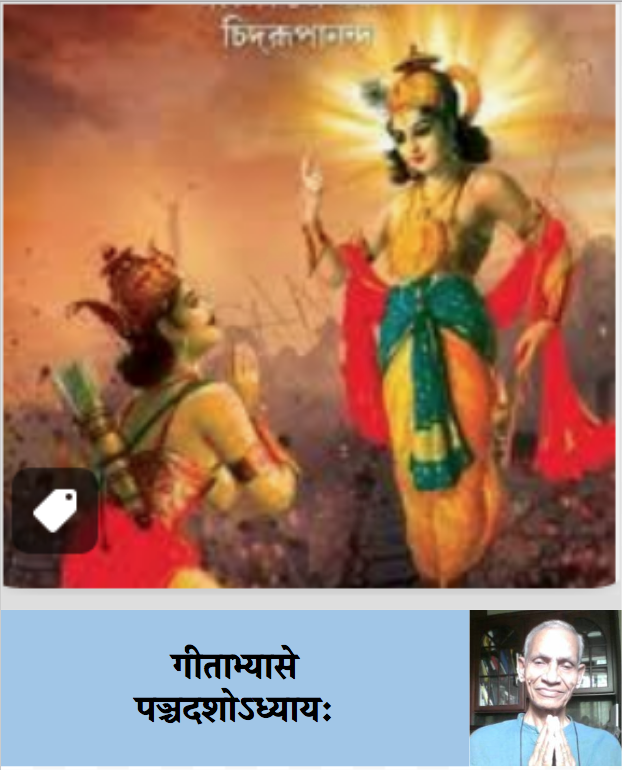
Comments
Post a Comment